
How to Compare BFA Powder Costs by Grade and Packaging
How to Accurately Compare BFA Powder Costs by Grade and Packaging
For purchasing managers in the welding and abrasives industries, comparing quotes for raw materials is a daily task. When evaluating suppliers for Brown Fused Alumina, it is tempting to focus solely on the per-ton price. However, this approach often overlooks critical factors that can significantly inflate the total cost of ownership. A seemingly lower price from one supplier can quickly become the more expensive option once packaging, logistics, and material yield are factored into the equation. To make a truly informed decision, you need a framework for normalizing these variables. As an ISO 9001 certified manufacturer, we believe in transparent and comprehensive cost analysis to build lasting partnerships.
This guide provides a practical methodology for comparing BFA powder quotes, ensuring you account for every cost component from the factory floor to your production line. By understanding how grade, purity, packaging efficiency, and logistics interplay, you can confidently select a supplier that offers not just the best price, but the best overall value for your operations.
Deconstructing the Quote: Beyond the Per-Ton Price
The initial price on a supplier's quote is just the starting point. The true value of a material like brown fused alumina is determined by its performance and consistency. Two quotes for the same nominal product can represent vastly different levels of quality, directly impacting your production efficiency and final product integrity. Understanding the specifications behind the price is the first step in an accurate comparison.
Grade and Purity Impact on Performance
Brown Fused Alumina is not a monolithic product. It is produced in various grades, typically defined by their aluminum oxide (Al₂O₃) purity. A common high-quality grade might offer 95% purity, but lower-purity options are also available at a lower cost. The critical question is whether the initial savings justify the potential downstream costs.
A lower-grade BFA powder may contain more impurities, which can lead to:
- Inconsistent Weld Quality: In applications like welding fluxes, impurities can interfere with the chemical reactions in the weld pool, potentially causing defects, porosity, or reduced mechanical strength of the finished weld.
- Higher Consumption Rates: Lower purity often means you need to use more material to achieve the desired result, whether in an abrasive or flux application. This increases your effective cost per unit of production.
- Increased Rework and Waste: Inconsistent material performance can lead to a higher rate of rejected parts, requiring costly rework or generating scrap.
When comparing quotes, always demand a detailed Certificate of Analysis (CoA) for the specific grade being offered. A reliable supplier will provide clear specifications for chemical composition, particle size distribution, and other relevant metrics. This allows you to compare the materials on a like-for-like basis in terms of quality, not just price.
Chemical Composition and Manufacturing Process
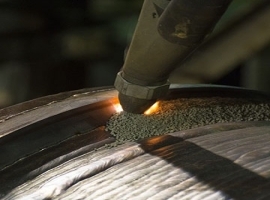
The quality of the final product is a direct result of the raw materials and the manufacturing process. At Oldwelders, our flux products are derived from a carefully controlled process. We begin with excellent raw materials, including dolomite, bauxite, cryolite, silica, and fluorine ore. These components are melted at extreme temperatures of 2000°C to ensure complete fusion and homogenization, creating a stable and high-purity product.
This meticulous process guarantees the chemical properties required for high-performance applications. When evaluating a supplier, inquire about their manufacturing process. A less controlled or lower-temperature process might produce a cheaper material, but it could lack the thermal stability and chemical consistency required for demanding industrial environments. This difference in manufacturing rigor is often a hidden factor in price disparities.
The Hidden Costs of Packaging and Logistics
Once you have normalized for material quality, the next significant variable is the cost of getting the product to your facility. Packaging and logistics are often treated as secondary line items, but they can dramatically alter the final landed cost per ton, especially for international shipments to markets like Brazil, Thailand, Australia, and Malaysia.
Packaging Options: 25kg Bags vs. Bulk Bags (FIBCs)
Brown fused alumina is typically packaged in two main ways: 25kg paper or poly-woven bags, or larger 1-ton (1000kg) bulk bags, also known as Flexible Intermediate Bulk Containers (FIBCs).
- 25kg Bags: This is a common standard. The bags are easy to handle manually and are suitable for smaller-scale operations. However, they are labor-intensive to load and unload, both at the shipping point and at your facility. They also present a higher risk of product loss from damaged bags and spillage.
- 1-ton Bulk Bags (FIBCs): These require mechanical handling (forklifts) but offer significant advantages in efficiency. They dramatically reduce loading and unloading times, minimize the risk of spillage, and reduce packaging waste. While the bulk bag itself may have a slightly higher cost than 40 individual 25kg bags, the labor savings and reduced product loss often provide a net financial benefit.
When comparing quotes, ask suppliers if they offer both options and request pricing for each. Your choice should depend on your facility's handling capabilities and labor costs.
Calculating Container Space Efficiency
For international buyers, maximizing the weight per shipping container is crucial for minimizing freight costs per ton. The way the BFA powder is packaged and loaded directly impacts this efficiency.
Consider a standard 20-foot container, which typically has a maximum payload of around 24-26 tons.
- Palletized 25kg Bags: When 25kg bags are stacked on pallets and shrink-wrapped, they are secure but create dead space. The pallets themselves add weight and take up volume. It may only be possible to load 20-22 tons into a container.
- Floor-loaded 25kg Bags: Loading the bags directly onto the container floor without pallets can increase the total weight to 24-25 tons, but it is extremely labor-intensive to load and unload.
- 1-ton Bulk Bags: FIBCs are highly space-efficient. It is often possible to load 24 or even 25 one-ton bags into a 20-foot container, maximizing the payload and significantly reducing the ocean freight cost per ton of product.
As a supplier with extensive experience exporting to diverse markets from Australia to Brazil, we understand the importance of optimizing container loads. Always discuss loading plans with potential suppliers to calculate the true freight cost per ton.

A Practical Formula for Normalizing Supplier Quotes
To make a true apples-to-apples comparison, you need to calculate the total landed cost and then adjust for usable yield. This "Effective Cost per Usable Ton" provides the most accurate financial picture.
Step 1: Calculate Total Landed Cost per Ton
This formula aggregates all costs required to get the material to your door.
Total Landed Cost = (Product Price per Ton) + (Packaging Cost per Ton) + (Inland Freight from Supplier) + (Ocean Freight per Ton) + (Insurance, Duties & Local Port Fees)
Be sure to get detailed quotes for each of these components. A supplier offering a low "Ex Works" (EXW) price may be located far from a port, resulting in high inland freight costs that negate the initial savings.
Step 2: Determine the Usable Yield Percentage
This is where material quality comes back into play. Based on the Certificate of Analysis and potentially your own sample testing, estimate the usable yield. For example, if a lower-grade BFA powder is expected to cause a 5% rejection rate in your finished products compared to a high-grade alternative, its usable yield is 95% (or 0.95).
Step 3: Calculate the Effective Cost per Usable Ton
This is the final and most important metric.
Effective Cost per Usable Ton = Total Landed Cost per Ton / Usable Yield %
Example Scenario:
- Supplier A quotes high-grade BFA powder at $800/ton. Landed cost is $1000/ton. Expected yield is 99%. Effective Cost = $1000 / 0.99 = $1010.10 per usable ton.
- Supplier B quotes lower-grade material at $750/ton. Landed cost is $950/ton. Expected yield is 95%. Effective Cost = $950 / 0.95 = $1000.00 per usable ton.
In this scenario, after accounting for yield, Supplier B offers a slightly better value, despite the quality difference. However, this calculation does not include the cost of rework or disposal, which would likely make Supplier A the more economical choice in reality. This framework empowers you to model these costs accurately for your specific operation. When planning your orders, remember that many suppliers, including Oldwelders, have a minimum order quantity (MOQ), which is typically 1 ton for these materials.
Partnering with a Reliable BFA Powder Manufacturer
Choosing a supplier is about more than just numbers; it's about securing a reliable partner for your supply chain. A dependable manufacturer provides not only a quality product but also consistency, transparency, and logistical support.
At Oldwelders, our commitment to quality is validated by our ISO 9001 certification. This ensures that every batch of material meets the same rigorous standards, giving you predictable performance in your production processes. Our state-of-the-art plant, covering 1000 square meters with six production lines, has the capacity to supply 100 tons per day. This scale ensures we can meet high-volume demands and maintain a stable supply, even during market fluctuations, with a standard lead time of 30 days.
We provide a comprehensive range of welding materials, including specialized welding fluxes designed for specific applications. Whether you require a standard product or a custom formulation, our technical team works with you to deliver the right material for your needs. For instance, our submerged arc welding flux hj431 is a testament to our focus on specialized, high-performance consumables.
By moving beyond the surface-level price and adopting a total cost of ownership approach, you can identify the true economic impact of your purchasing decisions. A thorough analysis of grade, packaging, logistics, and supplier reliability will always lead to a more profitable and stable supply chain. When you're ready to partner with a manufacturer who understands these complexities, contact Oldwelders.