
How to Calculate E7018 Electrode Cost per Deposited kg
Understanding the True Cost of Your E7018 Electrode Supply
For procurement managers, engineers, and fabrication supervisors, evaluating the cost of welding consumables goes far beyond the price on an invoice. The initial purchase price of an E7018 electrode is only a fraction of its total impact on a project's budget. The most accurate measure of value is the cost per kilogram of deposited weld metal. This calculation reveals the true efficiency of your consumables and directly influences labor expenses, project timelines, and overall profitability.
Focusing solely on the cost per box can lead to inefficient operations, increased rework, and ultimately, higher project costs. A lower-priced electrode with poor deposition efficiency will require more rods, more changeover time, and more labor to complete the same weld as a higher-quality, more efficient alternative. This guide will provide a clear framework for calculating the deposited cost, enabling you to make informed purchasing decisions that benefit your bottom line.
Beyond the Purchase Price: Factors Influencing True Weld Metal Cost
The price tag on a carton of welding rods is a starting point, not the final destination. Several critical performance factors determine how much of that electrode actually becomes part of the finished weld. Understanding these variables is the first step toward accurate cost analysis.
Deposition Efficiency
Deposition efficiency is the single most important metric in this calculation. It is the percentage of the electrode that is converted into weld metal, as opposed to being lost as slag, spatter, or stub end. It's expressed as a ratio: (Weight of Deposited Weld Metal) / (Weight of Electrode Consumed). For shielded metal arc welding (SMAW) with a 7018 rod, this efficiency typically ranges from 55% to 65%. A 10% difference in efficiency between two brands can have a massive impact on the total quantity of electrodes needed for a large-scale project.
Stub Loss
Every electrode leaves behind an unused portion, or stub, that must be discarded. This stub end, typically 2 to 3 inches long, is a built-in material loss. While unavoidable, the consistency of an electrode's coating can influence how much of the rod is usable. Poor quality control can lead to welders discarding longer stubs due to inconsistent arc performance near the holder, increasing waste.
Spatter and Slag
The flux coating on a 7018 rod is designed to create a protective slag layer and shield the molten weld pool. However, a poorly formulated or manufactured electrode can generate excessive spatter. Each particle of spatter is metal that should have been part of the weld bead. Excessive spatter not only represents material waste but also increases post-weld cleaning time, which adds to labor costs. The weight of the slag produced also contributes to the non-deposited portion of the electrode.
A Step-by-Step Guide to Calculating Cost per Deposited Kilogram
To accurately compare different suppliers, you must normalize the cost based on usable weld metal. This requires a straightforward calculation that accounts for the purchase price and the electrode's deposition efficiency. This method removes variables and provides a clear, apples-to-apples comparison.
The Core Formula
The formula to determine the cost per deposited kilogram is:
Cost per Deposited kg = (Price per kg of Electrode) / (Deposition Efficiency %)
Let's break down each component:
- Price per kg of Electrode: This is the simplest part of the equation. Take the total cost of your shipment and divide it by the total weight in kilograms. For example, if you purchase a 1-ton (1000 kg) pallet for $3,000, your price per kg is $3.00.
- Deposition Efficiency (%): This value is the most critical and should be provided by the manufacturer on the product's technical data sheet. If it is not available, you may need to conduct a physical test to determine it. A reputable supplier will always have this data readily available for their products.
Putting It Into Practice: A Comparison
Imagine you are evaluating quotes for an E7018 electrode from two different suppliers for a major structural steel project.
| Metric | Supplier A (Standard Quality) | Supplier B (High Quality) |
|---|---|---|
| Price per kg | $2.80 | $3.10 |
| Deposition Efficiency | 58% (0.58) | 65% (0.65) |
| Calculation | $2.80 / 0.58 | $3.10 / 0.65 |
| True Cost per Deposited kg | $4.83 | $4.77 |
In this scenario, Supplier A appears cheaper on paper with a lower price per kilogram. However, once deposition efficiency is factored in, Supplier B's product is actually more cost-effective. For every kilogram of finished weld, you save $0.06. While this seems small, it scales significantly. On a project requiring 10 tons of deposited weld metal, choosing Supplier B results in a direct material cost saving of $600, not to mention the associated reductions in labor and handling time from using fewer rods.
The Impact of Electrode Quality on Total Welding Costs
The calculation above clearly demonstrates that the quality of your E7018 electrode is directly tied to your project's financial performance. A high-quality electrode provides more than just a better deposition rate; it delivers consistency, reliability, and operational efficiency that reduce costs across the board.
At Oldwelders, our manufacturing process is governed by stringent ISO 9001 quality management standards. This commitment ensures that every batch of electrodes performs consistently, with predictable deposition rates and minimal defects. Our raw materials, including high-grade dolomite, bauxite, and silica, are melted at 2000 °C to create a homogenous flux coating. This meticulous process results in:
- A Stable, Smooth Arc: Reduces spatter and makes it easier for welders to maintain control, leading to higher-quality welds and less cleanup.
- Easy Slag Removal: A quality flux creates a slag that lifts away easily, significantly reducing the time and labor required for inter-pass and post-weld cleaning.
- X-Ray Quality Welds: Consistency in chemical composition and flux coating minimizes the risk of porosity and other defects, reducing the likelihood of costly rework after non-destructive testing.
Investing in a superior E7018 electrode is an investment in reducing your total operational cost, not just your material procurement expense.
How Operator Skill and Equipment Influence Efficiency
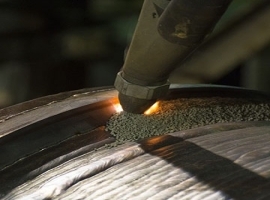
While the electrode itself is a primary factor, the welder and their equipment also play a crucial role in achieving optimal deposition. Even the best electrode can be wasted by improper technique or a faulty power source.
Welder Technique
An experienced welder will maintain the correct arc length, travel speed, and electrode angle to maximize metal deposition and minimize spatter. They will also burn the electrode down to a consistent, minimal stub length, reducing waste. Providing proper training and clear welding procedure specifications (WPS) is essential for ensuring your team operates efficiently.
Welding Machine Performance
The stability of the power source is critical. An outdated or poorly maintained welding machine can produce a fluctuating amperage, leading to an erratic arc, increased spatter, and inconsistent weld quality. A modern, well-calibrated power source provides the stable output needed for a smooth arc, allowing the 7018 rod to perform as designed. Ensuring your equipment, from the power source to the cables and holders, is in excellent condition is a key part of an efficient welding operation. Other consumables, like different types of electrodes or wires, also have unique requirements; for example, some operations may find that AWS E6013 welding electrodes are better suited for specific applications, each with their own efficiency characteristics.
Partnering with a Reliable Supplier for Your E7018 Electrode Needs
Choosing a supplier is about more than securing a good price; it's about building a partnership with a manufacturer who can guarantee quality, consistency, and a stable supply chain. For large-scale industrial buyers in markets like Brazil, Thailand, Australia, and Malaysia, supply chain reliability is paramount to avoiding project delays.
Oldwelders is positioned to be that partner. Our 1000-square-meter facility, equipped with six production lines, has the capacity to produce 100 tons of welding consumables per day. This ensures we can meet high-volume demands without compromising our ISO 9001-certified quality standards. With a standard minimum order quantity of 1 ton and a lead time of 30 days, we provide the predictability and scale that industrial projects require.
By focusing on the true cost per deposited kilogram of your E7018 electrode, you shift your procurement strategy from simple cost-cutting to value-driven optimization. This analytical approach, combined with high-quality consumables from a reliable partner, is the most effective way to control costs and ensure the success of your welding operations. We offer a comprehensive range of welding materials to meet the diverse needs of our industrial clients.
When you are ready to evaluate your next large-volume order of 7018 electrodes, move beyond the box price. Request technical data sheets, calculate the cost per deposited kilogram, and choose a supplier that delivers proven performance and value.