
How to Calculate Cost Per Cut for Structural Steel SAWs
How to Accurately Calculate the Cost Per Cut for Structural Steel SAW Operations
In the world of heavy fabrication, precision and efficiency are the cornerstones of profitability. For any project involving structural steel, the journey from raw material to finished assembly begins with a single, critical action: the cut. While welding often takes the spotlight as the primary joining process, the accuracy and cost-effectiveness of your cutting operations have a profound impact on every subsequent stage. Understanding the true cost per cut of your Structural Steel SAW is not just an accounting exercise; it is a strategic imperative that influences project bids, profit margins, and overall workflow efficiency.
Many fabricators focus on the initial purchase price of a saw or the cost of a single blade. However, this narrow view overlooks a spectrum of operational variables that constitute the true cost. This guide provides a comprehensive framework for calculating your cost per cut, empowering procurement teams and business owners to make more informed decisions, optimize their processes, and ultimately, enhance their bottom line. By analyzing these factors, you can move beyond simple equipment features and build a robust business case for operational excellence.
Deconstructing the Total Cost of Ownership (TCO) for Cutting Equipment
Before diving into a per-cut calculation, it's essential to understand the Total Cost of Ownership (TCO) of your cutting equipment. The initial investment in a high-capacity band saw or cold saw is significant, but it represents only a fraction of the machine's lifetime expense. TCO provides a holistic financial perspective, which can be broadly divided into two categories.
Capital Expenditure (CapEx)
This is the most straightforward component: the purchase price of the saw itself. It includes the base machine, delivery, installation, and any initial training costs. While a lower CapEx can be attractive, a cheaper machine may lead to significantly higher operating costs over its lifespan due to lower efficiency, increased maintenance, and shorter consumable life. A thorough TCO analysis often reveals that a higher initial investment in a more robust and efficient machine yields a lower cost per cut and a faster return on investment.
Operating Expenditure (OpEx)
This encompasses all the ongoing costs required to run and maintain the saw. OpEx is where the true cost of cutting resides and where the greatest opportunities for savings can be found. These recurring expenses are the core variables in our cost-per-cut formula and include:
- Consumables: Saw blades, coolant, and lubricants.
- Labor: The wages of the operator running the machine.
- Energy: The electricity consumed during operation.
- Maintenance: Scheduled servicing, replacement parts, and the cost of unexpected downtime.
By meticulously tracking and analyzing these OpEx components, you can gain precise control over your fabrication costs from the very first step.
Identifying Key Variables in Your Cost-Per-Cut Calculation
To build an accurate cost model, you must quantify each operational variable. The more precise your data, the more reliable your final calculation will be. Let's break down the essential inputs you need to gather.
1. Consumable Costs
Consumables are a primary driver of operating expenses. The goal is to maximize their useful life while maintaining cut quality.
- Blade Cost & Life: This is a two-part variable. First is the purchase price of a single saw blade. Second, and more critical, is the blade's effective life, measured in the number of cuts or total square inches it can process before becoming dull or failing. Factors influencing blade life include the type of material being cut, cutting speed, feed rate, and proper machine maintenance.
- Coolant & Lubricant Costs: Proper fluid application is vital for extending blade life and achieving a clean cut. You need to determine the cost of the coolant concentrate and its consumption rate. This includes the initial fill of the machine's reservoir and the rate at which it needs to be replenished or replaced.
2. Labor Costs
Labor is often one of the largest components of the cost per cut. Efficiency here is paramount.
- Operator's Fully-Burdened Wage: This isn't just the hourly pay. It should include payroll taxes, insurance, and any other overhead associated with the employee. For example, if an operator's wage is $25/hour, the fully-burdened rate might be closer to $35/hour.
- Total Time Per Cut: This metric must encompass the entire cycle, not just the time the blade is in the material. It includes material loading and positioning, machine setup (clamping, setting angles), the actual cutting time, and unloading the finished piece. Automating material handling or using saws with programmable controls can drastically reduce this time.
3. Energy Consumption
While often overlooked, energy costs can accumulate significantly in a high-production environment.
- Machine Power Rating (kW): This can be found on the machine's specification plate. It represents the power draw under load.
- Local Cost of Electricity ($/kWh): This rate is available on your utility bill.
- Active Cutting Time: The duration the motor is running under load for a single cut. The machine consumes less power when idle between cuts, but for simplicity in most calculations, focusing on the active cutting time provides a solid baseline.
4. Maintenance and Downtime
A machine that isn't running isn't making money. These costs, both planned and unplanned, must be factored in.
- Scheduled Maintenance Costs: Amortize the annual cost of replacement parts (e.g., guide bearings, hydraulic fluid) and technician labor over the expected number of cuts per year.
- Cost of Downtime: This is an opportunity cost. Estimate the revenue lost for every hour the machine is down unexpectedly. While harder to assign to a single cut, incorporating a risk factor for downtime provides a more realistic cost model.
The Cost-Per-Cut Formula: A Practical Model
With the variables identified, we can assemble them into a practical formula. This model provides a clear, quantifiable metric for each piece of structural steel you process.
Cost per Cut = Consumable Cost per Cut + Labor Cost per Cut + Energy Cost per Cut + Maintenance Cost per Cut
Let's break down each component:
- Consumable Cost per Cut = (Blade Price / Total Cuts per Blade) + (Coolant Cost / Cuts per Coolant Change)
- Labor Cost per Cut = (Hourly Labor Rate / 60) * (Total Cycle Time in Minutes)
- Energy Cost per Cut = (Machine kW * kWh Cost) * (Cutting Time in Hours)
- Maintenance Cost per Cut = (Annual Maintenance Cost / Total Annual Cuts)
Example Calculation:
Imagine cutting a W12x26 I-beam. Let's use some hypothetical but realistic figures:
- Blade: $150 per blade, with an average life of 500 cuts.
- Labor: $35/hour fully-burdened rate. The total cycle time (load, set, cut, unload) is 4 minutes.
- Energy: A 7.5 kW motor, electricity at $0.15/kWh, and an active cutting time of 1.5 minutes (0.025 hours).
- Coolant & Maintenance: We'll estimate these at a combined $0.05 per cut for simplicity.
1. Consumable Cost: $150 / 500 cuts = $0.30 per cut
2. Labor Cost: ($35 / 60) * 4 minutes = $2.33 per cut
3. Energy Cost: (7.5 kW * $0.15/kWh) * 0.025 hours = $0.028 per cut
4. Maintenance/Coolant: $0.05 per cut
Total Cost Per Cut = $0.30 + $2.33 + $0.03 + $0.05 = $2.71
Now, you have a tangible number. You can use this metric to compare the efficiency of different machines, justify the purchase of a new blade technology that offers more cuts, or implement process changes to reduce labor time.
Beyond Cutting: Integrating Fabrication Workflow for Maximum ROI
An efficient cutting operation is the foundation of a profitable fabrication project, but its value is only fully realized when integrated with downstream processes like welding. A precise, square cut from a well-maintained Structural Steel SAW results in superior fit-up between components. This precision is critical because it directly reduces the time and resources needed for welding.
Poor fit-up from inaccurate cuts creates larger gaps that must be filled with more weld metal, increasing consumption of welding materials and adding significant time to the welding process. By optimizing the cutting stage, you create a domino effect of efficiency. This holistic approach is crucial for success in demanding global markets, from large-scale infrastructure in Brazil to complex industrial projects in Australia, where we have successfully supported clients with reliable welding solutions.
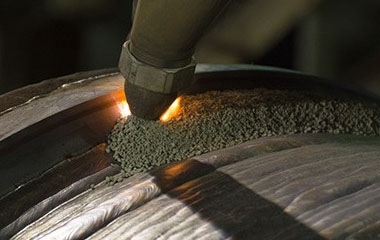
The quality of your welds depends heavily on the consistency of your consumables. As an ISO 9001 certified manufacturer, we ensure every batch of our welding fluxes meets stringent quality standards. We achieve this through complete control over our raw materials—sourcing excellent dolomite, bauxite, and silica, which are then melted at 2000 °C in our state-of-the-art facility to produce a homogenous, high-performance product.
Choosing a Partner for Your Complete Fabrication Needs
Optimizing your cost per cut is a vital step, but true operational excellence comes from viewing your fabrication line as a single, integrated system. The efficiencies gained in cutting must be matched by the quality and reliability of your welding operations. Choosing a supplier who understands this entire workflow is key to long-term success.
A reliable partner provides not only high-quality products but also supply chain security. Our 1000-square-meter plant, equipped with six production lines, has a capacity of 100 tons per day, ensuring we can meet the demands of large-scale projects and maintain consistent delivery schedules. This level of capacity provides peace of mind to procurement managers who need to ensure a steady flow of materials like submerged arc welding flux hj431 for heavy structural work, without risking project delays.
By investing in both precise cutting technology and premium welding solutions, you create a synergistic effect that drives down total project costs and elevates the quality of your final product. We invite you to explore our comprehensive range of welding equipment and consumables designed to complement a high-efficiency fabrication workflow. From a powerful welding machine to specialized electrodes, we provide the tools you need to turn perfectly cut steel into a flawlessly finished structure.