
How Welding Flux Protects and Strengthens the Weld Pool
How Welding Flux Provides Essential Protection for the Weld Pool
In the world of industrial fabrication and construction, the integrity of a welded joint is paramount. A strong, clean, and durable weld is not just a matter of applying heat and filler metal; it is a complex metallurgical process that requires precise control over the molten weld pool. At the heart of many essential welding processes lies a critical, yet often misunderstood, component: the welding flux. This granular or coated material is far more than a simple powder; it is an engineered compound designed to perform several vital functions simultaneously, all aimed at protecting the molten metal from the moment it is created until it solidifies into a sound joint.
For welding engineers, project managers, and fabricators, understanding how this protective compound works is fundamental to selecting the right welding process, ensuring procedural compliance, and achieving the desired mechanical properties in the final product. A failure to appreciate its role can lead to defects like porosity, cracking, and slag inclusions, compromising the structural integrity of the entire assembly. This article will delve into the multifaceted ways a high-quality welding flux shields, cleanses, and enhances the weld pool, ensuring a superior and reliable outcome.
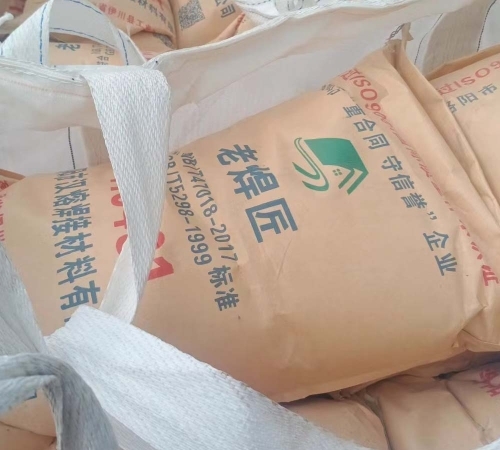
The Fundamental Role of Flux in Arc Welding
At its core, the primary purpose of flux is to protect the molten weld metal from the harmful effects of the surrounding atmosphere. When metal is heated to its melting point, typically several thousand degrees Celsius, it becomes highly reactive. The primary components of air—oxygen and nitrogen—are no longer benign gases but aggressive contaminants. If they come into contact with the molten weld pool, they can cause a range of severe defects:
- Oxidation: Oxygen readily combines with the molten metal to form oxides. These oxides can become trapped in the weld as it solidifies, creating non-metallic inclusions that act as stress concentration points, severely reducing the weld's strength and ductility.
- Nitrogen Contamination: Nitrogen can dissolve in the molten metal and then come out of the solution as the weld cools. This process forms gas bubbles that get trapped, resulting in porosity. Nitrogen can also form hard, brittle metallic nitrides, which can lead to cracking and a significant loss of toughness.
Flux counteracts these threats through a series of carefully controlled chemical and physical actions. It can be applied in various forms, such as a granular substance in submerged arc welding (SAW), a coating on an electrode in shielded metal arc welding (SMAW), or as the core material within a flux-cored wire. Regardless of the form, its protective functions remain consistent and critical.
Shielding the Molten Metal from Atmospheric Contamination
The most immediate and crucial function of a welding flux is to create a barrier between the molten weld pool and the atmosphere. It accomplishes this through a two-pronged approach: gas shielding and slag shielding.
Gaseous Shielding
When subjected to the intense heat of the welding arc, certain components within the flux decompose and vaporize. This reaction generates a protective cloud of shielding gas that displaces the surrounding air, creating a localized, controlled atmosphere around the arc and the weld pool. This gaseous shield is the first line of defense, preventing oxygen and nitrogen from ever reaching the molten metal. The effectiveness of this shield is directly tied to the chemical composition of the flux. At Oldwelders, our flux products are formulated from exceptional raw materials, including dolomite, bauxite, cryolite, and silica, which are meticulously melted at 2000 °C. This high-temperature process ensures the purity and proper combination of compounds needed to generate a stable and impenetrable gas shield during welding.
Slag Shielding
As the flux melts, it forms a liquid layer of molten slag that floats on top of the weld pool. Because slag is lighter than the molten metal, it naturally covers the entire surface. This liquid slag layer serves several purposes:
- It provides a robust physical barrier that further protects the weld metal from any atmospheric contaminants that might penetrate the initial gas shield.
- It insulates the weld pool, slowing down its cooling rate. This controlled cooling is crucial for preventing the formation of brittle microstructures, thereby improving the weld's overall toughness and reducing the risk of cracking.
- It helps to shape the weld bead, holding the molten metal in place and creating a smoother, more uniform surface finish as it solidifies.
Once the weld is complete and has cooled, this slag layer solidifies into a hard, glass-like coating that can be easily chipped or brushed away, revealing a clean and well-formed weld bead underneath.
Deoxidation and Impurity Removal for a Cleaner Weld
Even with the best shielding, some minor oxidation can occur. A high-quality welding flux is formulated with deoxidizing agents, such as manganese (Mn) and silicon (Si), to address this. These elements have a higher affinity for oxygen than the base metal (typically iron). They actively seek out any oxygen present in the weld pool, reacting with it to form oxides. These newly formed oxides are then absorbed into the molten slag layer, effectively cleaning or "purifying" the weld metal.
Furthermore, flux plays a critical role in removing other impurities that may be present in the base metal, such as sulfur (S) and phosphorus (P). These elements can cause brittleness and increase the susceptibility to hot cracking during solidification. The chemical components of the flux react with these impurities, drawing them out of the molten weld pool and into the slag. This cleansing action is a key factor in producing high-quality, defect-free welds that meet stringent industrial standards. Our commitment to quality, underscored by our ISO 9001 certification, ensures that every batch of flux we produce delivers consistent and superior cleansing performance for demanding applications.
This process of purification is essential for achieving the mechanical properties required in critical structures, from pressure vessels to bridges. The right selection of welding materials, including the flux, directly impacts the safety and longevity of the final product.

Enhancing Arc Stability and Weld Bead Characteristics
Beyond protection and cleaning, the composition of the welding flux has a direct influence on the electrical characteristics of the welding arc and the final appearance of the weld bead. The flux contains arc stabilizers, which are compounds that ionize in the heat of the arc. This ionization creates a more stable and conductive path for the welding current to flow, resulting in a smoother, more consistent, and less spatter-prone arc. A stable arc is easier for the welder or automated system to control, leading to more consistent penetration and a lower likelihood of defects.
The viscosity and melting point of the slag generated by the flux also play a significant role in shaping the weld bead. A flux designed for flat-position welding might produce a very fluid slag, while a flux for out-of-position welding (vertical or overhead) will create a more viscous, faster-freezing slag that helps hold the molten metal in place against the force of gravity. By controlling these properties, flux helps to define the weld bead's final contour, width, and smoothness. A product like our submerged arc welding flux hj431 is specifically engineered to provide excellent bead appearance and easy slag removal in high-productivity applications.
Alloying Element Addition and Metallurgical Control
Fluxes can be categorized as neutral, active, or alloyed, depending on their chemical formulation and intended function. While neutral fluxes are designed primarily for protection and cleaning, active and alloy fluxes go a step further by actively modifying the chemical composition of the weld metal.
These specialized fluxes contain specific amounts of metallic elements like manganese, silicon, chromium, nickel, or molybdenum. During welding, a portion of these elements is transferred from the flux, through the arc, and into the molten weld pool, becoming part of the final, solidified weld metal. This process is used to:
- Compensate for Element Loss: Some alloying elements present in the base metal or filler wire can be burned off in the arc. The flux can be designed to replace these lost elements, ensuring the weld metal's chemistry matches the requirements.
- Enhance Mechanical Properties: By adding specific alloys, the flux can significantly improve the weld's properties. For example, adding chromium increases corrosion resistance, while molybdenum improves high-temperature strength and creep resistance.
- Match Base Metal Properties: When welding alloy steels, the flux can be used to ensure the final weld deposit has the necessary strength, toughness, and hardness to match the surrounding parent material.
This capability makes the welding flux a powerful tool for metallurgical engineering, allowing fabricators to fine-tune the properties of the welded joint to meet precise performance specifications.
Sourcing a Reliable Supply of High-Quality Welding Flux
The effectiveness of any welding operation depends on the quality and consistency of its consumables. A well-formulated welding flux is indispensable for protecting the weld pool, ensuring metallurgical purity, and achieving the desired mechanical properties and aesthetic finish. By shielding the molten metal, deoxidizing and cleaning the weld, stabilizing the arc, and even adding critical alloying elements, flux transforms a potentially flawed process into a reliable and controlled method of fabrication.
For businesses engaged in large-scale manufacturing and construction, a dependable supply chain is as critical as the quality of the product itself. At Oldwelders, our 1000-square-meter plant, equipped with six production lines, has a capacity to supply 100 tons of flux per day. This robust production capability allows us to reliably serve demanding industrial markets, including those in Brazil, Thailand, Australia, and Malaysia, ensuring that your projects proceed without interruption. Whether you require a standard flux for general fabrication or a specialized alloyed flux for a critical application, partnering with an experienced manufacturer is key to achieving consistent, high-integrity welds. Explore our range of welding fluxes to find the optimal solution for your operational needs.