
How Smelting Flux Works to Purify Molten Metals
A high-quality smelting flux is essential for effectively separating impurities into slag.
In the world of metallurgy and high-temperature mineral processing, achieving metal purity is the ultimate goal. Raw ores and scrap metals are inherently contaminated with a variety of non-metallic compounds, known as gangue, which includes oxides, silicates, and other unwanted materials. If left untreated, these impurities compromise the structural integrity, performance, and value of the final metal product. The critical agent in this purification process is a carefully formulated smelting flux, a substance that acts as a chemical cleaning agent at extreme temperatures, facilitating the removal of these contaminants.
The fundamental principle is straightforward: the flux combines with the impurities to form a liquid phase known as slag. Because this slag is immiscible with and less dense than the molten metal, it naturally floats to the surface, where it can be easily skimmed off. This leaves behind a purer, more refined molten metal. Understanding the precise mechanisms of this separation is key for any foundry or processing plant looking to optimize efficiency, improve yield, and guarantee the quality of their output. This article delves into the science behind how these crucial additives work to create and separate slag.
The Fundamental Chemistry of Flux Action
The effectiveness of a flux hinges on its ability to alter the chemical and physical properties of the materials inside a furnace. Its primary functions are to lower the melting point of the gangue, decrease the viscosity of the slag, and promote the chemical reactions necessary for purification. Without a flux, operators would need to reach exceptionally high temperatures to melt the impurities, a process that is both energy-intensive and potentially damaging to the furnace and the metal itself.
Lowering the Fusion Point
Most impurities found in ores, such as silica (SiO₂) and alumina (Al₂O₃), have extremely high melting points. Silica, for example, melts at around 1,710°C (3,110°F). Reaching and maintaining such temperatures is uneconomical. A flux introduces components that form a eutectic mixture with these impurities. A eutectic system is a mixture of chemical compounds that has a single chemical composition that solidifies at a lower temperature than any other composition made up of the same ingredients. By adding a flux, the melting point of the entire mixture of impurities is significantly lowered, allowing them to become molten at a more manageable and cost-effective operating temperature. This is a critical first step in creating a fluid slag that can be easily separated.
Reducing Viscosity
Once the impurities are molten, the resulting slag must be fluid enough to move freely. A highly viscous, or thick, slag would trap droplets of valuable metal, reducing the overall yield. It would also be difficult to separate from the molten metal bath. Fluxes act as viscosity modifiers. They break down the complex silicate polymer chains that make many slags thick and sluggish. By introducing basic oxides (like calcium oxide or magnesium oxide) to an acidic slag (high in silica), the flux disrupts the Si-O-Si bonds, resulting in a more fluid and manageable slag. This ensures a clean separation between the slag and metal layers, maximizing the recovery of the purified metal.
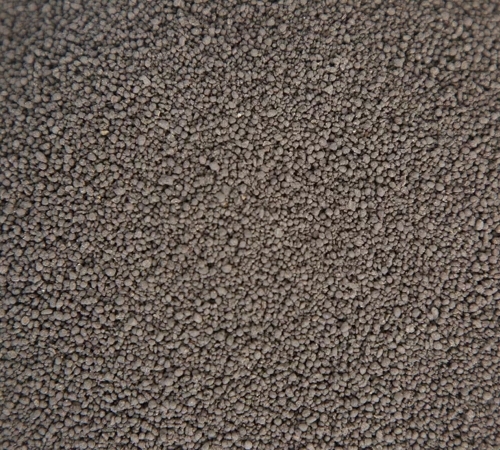
At Oldwelders, we understand the rigors of these high-temperature environments. Our flux products are formulated from exceptional raw materials like dolomite, bauxite, and silica, which are melted at temperatures of 2000°C to ensure they can perform under the most demanding industrial conditions and effectively manage both fusion points and viscosity.
Key Components and Types of Fluxes
Not all impurities are the same, and therefore, not all fluxes are interchangeable. The chemical composition of the flux must be carefully chosen to counteract the specific type of gangue present in the ore or scrap. Fluxes are generally categorized based on their chemical nature: acidic, basic, or neutral.
Acidic Fluxes
Acidic fluxes, with silica (SiO₂) as their primary component, are used to remove basic impurities like limestone (calcium carbonate, CaCO₃) and manganese oxides. The silica reacts with these basic oxides to form fusible silicates, which then become part of the slag. For example, in the presence of an acidic flux, calcium oxide (CaO), a basic impurity, will react to form calcium silicate (CaSiO₃), a primary component of slag.
CaO (impurity) + SiO₂ (flux) → CaSiO₃ (slag)
This type of flux is common in processes where the furnace lining itself is acidic to prevent unwanted reactions with the refractory materials.
Basic Fluxes
Conversely, basic fluxes are used to remove acidic impurities like silica and phosphorus pentoxide (P₄O₁₀). The most common basic fluxes are calcium carbonate (CaCO₃, in the form of limestone) and magnesium carbonate (MgCO₃, from dolomite). When heated, these carbonates decompose to form basic oxides (CaO and MgO), which then react with the acidic impurities. For instance, calcium oxide reacts with silica impurity to form the same calcium silicate slag.
SiO₂ (impurity) + CaO (flux) → CaSiO₃ (slag)
The choice depends on whether the silica is the impurity to be removed or the agent used for removal. Basic fluxes are essential in steelmaking to remove phosphorus and sulfur, which are detrimental to the quality of the steel.
Neutral Fluxes
Neutral fluxes, such as fluorspar (calcium fluoride, CaF₂), are often used as thinning agents. Their primary role is not to react chemically with impurities but to increase the fluidity (decrease the viscosity) of the slag. This makes the slag more effective at absorbing other impurities and ensures a cleaner separation from the metal. Cryolite is another example of a material used in specialized applications, like aluminum smelting, for its powerful ability to dissolve metal oxides.
The Step-by-Step Process of Slag Formation
The creation and separation of slag is a dynamic process that unfolds in a series of overlapping stages within the furnace. Understanding this sequence highlights the critical role of a properly selected smelting flux.
- Charging and Heating: The furnace is charged with the raw ore or scrap metal, along with the calculated amount of flux and a fuel source like coke. As the temperature rises, the components begin to heat and melt.
- Flux Activation and Reaction: As the flux reaches its active temperature, it melts and begins to react with the non-metallic impurities (gangue) in the charge. The flux components chemically combine with the oxides, silicates, and other compounds, lowering their collective melting point and forming a preliminary, molten slag.
- Coalescence and Separation: Due to its lower density, this molten slag begins to coalesce and float on top of the denser molten metal. The reduced viscosity, facilitated by the flux, allows for tiny entrapped metal droplets to sink through the slag and join the main metal bath below, maximizing yield.
- Protection and Purification: The continuous layer of slag on the surface serves an additional, vital purpose: it acts as a protective blanket. It shields the hot, reactive molten metal from the furnace atmosphere, preventing re-oxidation and the absorption of harmful gases like nitrogen. It also continues to absorb any remaining impurities that rise from the metal.
- Tapping: Once the smelting process is complete, the furnace is tapped. The slag is typically poured off first, followed by the purified molten metal, which is then cast into ingots or transferred for further processing.
This entire process relies on the quality and consistency of the flux. As an ISO 9001 certified manufacturer, Oldwelders ensures that every batch of flux meets stringent quality standards, providing predictable and reliable performance for your metallurgical operations. This certification reflects our commitment to process control, from raw material selection to final product delivery.
Selecting the Right Flux for Your Industrial Application
The choice of flux is a critical decision that directly impacts operational costs, energy consumption, metal quality, and environmental compliance. Several factors must be considered:
- Nature of Impurities: As discussed, the chemical composition of the gangue dictates whether an acidic or basic flux is required. A thorough analysis of your raw materials is the essential first step.
- Furnace Type and Lining: The flux must be chemically compatible with the furnace's refractory lining. Using a basic flux in a furnace with an acidic silica-brick lining will cause the flux to attack and erode the lining, leading to costly downtime and repairs.
- Desired Slag Properties: The target viscosity, melting temperature, and chemical reactivity of the slag must be considered. In some processes, the slag itself is a valuable byproduct, and its final composition is important.
- Cost and Availability: The economic viability of the flux is always a factor. Materials like limestone are inexpensive and widely available, while more specialized fluxes like fluorspar are more costly.
Partnering with a knowledgeable supplier is crucial. At Oldwelders, we leverage our deep expertise to help clients across Brazil, Thailand, Australia, and Malaysia select the optimal welding fluxes for their unique processes, ensuring efficiency and quality.
From Smelting Furnaces to Welding Arcs
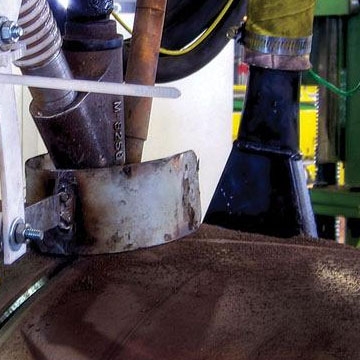
The principles governing the use of a smelting flux in a large furnace are mirrored on a much smaller scale in welding. The coating on a shielded metal arc welding (SMAW) electrode or the granular material used in submerged arc welding (SAW) is, in essence, a specialized flux.
When the welding arc is struck, this flux melts along with the electrode and the base metal. It performs several of the same critical functions:
- Deoxidation: It removes oxygen from the molten weld pool to prevent porosity and brittleness.
- Impurity Removal: It reacts with impurities like sulfur and phosphorus in the base metal, drawing them out into the slag.
- Shielding: It generates a shielding gas to protect the molten weld pool from atmospheric contamination.
- Slag Covering: It forms a protective slag layer over the solidifying weld bead, which insulates it, slows the cooling rate to improve metallurgical properties, and shapes the final bead profile.
Whether you are processing tons of ore or running a precise weld bead, the goal is the same: to use a carefully designed chemical agent to remove impurities and protect the integrity of the metal. Our extensive range of welding materials, including our high-performance submerged arc welding flux hj431, is built on these foundational metallurgical principles.
With a plant covering 1000 square meters and six production lines, we have the capacity to supply up to 100 tons a day, meeting the demands of large-scale industrial clients. We support our partners with a minimum order quantity of 1 ton and a standard lead time of 30 days, ensuring a reliable supply chain for your critical operations.