
How Sintered Flux is Made for Submerged Arc Welding
Understanding How Sintered Flux Is Made for Submerged Arc Welding
For welding engineers and technical buyers, understanding the intricate manufacturing process behind crucial consumables like welding fluxes is paramount. Among the various types, Sintered Flux plays a vital role in achieving superior weld quality in Submerged Arc Welding (SAW). This article delves into the meticulous steps involved in producing this essential material, highlighting the precision and quality control necessary at each stage to ensure optimal performance in demanding industrial applications.
The performance of any welding operation is significantly influenced by the quality of its consumables. Sintered Flux, known for its consistency and excellent metallurgical properties, is no less critical. Its production is a complex process that demands stringent adherence to specifications, starting from the selection of raw materials all the way through to final packaging. At Oldwelders, we understand this criticality, which is why our manufacturing processes are designed to meet the highest standards, ensuring our partners receive products they can consistently rely on.
The Foundation: Selecting and Preparing Raw Materials for Sintered Flux
The journey of creating high-quality Sintered Flux begins with the careful selection of its constituent raw materials. These materials are not merely mixed; they are chosen for their specific chemical properties and purity, which directly influence the flux's performance during welding. The primary raw materials utilized in our flux products include excellent dolomite, bauxite, cryolite, silica, and fluorine ore. Each component contributes unique characteristics:
- Dolomite and Bauxite: These provide essential oxides that influence slag basicity, viscosity, and overall weld metal chemistry.
- Cryolite: Important for arc stability and improving the transfer of alloying elements.
- Silica: A key component for slag formation and controlling its properties.
- Fluorine Ore: Contributes to slag fluidity and hydrogen control in the weld metal.
The quality of these raw materials is rigorously assessed to ensure they meet the precise specifications required for consistent flux performance. Impurities can severely compromise the final weld quality, leading to defects and costly rework. Therefore, Oldwelders places immense emphasis on sourcing and verifying the purity of every incoming batch. This foundational step is critical for developing a submerged arc welding flux hj431 or any other specialized flux that delivers reliable results.
Precision Blending and Granulation: Crafting the Flux Mixture
Once the raw materials are selected and verified, they undergo a series of preparatory steps before the sintering process. This stage involves precise weighing, mixing, and granulation to create a homogeneous blend. The goal is to ensure that each particle of the final Sintered Flux contains a consistent proportion of all the necessary ingredients, guaranteeing uniform performance across every batch.
The specific ratios of dolomite, bauxite, cryolite, silica, and fluorine ore are determined by sophisticated metallurgical formulas tailored to specific welding applications and desired weld properties. These materials are accurately weighed to tight tolerances before being introduced into high-efficiency mixers. Thorough mixing is essential to achieve a uniform distribution of all components, preventing segregation and ensuring consistent chemical reactions during the welding process.
Following mixing, the blend is often granulated. This involves adding a binder and processing the mixture to form small, uniform particles. Granulation improves material handling, reduces dust, and ensures better flow characteristics in automatic flux feeding systems often used with an automatic welding machine. The particle size distribution is carefully controlled, as it impacts arc stability, slag removal, and overall weld bead appearance.
The Sintering Process: High-Temperature Transformation
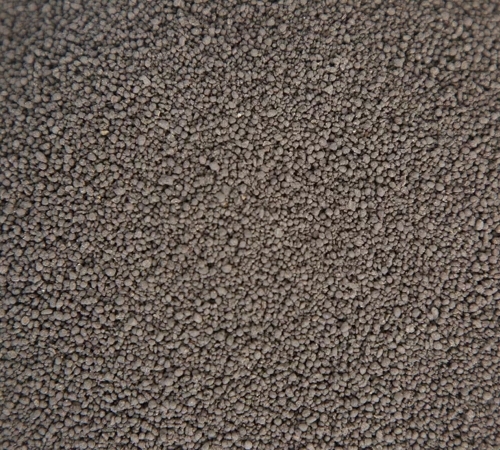
The core of Sintered Flux production lies in the sintering process itself. This stage transforms the carefully prepared raw material mixture into a durable, homogeneous, and metallurgically active product. The granulated mixture is subjected to extremely high temperatures, typically around 2000 °C, in specialized furnaces. This intense heat causes the particles to fuse together without fully melting, forming a solid, porous mass.
During sintering, complex chemical reactions occur, leading to the formation of new mineral phases that are stable and beneficial for the welding process. The high temperature ensures that any volatile components are driven off, and the constituent oxides are thoroughly integrated. This process yields a product with superior strength, reduced hygroscopicity, and enhanced metallurgical control compared to other flux types.
Oldwelders' commitment to quality is evident in our state-of-the-art production facilities. Our plant, covering an area of 1000 square meters, houses six production lines specifically designed for high-volume, high-quality flux manufacturing. This capacity allows us to supply up to 100 tons of flux per day, meeting the demands of our global partners in markets such as Brazil, Thailand, Australia, and Malaysia. Our adherence to the ISO 9001 quality management system further underscores our dedication to consistent product excellence at every stage of the sintering process.
Post-Sintering Treatment: Crushing, Sieving, and Quality Control
After the sintering process, the large, solid blocks of Sintered Flux must be processed into their final usable form. This involves several critical steps to prepare the flux for packaging and distribution.
- Crushing: The sintered blocks are first crushed into smaller pieces using specialized machinery. This step requires precision to avoid excessive fines while breaking down the material efficiently.
- Sieving: The crushed material is then passed through a series of sieves to achieve the desired particle size distribution. Different welding applications may require different flux particle sizes, and precise sieving ensures that the final product meets these specific requirements. This step also helps remove any oversized particles or undesirable fines that could negatively impact welding performance.
- Magnetic Separation: To ensure the highest purity, the sieved flux often undergoes magnetic separation to remove any stray metallic particles that may have been introduced during crushing or handling. This prevents potential contamination of the weld metal.
- Dust Removal: Finally, the flux is subjected to dust removal processes to ensure a clean product. Excessive dust can lead to arc instability and other welding issues.
Throughout these post-sintering stages, stringent quality control measures are in place. Samples from each batch are regularly tested for chemical composition, particle size distribution, bulk density, and welding performance characteristics. This meticulous testing ensures that every kilogram of flux produced meets Oldwelders’ high standards and the specific requirements of our customers. Our minimum order quantity (MOQ) of 1 ton makes our high-quality Sintered Flux accessible for various project scales, supporting businesses globally.
The End Product: Advantages of High-Quality Sintered Flux
The rigorous manufacturing process of Sintered Flux results in a product that offers significant advantages for Submerged Arc Welding applications. These benefits are directly attributable to the controlled chemical reactions and physical transformations that occur during sintering:
- Consistent Chemical Composition: The high-temperature fusion ensures a very stable and homogeneous chemical composition, leading to predictable weld metal properties.
- Improved Resistance to Moisture Absorption: Sintered fluxes are generally less hygroscopic than agglomerated fluxes, reducing the risk of hydrogen-induced cracking in welds.
- Enhanced Mechanical Properties: Welds produced with quality Sintered Flux often exhibit superior mechanical properties, including higher toughness and tensile strength, crucial for structural integrity.
- Excellent Arc Stability: The uniform particle size and composition contribute to a stable arc, minimizing spatter and improving bead shape.
- Reduced Fume Emission: The stable nature of sintered fluxes can lead to lower fume emissions during welding, contributing to a safer working environment for operators using a welding machine.
These advantages make Sintered Flux an ideal choice for critical applications in industries such as shipbuilding, heavy machinery manufacturing, pressure vessel fabrication, and pipeline construction, where weld integrity is non-negotiable.
Conclusion: Oldwelders' Commitment to Sintered Flux Excellence
The production of Sintered Flux for Submerged Arc Welding is a testament to precision engineering, metallurgical expertise, and unwavering quality control. From the initial selection of excellent raw materials like dolomite, bauxite, cryolite, silica, and fluorine ore, melted at 2000 °C, through to the stringent post-sintering treatments and rigorous quality checks, every step is designed to deliver a superior product.
At Oldwelders, our dedication to manufacturing high-performance welding materials is reinforced by our ISO 9001 certification and our advanced production capabilities, including six lines capable of producing 100 tons daily from our 1000 square meter facility. We are committed to empowering welding engineers and technical buyers worldwide with the reliable Sintered Flux they need to achieve exceptional weld quality and operational efficiency. Partner with Oldwelders for consistent, high-quality welding solutions.