How SAW Flux Controls Arc Stability in Welding
Understanding How SAW Flux Influences Arc Stability for Optimal Welds
Submerged Arc Welding (SAW) is a highly efficient and productive welding process extensively used in heavy fabrication industries such as shipbuilding, pressure vessel manufacturing, and structural steel construction. Its ability to produce high-quality welds with deep penetration and minimal spatter makes it a preferred choice for many applications. However, achieving consistent weld quality fundamentally relies on maintaining a stable welding arc. While parameters like current, voltage, and travel speed are crucial, the often-underestimated hero in arc stability is the welding fluxes used. Specifically, the formulation of SAW Flux directly dictates the arc's behavior, influencing everything from penetration and bead shape to mechanical properties and defect prevention.
For production welders and process engineers troubleshooting inconsistent SAW bead formation, understanding the intricate relationship between flux characteristics and arc stability is paramount. This article delves into the various factors controlled by SAW flux that contribute to or detract from a stable arc, providing insights into optimizing welding operations.
The Fundamental Role of SAW Flux in Arc Stability
In Submerged Arc Welding, the arc operates beneath a blanket of granular flux, which completely covers the molten weld pool and the end of the electrode. This flux serves multiple critical functions:
- Shielding: It protects the molten metal from atmospheric contamination (oxygen and nitrogen), preventing porosity and brittleness in the weld.
- Arc Stabilization: The flux provides ionizable elements that contribute to the electrical conductivity of the arc plasma, initiating and maintaining a stable arc.
- Metallurgical Influence: It introduces alloying elements into the weld metal and removes impurities through slag-metal reactions, refining the weld's chemical composition and mechanical properties.
- Slag Formation: Upon melting, the flux forms a molten slag layer that covers the weld pool, shaping the bead and controlling its cooling rate. This slag then solidifies and is typically removed after welding.
The ability of the flux to provide a consistent, conductive path for the arc is central to arc stability. An unstable arc can lead to erratic penetration, uneven bead profiles, increased spatter, and ultimately, defective welds, requiring costly rework.
Chemical Composition of SAW Flux and Its Impact
The chemical makeup of SAW Flux is perhaps the most significant determinant of arc stability and overall weld quality. Fluxes are complex mixtures of various oxides, fluorides, and carbonates, each contributing differently to the welding process. Oldwelders, for instance, utilizes excellent dolomite, bauxite, cryolite, silica, and fluorine ore as raw materials, which are meticulously melted at 2000 °C to ensure optimal purity and consistency in our flux products.
Basicity Index and Ionization Potential
A key concept related to flux chemistry is the basicity index, which classifies fluxes as acidic, neutral, or basic. Basic fluxes (high in CaO, MgO, MnO, CaF2) generally promote a stable, smooth arc, better toughness, and lower hydrogen content in the weld metal. Acidic fluxes (high in SiO2, TiO2) tend to have a more fluid slag and higher deposition rates but can be more prone to arc instability and higher oxygen content. The ionization potential of elements within the flux, such as sodium and potassium, significantly influences the arc's electrical conductivity. Fluxes containing easily ionizable elements facilitate arc initiation and maintenance, contributing to greater stability.
Slag Viscosity and Surface Tension
The oxides and fluorides in the flux melt to form the slag. The viscosity and surface tension of this molten slag are critical. A slag that is too viscous can entrap gases, leading to porosity, while a slag that is too fluid might not adequately support the weld pool or provide sufficient shielding. Optimized slag properties ensure smooth arc operation and proper bead formation. Elements like TiO2 and SiO2 tend to increase viscosity, while CaF2 can reduce it, offering a balance that skilled manufacturers like Oldwelders carefully control.
Physical Properties of SAW Flux Affecting Arc Behavior
Beyond chemical composition, the physical characteristics of the granular SAW Flux also play a vital role in arc stability and weld consistency.
Granulation (Particle Size)
The size and distribution of flux particles are crucial for consistent feeding and proper coverage of the arc. Finely granulated fluxes tend to offer better coverage and shielding but can be more susceptible to moisture absorption. Coarser fluxes might feed more easily but could lead to less uniform arc coverage. An optimal particle size range ensures smooth flow through the hopper and effective blanket formation over the weld area.
Bulk Density
Bulk density affects how the flux flows and packs around the arc. Consistent bulk density is essential for maintaining a predictable flux column, which in turn influences the arc voltage and current density. Variations can lead to inconsistent arc length and instability.
Moisture Content
Moisture is a significant enemy of arc stability and weld quality in SAW. Excessive moisture in the flux can dissociate into hydrogen and oxygen in the arc, leading to hydrogen-induced cracking and porosity in the weld metal. Reputable manufacturers ensure fluxes are supplied with very low moisture content, and proper storage is essential to prevent re-absorption. This focus on material integrity is a hallmark of Oldwelders' commitment to quality, where our raw materials are processed and melted at 2000 °C to eliminate impurities and moisture.
Operational Parameters and Their Interaction with SAW Flux
While the flux itself is a major factor, its interaction with welding operational parameters is equally important for achieving and maintaining arc stability. Welders must consider these interactions to optimize their processes.
Voltage and Current
Increasing the arc voltage generally widens the arc and increases heat input, which can be beneficial for certain fluxes but might lead to instability if the flux's ionization characteristics are not compatible. Welding current directly affects the melt rate of the electrode and the flux. A stable current ensures a consistent arc force and heat input, which the flux must be able to accommodate through its chemical reactions and slag formation.
Travel Speed and Electrode Stick-Out
Travel speed influences the amount of time the arc interacts with a given volume of flux and molten metal. Too fast a travel speed can outrun the flux's ability to form a stable slag or provide adequate shielding. Electrode stick-out (the distance from the contact tip to the arc) affects resistance heating and current density, which in turn influences how the flux melts and reacts. Optimal stick-out, in conjunction with the chosen flux, promotes deep penetration and a stable arc.
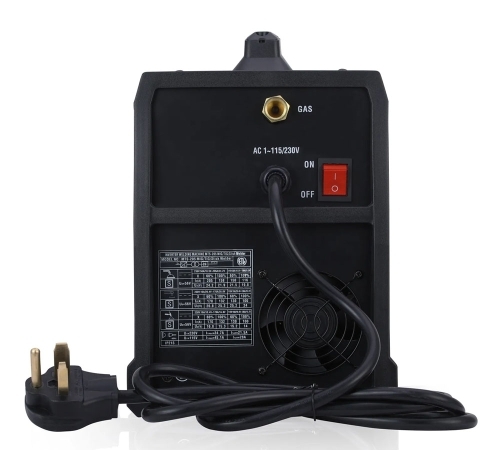
Proper selection of a welding machine that offers precise control over these parameters is also crucial in harnessing the full potential of high-quality fluxes.
Ensuring Quality and Consistency with Oldwelders' SAW Flux
For businesses that rely on consistent, high-quality welding, the choice of supplier and flux is paramount. Oldwelders stands as a trusted provider of industrial welding solutions, including a comprehensive range of welding materials. Our commitment to quality is underscored by our ISO 9001 certification, assuring our clients of products that meet rigorous international standards.
Our manufacturing facility, spanning 1000 square meters, is equipped with six production lines, enabling us to supply up to 100 tons of product per day. This significant capacity ensures that we can meet the demands of large-scale operations across various industries. From the initial selection of premium raw materials like dolomite, bauxite, cryolite, silica, and fluorine ore, to the precise melting process at 2000 °C, every step is controlled to produce welding fluxes that deliver exceptional arc stability and weld integrity.
We understand the critical importance of timely delivery and flexible ordering. With a minimum order quantity (MOQ) of just 1 ton and a typical lead time of 30 days, Oldwelders is equipped to support diverse project requirements efficiently. Our products, including various types of SAW flux like submerged arc welding flux hj431, are trusted by professionals in target markets such as Brazil, Thailand, Australia, and Malaysia, where demanding applications require uncompromising performance.
Maintaining Excellence in Submerged Arc Welding Processes
Achieving and sustaining arc stability in Submerged Arc Welding is a multifaceted challenge, but a profound understanding of SAW Flux properties and their interaction with welding parameters provides a clear path to success. By paying close attention to the chemical composition, physical attributes, and operational settings, welders and engineers can significantly enhance weld quality, reduce defects, and improve productivity.
The deliberate selection of high-quality flux from a reliable manufacturer is not merely a purchasing decision; it is a strategic investment in the integrity and efficiency of your welding operations. Oldwelders is dedicated to supplying superior welding fluxes and other essential products, including a wide array of welding machine options, that empower industries worldwide to achieve unparalleled welding performance. Our expertise and commitment ensure that you have the right materials to control arc stability, resulting in welds that meet the highest standards of strength, durability, and reliability.