
How SAW Flux Chemistry Affects Multi-Pass Welds
Understand how submerged arc flux chemistry impacts your multi-pass welds
For welding engineers and procedure developers, selecting the right consumables is a foundational step toward achieving sound, reliable welds. In Submerged Arc Welding (SAW), the choice of wire is critical, but the granular flux plays an equally important, and often more complex, metallurgical role. While many understand flux as a shielding agent, its true function extends deep into the chemistry of the weld pool. This becomes especially critical in heavy-section, multi-pass applications where the final weld metal is a cumulative result of repeated thermal cycles and chemical reactions.
An incorrect pairing of flux and wire that seems acceptable in a single-pass weld can lead to significant deviations in mechanical properties and chemical composition over multiple passes. Understanding this cumulative effect is the key to developing robust welding procedure specifications (WPS) that deliver consistent quality from the root to the cap. This guide explores the nuanced interaction between submerged arc flux and wire chemistry, providing the technical insight needed to make informed selections for demanding projects.
The Role of SAW Flux Beyond Simple Shielding
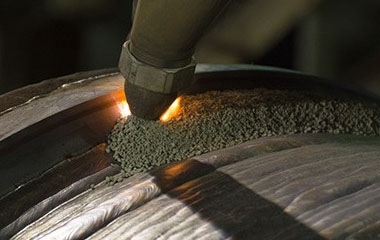
In the Submerged Arc Welding process, the flux is more than just a protective blanket. While its primary functions are indeed to shield the molten weld pool from atmospheric contamination (oxygen and nitrogen) and to stabilize the arc, it also acts as a powerful metallurgical reagent. As the flux melts under the intense heat of the arc, it forms a liquid slag that actively refines the weld metal.
This refining action involves several key processes:
- Deoxidation: The slag reacts with and removes oxygen from the molten metal, preventing porosity and improving the weld's mechanical properties.
- Alloying: Certain fluxes, known as "active" fluxes, are designed to intentionally add specific alloying elements like manganese (Mn) and silicon (Si) to the weld deposit. This compensates for elements lost during the welding process or enhances the final properties of the weld metal.
- Impurity Removal: The slag can absorb impurities such as sulfur (S) and phosphorus (P) from the weld pool, transferring them out of the finished weld where they could otherwise cause embrittlement or cracking.
- Weld Bead Shaping: The viscosity and surface tension of the molten slag influence the shape and appearance of the final weld bead, contributing to a smooth, uniform profile with easy slag removal.
Because the flux is an active participant in the weld's chemical makeup, its own composition is of paramount importance. At Oldwelders, we control this from the very beginning. Our flux production begins with carefully selected raw materials, including high-purity dolomite, bauxite, and silica, which are melted at 2000 °C to ensure homogeneity and remove volatile impurities. This meticulous process is the first step in guaranteeing predictable metallurgical performance.
Understanding Flux Basicity and Its Impact on Weld Chemistry
One of the most critical metrics for classifying a submerged arc flux is its Basicity Index (BI). The BI is a calculated ratio of basic oxides (like CaO, MgO, BaO, CaF2) to acidic oxides (like SiO2, TiO2) in the flux's formulation. This ratio determines the flux's metallurgical behavior and its effect on the final weld deposit.
Neutral Fluxes (BI approx. 0.9 - 1.2)
Neutral fluxes have a balanced composition and are designed to have minimal effect on the weld metal chemistry. They do not significantly add or remove silicon and manganese. This means the chemical composition of the final weld deposit is primarily determined by the welding wire and the amount of base metal dilution. They are preferred for multi-pass welding on thick sections, as they provide predictable chemistry from one pass to the next. However, their lower deoxidation capacity makes them more sensitive to rust, mill scale, or other contaminants on the base material.
Active Fluxes (BI < 0.9)
Active fluxes have a higher proportion of acidic oxides, particularly silicon dioxide. They are designed to intentionally transfer a controlled amount of silicon and manganese to the weld metal. This is useful for single-pass or two-pass welding on plate with light rust or scale, as the added Si and Mn act as powerful deoxidizers, preventing porosity. However, their use in multi-pass applications must be carefully evaluated. Because they add elements with each pass, there is a risk of element buildup, which can negatively affect the weld's mechanical properties.
Basic Fluxes (BI > 1.2)
Basic fluxes are rich in basic oxides and are excellent deoxidizers and cleaning agents. They produce weld metal with very low oxygen content, which results in superior impact toughness, especially at low temperatures. They are the standard choice for critical applications like pressure vessels, offshore structures, and high-strength steel fabrication. While they can transfer some alloys, their primary benefit is the exceptional purity and mechanical performance of the weld deposit they produce. Properly managing these fluxes is key when selecting from our comprehensive range of welding materials.
The Cumulative Effect: How Chemistry Shifts in Multi-Pass Welds
The central challenge in multi-pass welding is managing the cumulative change in weld metal chemistry. Each subsequent weld pass melts a portion of the previous pass along with new wire and flux. The chemical reactions that occur in a single pass are repeated, and the effects can compound.
Consider a scenario using an active submerged arc flux designed to increase manganese content.
- Pass 1 (Root): The flux adds a specific amount of Mn to the weld deposit, bringing it to the desired level for strength and deoxidation.
- Pass 2: This pass melts the new welding wire and a portion of the Mn-enriched first pass. The active flux again adds more Mn to this new, already-rich molten pool.
- Subsequent Passes: The process repeats. With each layer, the manganese concentration in the weld metal can "stack up," potentially rising beyond the acceptable limits specified by the welding code or material standard.
Excessive manganese can increase hardness and tensile strength but may reduce ductility and toughness, increasing the risk of cracking. Conversely, using a flux that does not adequately compensate for element burnout can lead to a progressive drop in alloy content, resulting in a weld that fails to meet required strength levels.
This is why neutral and basic fluxes are often specified for multi-pass welds on thick materials. Their minimal impact on the alloy content ensures that the chemistry of the weld deposit remains consistent and is primarily controlled by the filler wire, providing a much more predictable outcome from root to cap. The stability provided by a well-designed automatic welding machine further ensures that parameters like travel speed and heat input remain constant, contributing to this chemical consistency.
Strategies for Selecting the Right Flux-Wire Combination
Developing a successful welding procedure requires a holistic approach that considers the base material, joint design, service conditions, and the interaction between consumables.
1. Define Mechanical Property Requirements
Start with the end in mind. Are you welding standard carbon steel, or a high-strength, low-alloy (HSLA) steel? Is low-temperature impact toughness a critical requirement for the application? The answers will guide your flux choice. Basic fluxes are generally required for applications demanding high toughness. For general fabrication where toughness is less critical, a neutral or even a slightly active flux may be suitable and more economical.
2. Match Flux Type to the Application
For single or two-pass welds, an active flux can be beneficial, offering better tolerance for surface contaminants and providing a cost-effective way to achieve the desired weld metal chemistry. For multi-pass welds, especially on sections thicker than 25 mm (1 inch), a neutral or basic flux is almost always the safer and more reliable choice. This ensures chemical consistency and prevents the cumulative buildup of alloys like Si and Mn.
3. Verify with Consumable Data Sheets
Always consult the manufacturer's data sheets for both the flux and the wire. These documents provide crucial information on the expected chemical analysis and mechanical properties of the weld deposit for a given flux-wire combination. Pay close attention to the "typical" all-weld-metal chemistry and compare it to the requirements of your project specification. For specific applications requiring a robust wire, consider options like our high-quality solid wire selections.
4. Conduct Procedure Qualification Testing (PQR)
There is no substitute for physical testing. A PQR is essential to verify that your chosen flux-wire combination, along with your welding parameters, will produce a weld that meets all specified mechanical and chemical requirements. This is not just a box-ticking exercise; it is the ultimate proof that your theoretical selection works in practice. Testing a coupon that simulates the joint design and thickness of the production weld is the only way to be certain of the outcome.
Manufacturing Consistency for Predictable Performance
The success of any welding procedure relies on the consistency of the consumables. A flux that varies in composition from one batch to the next will produce unpredictable results, invalidating your PQR and putting weld quality at risk. This is why choosing a supplier with robust quality control systems is non-negotiable.
At Oldwelders, our entire manufacturing process is governed by our ISO 9001 certified quality management system. Our 1000-square-meter facility houses six dedicated production lines capable of supplying 100 tons of flux per day, ensuring we can meet the demands of large-scale projects for our partners in Brazil, Thailand, Australia, Malaysia, and around the world. Every batch of submerged arc flux undergoes rigorous testing to confirm its chemical composition, particle size distribution, and metallurgical performance. This commitment to quality ensures that the flux you receive today will perform identically to the flux you receive a year from now, providing the consistency and predictability your critical applications demand.