
How Does Pipeline Welding Prevent Field Joint Leaks?
How Professional Pipeline Welding Prevents Field Joint Leaks
In the high-stakes world of oil, gas, and water transportation, the integrity of a pipeline is paramount. A single leak in a field joint can lead to catastrophic environmental damage, significant financial loss, and severe safety hazards. The primary defense against such failures is the quality of the weld itself. Professional pipeline welding is a highly controlled engineering discipline that transforms two separate pipe sections into a single, continuous, and leak-proof conduit. This is achieved not by a single action, but through a multi-layered system of precise techniques, rigorous quality control, and superior material selection.
For project engineers and contractors, understanding the fundamentals of how welding practice translates directly to leak prevention is essential for risk management and operational success. It involves a holistic approach that begins long before the first arc is struck and continues well after the weld has cooled. This article explores the core principles, processes, and verification methods that ensure every welded joint meets the exacting standards required for long-term, reliable service in demanding environments.
The Fundamental Metallurgy of a Leak-Proof Weld
At its core, a weld is a metallurgical bond. The goal of pipeline welding is to create a joint that possesses mechanical properties and structural integrity equal to, or greater than, the parent pipe material. A leak-proof weld is not merely a seal; it is a complete, monolithic fusion of the materials.
This is achieved through several key principles:
- Complete Fusion and Penetration: The welding process must generate sufficient heat to melt the beveled edges of the pipe ends (the "land") and the filler material (from the welding rod or wire). This molten pool, or "weld puddle," must penetrate through the entire thickness of the pipe wall. Incomplete penetration creates a built-in crack, a natural stress point, and a potential leak path. The initial "root pass" is the most critical layer, as it forms the foundation of the weld on the pipe's interior.
- Homogeneous Microstructure: As the weld puddle cools and solidifies, it forms a new grain structure. A properly executed weld, using the correct parameters and consumables, will result in a strong, uniform microstructure free from impurities and voids. This ensures the joint can withstand the immense pressures, temperature fluctuations, and ground stresses it will experience during its service life.
- Elimination of Defects: Porosity (gas pockets), slag inclusions (trapped flux), cracks, and undercut (grooves melted into the base metal) are all potential leak paths. Each of these defects creates a discontinuity in the metal, weakening the joint and providing a channel for the pipeline's contents to escape. Proper technique and high-quality consumables are the first line of defense against these imperfections.
By controlling the heat input, travel speed, and shielding of the molten weld, a skilled welder creates a seamless transition between the two pipes, effectively eliminating the "joint" and making it an integral part of the pipeline itself.
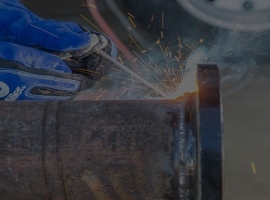
Common Welding Processes for Pipeline Construction
The choice of welding process depends on factors like pipe diameter, wall thickness, material grade, project location, and economic considerations. Several advanced methods are employed in modern pipeline welding, each with specific advantages for different stages of the joint completion.
Shielded Metal Arc Welding (SMAW)
Often called "stick welding," SMAW is the traditional workhorse of field pipeline construction. Its versatility, portability, and resilience in outdoor conditions make it invaluable, especially for root passes and repairs. The welder uses a consumable electrode coated in flux, which melts to shield the weld puddle from atmospheric contamination. The quality of the joint is highly dependent on operator skill, making welder qualification a critical control point. Using premium consumables like AWS E6013 welding electrodes is essential for achieving the required deposit quality.
Gas Metal Arc Welding (GMAW) & Flux-Cored Arc Welding (FCAW)
GMAW (MIG) and FCAW are semi-automatic processes that use a continuously fed wire electrode. They offer much higher deposition rates than SMAW, making them ideal for the "fill" and "cap" passes that build up the bulk of the weld after the root is complete. Automated and semi-automated GMAW systems, often called "bug-and-band" systems, are now common in large-scale projects, improving consistency and productivity. FCAW uses a tubular wire filled with flux, combining the high deposition rate of wire-fed processes with the robust shielding benefits of a flux, making it excellent for outdoor conditions.
Gas Tungsten Arc Welding (GTAW)
Also known as TIG welding, GTAW is a high-precision process that uses a non-consumable tungsten electrode and a separate filler rod. It produces exceptionally clean and high-quality welds, making it a preferred method for the critical root pass on high-pressure or specialty alloy pipelines. While slower than other processes, the superior control it offers is often necessary to ensure a perfect, defect-free root.
Submerged Arc Welding (SAW)
SAW is a high-productivity, automated process typically used in fabrication yards for "double-jointing," where two 40-foot pipe sections are welded together to create an 80-foot section before being transported to the field. In this process, the arc is "submerged" under a blanket of granular flux, which completely shields the weld and produces very smooth, high-quality results. The quality of the flux, such as a high-performance submerged arc welding flux HJ431, is critical for achieving the desired mechanical properties and preventing defects.
The Crucial Role of Quality Control and Procedure
A reliable weld is not an accident; it is the result of a strictly enforced quality control system. For project engineers, specifying and verifying these controls is the most effective way to prevent joint leaks. This system is built on several key pillars.
Welding Procedure Specification (WPS)
The WPS is the master recipe for every weld on the project. It is a formal, written document that details every essential variable, including the pipe material and grade, the welding process(es) to be used, the type of filler metal, preheat and interpass temperature requirements, travel speed, and electrical parameters (amperage and voltage). Each WPS must be qualified through rigorous testing to prove it can produce a weld that meets all project and code requirements before it is used in production.
Procedure Qualification Record (PQR)
The PQR is the documented evidence that the WPS works. It records the actual values used during the test weld and the results of all mechanical and non-destructive tests performed on the weld coupon. This data proves that following the specified procedure results in a sound, strong, and defect-free weld.
Welder Qualification Test (WQT)
Even with a perfect procedure, the final quality depends on the person or machine executing it. Every welder must pass a WQT to demonstrate their ability to follow the WPS and create a weld that meets the required quality standards. This qualification is specific to the process, position, and other variables, and records are maintained to ensure only qualified personnel are performing production welding.
High-Quality Consumables: The Foundation of Weld Integrity
The filler metals and fluxes used in pipeline welding are not just ancillary supplies; they are fundamental components of the finished joint. The chemical composition and manufacturing quality of these consumables directly impact the strength, ductility, and corrosion resistance of the weld. Sourcing these materials from a proven, certified supplier is a critical step in risk mitigation.
At Oldwelders, we understand that weld integrity begins with superior raw materials. As an ISO 9001 certified manufacturer, we operate a 1000-square-meter facility with a production capacity of 100 tons per day, enabling us to support major projects for clients in markets from Brazil to Australia. Our welding materials, particularly our welding fluxes, are produced from carefully selected ores like dolomite, bauxite, and cryolite. These premium raw materials are melted at 2000°C in a tightly controlled process, ensuring the final product provides optimal shielding, deoxidation, and slag detachability. This manufacturing discipline results in consumables that deliver:
- Consistent Chemical Composition: Ensures the deposited weld metal has the correct alloy content to match the parent pipe, preventing metallurgical issues.
- Low Hydrogen Content: Minimizes the risk of hydrogen-induced cracking, a common cause of delayed weld failure.
- Excellent Arc Stability: Allows the welder to maintain precise control over the weld puddle, reducing the likelihood of defects.
- Effective Shielding: Protects the molten metal from oxygen and nitrogen in the atmosphere, which can cause porosity and embrittlement.
Inferior consumables can introduce impurities and inconsistencies that compromise the weld, regardless of welder skill or procedure quality. Partnering with a manufacturer that demonstrates a commitment to quality through certification and process control is essential for any critical pipeline project.
Verification Through Non-Destructive Testing (NDT)
The final step in ensuring a leak-proof joint is verification. Since visually inspecting the outside of a weld reveals little about its internal integrity, a suite of Non-Destructive Testing (NDT) methods is used to "see" inside the weld and identify any hidden flaws.
Common NDT methods for pipeline welding include:
- Radiographic Testing (RT): Similar to a medical X-ray, RT uses X-rays or gamma rays to create an image of the weld's internal structure on film. It is highly effective at detecting volumetric flaws like porosity and slag inclusions.
- Ultrasonic Testing (UT): This method uses high-frequency sound waves that are transmitted into the weld. The reflections, or "echoes," from any internal discontinuities are displayed on a screen, allowing a trained technician to identify their size, shape, and location. Phased Array Ultrasonic Testing (PAUT) is an advanced form of UT that provides a more detailed, real-time image of the weld's cross-section.
- Magnetic Particle Testing (MT): Used for detecting surface and near-surface defects in ferromagnetic materials, MT involves magnetizing the part and applying fine iron particles. The particles will accumulate at any "flux leakage" field caused by a crack or other discontinuity, making it visible.
- Liquid Penetrant Testing (PT): This method is used to find surface-breaking defects. A colored or fluorescent liquid dye is applied to the surface and drawn into any cracks by capillary action. After the excess is removed, a developer is applied, which pulls the dye back out, revealing the flaw.
A comprehensive NDT program, typically requiring 100% inspection of every production weld, is the final gatekeeper that prevents a flawed joint from being put into service, providing the ultimate assurance against future leaks.