
How Calcination Ensures Sintered Flux Batch Consistency
How Calcination Control Ensures Consistent Sintered Flux Performance
For quality assurance managers and procurement specialists in heavy fabrication, the consistency of welding consumables is paramount. In Submerged Arc Welding (SAW), where the weld is formed under a blanket of granular material, the flux is not just a shield but an active metallurgical component. Variations between batches can lead to inconsistent weld chemistry, mechanical properties, and ultimately, costly defects. A high-quality Sintered Flux provides the foundation for repeatable, code-compliant welds, and the key to its consistency lies in a meticulously controlled manufacturing stage: calcination.
While many understand that sintering involves heat, few delve into the specific process controls that separate a premium flux from a standard one. This article moves beyond a surface-level definition to explore how rigorous control during calcination directly translates to the batch-to-batch reliability that industrial applications demand. Understanding these production checkpoints is crucial for technical due diligence when evaluating a new supplier.
Why Batch-to-Batch Consistency is Non-Negotiable in SAW
Submerged Arc Welding is the backbone of industries like shipbuilding, pressure vessel manufacturing, and large-scale structural steel fabrication. Its high deposition rates and deep penetration are essential for productivity. However, these benefits are entirely dependent on the stable performance of the flux-wire combination.
The flux plays several critical roles:
- Arc Stabilization: It contains arc stabilizers that ensure a smooth, consistent electrical arc, which is essential for uniform bead shape and penetration.
- Slag Formation: It melts to form a protective slag layer that shields the molten weld pool from atmospheric contamination (oxygen and nitrogen), shapes the weld bead, and controls the cooling rate.
- Metallurgical Control: It can add or remove elements from the weld pool. Alloying elements can be transferred from the flux to the weld metal to achieve specific mechanical properties like toughness and tensile strength.
When there is inconsistency between flux batches, operators and automated systems face a host of problems. A change in basicity can alter the weld metal's oxygen content, affecting impact toughness. A shift in particle size distribution can change the bulk density, leading to uneven flux feeding and potential arc instability. These variations result in weld defects, increased rework, and unpredictable mechanical test results, jeopardizing project timelines and profitability. Therefore, ensuring your supplier has robust process controls is not just a quality preference; it is a fundamental business requirement.
The Sintering Process: From Raw Ore to Precision Granule
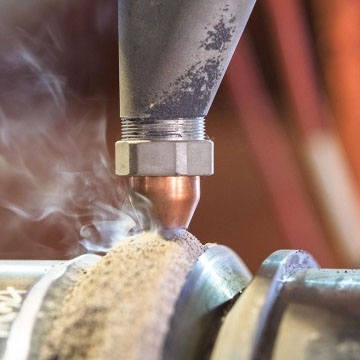
The creation of a high-performance agglomerated flux is a multi-stage process that transforms finely ground minerals into durable, chemically precise granules. Unlike fused fluxes, which are melted completely like glass, sintered types are created through a process of agglomeration and heat treatment at temperatures below the melting point of the primary constituents.
The journey begins with the careful selection and preparation of raw materials. As an ISO 9001 certified manufacturer, we understand that final quality starts at the source. Our process utilizes excellent ores such as dolomite, bauxite, cryolite, silica, and fluorine ore. These raw ingredients are individually crushed, dried, and ground into a fine powder. They are then precisely weighed and dry-mixed according to a specific formulation designed to achieve the desired basicity index, alloy transfer characteristics, and slag properties.
After mixing, a binding agent (typically a silicate solution) is added, and the mixture is pelletized or granulated to form small, damp spheres. These "green" granules are then dried to remove excess moisture before heading to the most critical stage: calcination in a rotary kiln. This is the heat treatment process that solidifies the granules, activates the chemical components, and locks in the properties that define the flux's performance. While our plant is capable of melting raw materials at 2000 °C for other processes, the calcination for a Sintered Flux is a more nuanced, lower-temperature process requiring extreme precision.
Mastering Calcination: The Key to Repeatable Flux Quality
Calcination is where a simple mixture of powders becomes a sophisticated welding consumable. This is the step that production-focused suppliers with robust quality management systems, like Oldwelders, excel at. It is not simply about heating the material; it is about executing a precise thermal and chemical profile. The three pillars of calcination control are temperature, atmosphere, and time.
Precise Temperature Profiling
The granules travel through a long, rotating kiln with multiple temperature zones. A carefully programmed temperature profile is essential for consistent results.
- Initial Heating Zone: The temperature is gradually increased to drive off any remaining free and chemically bound water from the binder without causing the granules to fracture from rapid steam generation.
- Reaction Zone: This is the highest temperature zone, where calcination occurs. Here, carbonates decompose, and solid-state chemical reactions begin between the mineral components. The temperature must be high enough to ensure these reactions complete but low enough to prevent an outright fusion of the particles. Inconsistent temperatures can lead to incomplete reactions, resulting in a flux that behaves unpredictably in the arc.
- Cooling Zone: A controlled cooling rate is necessary to ensure the granules have the required mechanical strength and are not thermally shocked, which can lead to excessive dust and fines.
Controlled Kiln Atmosphere
The chemical environment inside the kiln is just as important as the temperature. The atmosphere can be oxidizing, neutral, or reducing, and this affects the final state of the metallic oxides in the flux. For example, controlling the oxygen potential is critical for fluxes containing manganese and silicon oxides, as it dictates their activity and subsequent transfer into the weld metal. A failure to control the kiln atmosphere can lead to significant variations in the flux's Basicity Index (BI) and its alloying potential, directly impacting the final weld's mechanical properties.
Optimized Residence Time
The amount of time the granules spend in the kiln, known as residence time, is determined by the kiln's length, angle of inclination, and rotation speed. This variable must be precisely controlled to ensure that every granule is exposed to the correct temperature profile for the required duration. Too short a time results in an under-processed flux with poor strength and unreacted components. Too long a time can lead to overheating or unwanted phase changes. Our six production lines, capable of supplying 100 tons a day, are calibrated to ensure this residence time is identical across all batches, a key factor in supplying consistent welding materials to our global clients in markets like Brazil, Thailand, and Australia.
Tangible Outcomes of a Controlled Sintering Process
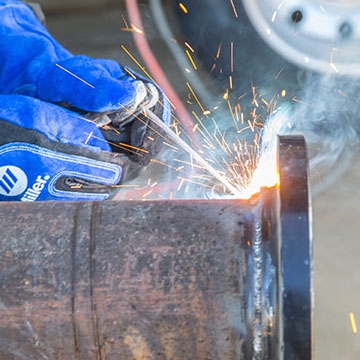
When calcination is mastered, the resulting Sintered Flux exhibits superior characteristics that translate directly to welding performance. QA managers can often identify a well-produced flux by observing these properties.
Chemical Homogeneity and Stable Basicity
Proper calcination ensures that the chemical reactions within each granule are complete and uniform. This creates a homogenous material where every particle has the same chemical composition. This is crucial for maintaining a stable basicity index, which in turn controls the weld metal's oxygen content, deoxidation practice, and ultimately its toughness and resistance to cracking. With a consistent flux like our submerged arc welding flux hj431, engineers can be confident in achieving the specified mechanical properties weld after weld.
Optimal Granule Strength and Low Dusting
The sintering reactions bind the fine mineral powders into a strong, ceramic-like structure. A well-calcined granule is tough enough to withstand handling and transport in automated flux delivery systems without breaking down. This minimizes the generation of "fines" or dust. Excessive dust can clog flux handling systems and, more critically, alter the arc characteristics, leading to porosity and an unstable weld.
Controlled Moisture Content
One of the primary goals of calcination is to drive off moisture. A properly processed flux has very low moisture content. This is critical because hydrogen, sourced from moisture, is the leading cause of hydrogen-induced cracking (HIC) or cold cracking in steel welds. A supplier with a tightly controlled process guarantees a flux that arrives dry and ready to use, minimizing the risk of this catastrophic weld defect. This is a fundamental aspect of producing reliable consumables, from flux to a high-quality arc welding machine.
Evaluating Supplier Capabilities for Sintered Flux Production
For buyers and QA professionals, evaluating a supplier’s ability to deliver consistent Sintered Flux comes down to verifying their process controls. When vetting a potential manufacturing partner, consider asking about their quality management system, production capacity, and batch testing procedures.
Look for certifications like ISO 9001, which provide third-party validation of a company's commitment to quality control and process documentation. Inquire about their batch-testing protocols. Do they perform X-ray fluorescence (XRF) analysis on every batch to verify chemical composition? Do they conduct sieve analysis to ensure particle size distribution is within specification? A transparent supplier will readily provide this data.
Furthermore, a manufacturer's scale can be an indicator of process maturity. Our plant, with its 1000-square-meter footprint and a daily production capacity of 100 tons, has the infrastructure and established procedures to ensure that the first and last ton of a production run are identical. With a minimum order quantity of 1 ton and a lead time of 30 days, we provide a reliable supply chain for large-scale projects in demanding markets from Malaysia to Brazil.
Ultimately, the performance of a Sintered Flux in your workshop is a direct reflection of the control exerted in the manufacturer's kiln. By understanding the critical role of calcination, you can make more informed purchasing decisions, mitigate production risks, and ensure the integrity and quality of your most critical welds.