
Hardfacing Electrodes: Calculate Cost per Wear Hour
How to Accurately Calculate the Cost per Wear Hour for a Hardfacing Electrode
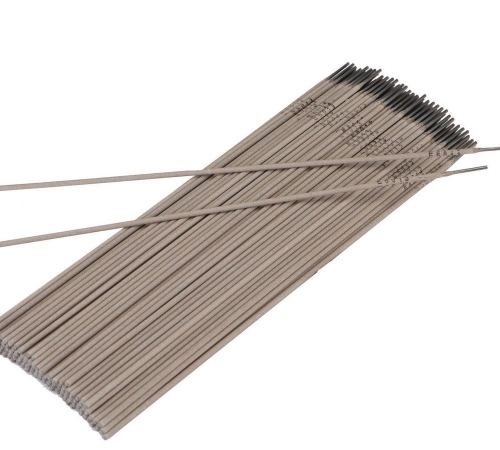
For procurement managers and maintenance supervisors, the initial purchase price of welding consumables can be misleading. A lower cost per kilogram for a hardfacing electrode often seems like a straightforward win for the budget. However, this narrow view overlooks the most critical metric: the total cost of ownership (TCO). The true measure of value isn't what you pay for the electrode, but how much it costs to protect your equipment per hour of operation. Calculating the cost per wear hour provides a data-driven framework for making sourcing decisions that genuinely impact the bottom line, reduce downtime, and extend the service life of critical assets.
Focusing on this key performance indicator (KPI) shifts the conversation from a simple commodity purchase to a strategic investment in operational efficiency. An electrode that costs more upfront but provides a significantly longer service life or requires less labor to apply will almost always result in a lower total cost. This guide will walk you through the components of this crucial calculation, provide a step-by-step example, and explore the factors that influence the final outcome, enabling you to build a powerful business case for your next procurement decision.
Understanding the Core Components of Wear Cost Calculation
To accurately assess the economic value of a hardfacing solution, you must look beyond the invoice price of the consumables. The total cost is a sum of direct and indirect expenses associated with the entire repair and operation cycle. Breaking these down reveals the true financial impact of your choice of hardfacing electrode.
1. Consumable Costs
This is the most obvious component, but it requires a nuanced approach. It’s not just the price per kilogram or pound.
- Price per Unit: The initial cost of the electrode.
- Deposition Efficiency: This is a critical factor often overlooked. It represents the percentage of the electrode that becomes part of the final weld deposit, as opposed to being lost as slag, spatter, or stub loss. An electrode with 80% deposition efficiency is far more valuable than one with 60%, as you purchase less to achieve the same weld volume.
- Deposition Rate: Measured in kilograms or pounds per hour, this indicates how quickly the welder can lay down the protective material. A higher deposition rate translates directly into lower labor costs for the same repair job.
2. Labor Costs
Labor is frequently the most significant expense in any welding operation. A superior consumable can drastically reduce these costs.
- Welder's Hourly Rate: The fully-burdened cost of the welder, including salary, benefits, and other overheads.
- Arc-On Time: The actual time the welder spends depositing the hardfacing material. This is directly influenced by the electrode's deposition rate.
- Ancillary Time: This includes setup, pre-heating, interpass temperature control, post-weld heat treatment, and, importantly, deslagging and cleaning. An electrode with a self-releasing slag can save considerable time and effort compared to one that requires extensive chipping and grinding between passes.
3. Overhead and Associated Costs
These are the operational costs associated with performing the welding job.
- Energy Consumption: The electricity required to power the welding machine. While often a smaller part of the total, it contributes to the overall cost.
- Shielding Gas: If the process requires it, the cost of gas can be a significant factor.
- Downtime Costs: This is arguably the most critical and most expensive component. What is the cost to the business for every hour the piece of equipment is out of service for repair? A hardfacing deposit that lasts twice as long cuts the frequency of downtime in half, leading to massive gains in productivity and revenue.
A Practical Guide: Calculating Cost per Wear Hour
Let's illustrate this with a hypothetical example. Imagine we are rebuilding the cutting edge of an excavator bucket and are comparing two different hardfacing electrodes: Electrode A (standard, lower price) and Electrode B (premium, higher price).
Step 1: Gather Your Data
First, we need to establish the variables for our calculation. You can create a simple table to compare the options.
Job Requirement: Deposit 10 kg of weld metal.
| Variable | Electrode A (Standard) | Electrode B (Premium) | Notes | | :--- | :--- | :--- | :--- | | Cost per kg | $8.00 | $12.00 | Initial purchase price. | | Deposition Efficiency | 65% | 80% | Percentage of electrode that becomes weld metal. | | Deposition Rate | 2.0 kg/hr | 2.5 kg/hr | How fast the weld metal is applied. | | Welder's Rate | $50/hr | $50/hr | Fully-burdened labor cost. | | Overhead Rate | $20/hr | $20/hr | Energy, equipment, shop space. | | Expected Service Life | 400 hours | 900 hours | Hours of operation before next repair. |Step 2: Calculate the Total Job Cost
Now, we calculate the total cost to complete the 10 kg deposit for each electrode.
Electrode A (Standard)
- Electrode Needed: 10 kg / 0.65 (efficiency) = 15.38 kg
- Total Consumable Cost: 15.38 kg * $8.00/kg = $123.04
- Arc-On Time: 10 kg / 2.0 kg/hr = 5.0 hours
- Total Labor Cost: 5.0 hours * $50/hr = $250.00
- Total Overhead Cost: 5.0 hours * $20/hr = $100.00
- Total Job Cost (Electrode A): $123.04 + $250.00 + $100.00 = $473.04
Electrode B (Premium)
- Electrode Needed: 10 kg / 0.80 (efficiency) = 12.5 kg
- Total Consumable Cost: 12.5 kg * $12.00/kg = $150.00
- Arc-On Time: 10 kg / 2.5 kg/hr = 4.0 hours
- Total Labor Cost: 4.0 hours * $50/hr = $200.00
- Total Overhead Cost: 4.0 hours * $20/hr = $80.00
- Total Job Cost (Electrode B): $150.00 + $200.00 + $80.00 = $430.00
Immediately, we see that despite being 50% more expensive per kilogram, the premium hardfacing electrode results in a lower total job cost due to higher efficiency and a faster deposition rate, saving an hour of labor and overhead.
Step 3: Calculate the Cost per Wear Hour
This is the final and most revealing step. We divide the total job cost by the expected service life of the repair.
- Cost per Wear Hour (Electrode A): $473.04 / 400 hours = $1.18 per hour
- Cost per Wear Hour (Electrode B): $430.00 / 900 hours = $0.48 per hour
The result is undeniable. The premium electrode, which initially looked more expensive, delivers a wear protection cost that is less than half that of the standard option. For a procurement manager, this data provides a compelling justification for choosing the higher-quality product, demonstrating a direct and significant contribution to reducing long-term operational costs.
Key Factors that Influence Hardfacing Performance
The service life of a hardfaced component isn't determined by the consumable alone. It's an interplay of the material, the application process, and the operating environment. Optimizing these factors is key to maximizing your return on investment.
Alloy Composition and Wear Mechanisms
The "best" hardfacing electrode is the one correctly matched to the specific wear mechanism it will face.
- Abrasion: Caused by sand, dirt, or other hard particles sliding across a surface. Chromium carbide and tungsten carbide alloys are excellent for resisting abrasion.
- Impact: Caused by direct, forceful blows. Austenitic manganese steel and certain martensitic alloys provide toughness to resist cracking and spalling under impact.
- Corrosion: Chemical degradation of the surface. Nickel-based or cobalt-based alloys are often required for these environments.
- Heat: High temperatures can soften the surface, accelerating wear. Cobalt and nickel-based alloys typically retain their hardness at elevated temperatures.
Welding Parameters and Procedure
The skill of the operator and the quality of the procedure are paramount. Using the correct parameters for your chosen arc welding machine ensures the deposit has the intended properties.
- Dilution: This is the mixing of the base metal with the deposited weld metal. Excessive dilution can compromise the hardness and wear resistance of the final surface. Controlling amperage, travel speed, and electrode angle is crucial to minimize dilution.
- Pre-heat and Post-heat: For many high-carbon or alloy steel base metals, proper thermal management is essential to prevent cracking in the heat-affected zone (HAZ).
- Number of Layers: Typically, the first layer of hardfacing will have higher dilution and may not achieve full hardness. Two to three layers are often recommended for optimal wear resistance.
Partnering with a Supplier Focused on Total Value
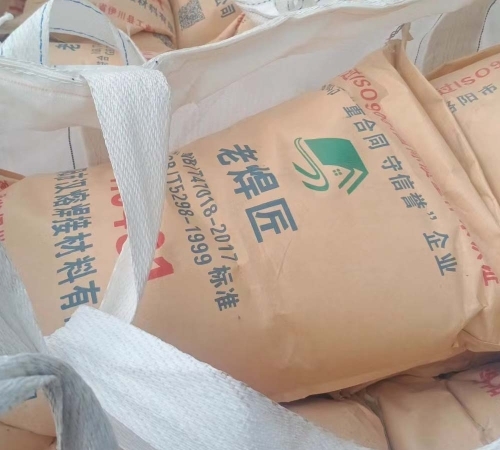
Achieving the lowest cost per wear hour requires more than just a good calculation; it requires a consistent, high-quality product from a reliable supplier. At Oldwelders, we engineer our welding materials for maximum performance and economic value, not just a low initial price.
Our commitment to quality is validated by our ISO 9001 certification, ensuring that every batch of electrodes meets stringent specifications. This consistency is vital for your calculations—you can trust that the performance you measure today will be the performance you receive in your next order. Our state-of-the-art facility, spanning 1000 square meters with six production lines, has the capacity to supply 100 tons a day. This robust production capability ensures a stable supply chain for our partners in demanding industrial markets across Brazil, Thailand, Australia, and Malaysia.
The foundation of our product performance lies in our raw materials. We use excellent dolomite, bauxite, cryolite, and other carefully selected ores, which are melted at 2000 °C to create superior welding fluxes and electrode coatings. This meticulous process results in consumables that offer higher deposition efficiencies and rates, contributing directly to lower labor costs and a better overall value proposition. With a standard lead time of 30 days and a minimum order quantity of 1 ton, we provide the predictability and scale required for large-scale maintenance planning.
By shifting your focus from the cost per kilogram to the cost per wear hour, you transform your procurement process from a cost center into a strategic driver of operational efficiency and profitability. Contact us today to discuss your specific wear challenges and let us help you find the optimal hardfacing electrode solution that delivers the lowest total cost of ownership for your critical equipment.