
Estimate Flux Hopper Downtime Costs Before Buying
Estimating Flux Hopper Downtime Costs Before Your Purchase
For industrial welding operations, particularly those relying on high-deposition submerged arc welding (SAW), the efficiency and reliability of every component are paramount. While the initial purchase price of a welding machine or its accessories might seem significant, focusing solely on this figure can obscure the true long-term cost of ownership. A critical component often overlooked in this calculation is the flux delivery system, specifically the flux hopper. An inefficient or unreliable flux hopper can lead to substantial downtime, impacting productivity, increasing operational costs, and compromising weld quality. Before making a purchasing decision, it is crucial for production buyers to estimate potential flux hopper downtime costs to gain a comprehensive understanding of their investment.
Oldwelders understands that every minute of downtime translates directly into lost revenue and increased expenses. Our commitment to providing robust and reliable welding solutions, from welding materials to advanced machinery, is underpinned by our ISO 9001 certification. We aim to equip businesses in target markets like Brazil, Thailand, Australia, and Malaysia with the knowledge and equipment necessary for uninterrupted, high-quality production.
The Hidden Financial Impact of Inefficient Flux Delivery
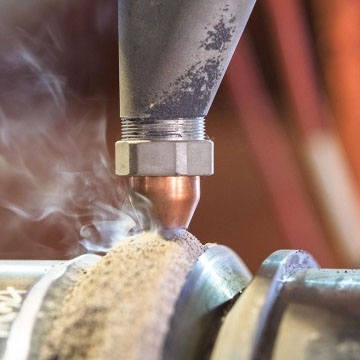
The role of a flux hopper in submerged arc welding is straightforward: to consistently deliver granular flux to the weld pool. However, the consequences of inconsistent delivery are far-reaching. When a flux hopper malfunctions, jams, or requires frequent manual intervention, the entire welding process grinds to a halt. This immediate stoppage is just the tip of the iceberg. The hidden costs associated with inefficient flux delivery stem from several factors, each contributing to a higher total cost of ownership (TCO) than initially anticipated.
Understanding Different Types of Downtime
- Unplanned Downtime: This refers to unexpected stoppages due to equipment malfunction, such as motor failure, clogged delivery lines, or sensor errors within the flux hopper. Unplanned downtime is particularly costly because it disrupts production schedules, often requires emergency maintenance, and can lead to missed deadlines.
- Planned Downtime: While necessary for maintenance, cleaning, and refilling, excessive planned downtime for a flux hopper can also be detrimental. If a hopper design makes cleaning difficult or refilling cumbersome, the cumulative time spent on these tasks can significantly reduce overall operational hours.
- Quality-Related Downtime: Inconsistent flux delivery can lead to defective welds, requiring rework or even scrapping entire components. This not only consumes additional labor and materials but also extends production cycles, effectively acting as another form of downtime.
The impact of these downtimes extends beyond the immediate stoppage. It affects labor utilization, material consumption, energy costs, and ultimately, your bottom line. Recognizing these costs is the first step towards making an informed investment in a reliable flux delivery system.
Quantifying the True Total Cost of Ownership for Your Operations
To accurately assess the value of a flux hopper, you must look beyond its sticker price and calculate its potential total cost of ownership. This involves quantifying the various expenses incurred due to operational inefficiencies and downtime. Consider the following cost categories:
Labor Costs During Stoppages
When a welding line stops due to a flux hopper issue, the operators, supervisors, and any maintenance personnel assigned to that line are still on the clock. Their wages, including benefits, continue to accumulate even though no productive work is being done. To calculate this, determine the average hourly cost of all personnel directly affected by the stoppage and multiply it by the estimated downtime hours per year. For example, if a line with three operators and one supervisor experiences 10 hours of flux hopper-related downtime per month, and their combined hourly cost is $150, that’s an additional $1,500 per month, or $18,000 per year, in non-productive labor costs.
Lost Production Revenue
Perhaps the most significant cost is the revenue lost from products not produced. Each hour of downtime means a certain number of parts or linear feet of weld are not completed, delaying delivery and impacting sales. To calculate this, determine the average revenue generated per hour of operation for the affected welding line. Multiply this by the estimated downtime hours. If your line generates $500 per hour in revenue and experiences 100 hours of downtime annually due to flux hopper issues, you are looking at $50,000 in lost revenue. This figure can quickly escalate for high-volume production facilities.
Material Waste and Rework
Inconsistent flux application often results in weld defects such as porosity, slag inclusions, or insufficient penetration. These defects necessitate costly rework or, in severe cases, the scrapping of entire workpieces. This means not only the cost of the raw material itself but also the cost of the flux, solid wire or flux-cored wire, and the labor expended on the initial, failed weld. Additionally, the time spent on rework further reduces overall productivity. Quantify the average cost of materials wasted and the labor hours dedicated to rework due to flux delivery issues annually.
Energy Waste
During downtime, welding power sources, ventilation systems, and other auxiliary equipment may still consume electricity, albeit at a reduced rate. While not producing, these machines are still drawing power, leading to wasted energy costs. Although often smaller than labor or lost revenue, these cumulative costs add up over time, especially in facilities with multiple welding stations.
Consumable Wear and Tear
Frequent start-stops or uneven operation caused by flux delivery problems can put undue stress on other welding consumables and components, such as contact tips, nozzles, and even the electrode itself. This can lead to premature wear and tear, increasing replacement frequency and maintenance expenses for related equipment.
Expedited Shipping and Logistics
If prolonged downtime delays critical orders, companies may incur additional expenses for expedited shipping to meet customer deadlines. These costs, though indirect, are a direct consequence of production interruptions caused by unreliable equipment.
By systematically identifying and quantifying these cost factors, businesses can develop a realistic TCO for their flux hopper systems. This comprehensive evaluation allows for a more informed comparison between different models and suppliers, revealing that a higher initial investment in a robust, reliable system can lead to significant long-term savings.
Essential Features for a High-Performance Flux System
Investing in a high-quality flux hopper is a strategic decision that directly impacts your welding operation's profitability. To minimize downtime and ensure consistent performance, consider the following features when evaluating potential systems:
- Consistent Flux Delivery: The primary function of any flux hopper is reliable and consistent flux flow. Look for designs that prevent bridging, clogging, and segregation of flux particles. Advanced vibratory feeders or agitation mechanisms can help maintain flow consistency, especially with different flux types, such as our submerged arc welding flux HJ431.
- Durable Construction: Industrial environments are demanding. A flux hopper should be built from robust materials capable of withstanding heavy use, temperature fluctuations, and potential impacts. This reduces the likelihood of structural damage and extends the equipment's lifespan.
- Ease of Maintenance and Cleaning: A well-designed flux hopper should allow for quick and easy access for routine cleaning and maintenance tasks. Features like quick-release components, accessible inspection ports, and modular designs can significantly reduce planned downtime.
- Appropriate Capacity: Match the hopper's capacity to your production volume. An undersized hopper will require frequent refilling, increasing planned downtime, while an oversized one might be unnecessarily expensive or occupy too much space.
- Integration Capabilities: For automatic welding machine setups, seamless integration with the overall control system is crucial. Look for hoppers with compatible electrical interfaces and communication protocols for automated start/stop and fault reporting.
- Moisture Protection: Flux is hygroscopic and can absorb moisture, leading to welding defects. Features like sealed designs, heating elements, or dehumidifiers are vital for maintaining flux quality, especially in humid environments.
Oldwelders prioritizes these design principles in our welding equipment and welding fluxes. Our ISO 9001 certification underscores our commitment to manufacturing excellence, ensuring that every product contributes to your operational efficiency and weld quality. We understand that a reliable flux delivery system is integral to achieving consistent, high-quality results in applications ranging from general fabrication to specialized industrial projects.
Oldwelders' Commitment to Uninterrupted Welding Productivity
At Oldwelders, we recognize that the selection of a flux hopper, like any critical piece of welding equipment, is an investment in your productivity and product quality. Our approach is rooted in providing solutions that not only meet but exceed the rigorous demands of modern industrial welding. We are proud of our comprehensive capabilities and our dedication to supporting our clients globally.
Our state-of-the-art manufacturing facility exemplifies our commitment to quality and efficiency. The plant covers an area of 1000 square meters and houses six production lines, enabling us to supply up to 100 tons of product a day. This extensive capacity ensures that we can meet the demands of large-scale industrial operations, minimizing lead times and ensuring consistent product availability for our clients across Brazil, Thailand, Australia, and Malaysia.
The quality of our products begins with the raw materials. For our welding fluxes, we exclusively use excellent dolomite, bauxite, cryolite, silica, fluorine ore, and other high-grade ores. These materials are meticulously melted at 2000 °C to create flux products that deliver superior performance and reliability. This attention to detail in our flux manufacturing extends to all our offerings, including arc welding machine and specialized special welding machine, ensuring that every component contributes to a robust and efficient welding process.
Choosing Oldwelders means partnering with a company that understands the intricacies of welding operations and the importance of minimizing downtime. Our ISO 9001 certification is not just a badge; it is a testament to our rigorous quality management systems that permeate every stage of design, production, and customer support. We are dedicated to delivering products, including reliable flux handling systems, that enhance your operational efficiency, reduce your total cost of ownership, and ultimately contribute to your success.
By investing in Oldwelders' quality welding solutions, you are choosing equipment designed for longevity, consistent performance, and minimal interruptions, allowing you to focus on achieving your production goals with confidence.
Conclusion
When procuring a flux hopper for your submerged arc welding operations, a superficial comparison of purchase prices is insufficient. A thorough understanding of the potential downtime costs – including labor, lost production, material waste, and maintenance – is essential for making a truly economical decision. By calculating the total cost of ownership, businesses can identify the most cost-effective solution in the long run, even if it entails a higher initial investment.
Oldwelders is dedicated to providing high-quality, reliable welding equipment and consumables that are designed to maximize your uptime and productivity. With our robust manufacturing capabilities, stringent quality controls, and commitment to using premium raw materials, we offer solutions that reduce the hidden costs of inefficient operations. Partner with Oldwelders to ensure your welding processes are consistently efficient, productive, and profitable, supported by equipment that stands the test of time.