
Essential Certificates for Stainless Steel Rod Buyers
What Documentation Should Accompany Your Stainless Steel Rod Order
For industrial buyers and quality managers, procuring a high-quality stainless steel rod is about more than just dimensions and grade. It involves rigorous verification to ensure every component meets stringent performance and safety standards. Without the correct documentation, even materials that appear correct can introduce significant risk into a project, leading to premature failure, regulatory non-compliance, and costly rework. True quality assurance lies in traceability, and that traceability is established through a clear, verifiable paper trail. This guide details the essential certificates and verification processes that every buyer must have in place to guarantee the integrity of their supply chain.
Understanding these documents is not just a formality; it is a critical step in risk management. Whether the end-use is in construction, chemical processing, or manufacturing, the performance of the final product depends on the certified properties of its constituent parts. We will explore the non-negotiable certificates, explain how to interpret them, and discuss when to implement advanced verification methods to protect your operations and investment.
The Foundation of Quality: The Mill Test Certificate (MTC)
The single most important document accompanying any shipment of industrial metals is the Mill Test Certificate (MTC), also known as a Certified Mill Test Report (CMTR) or mill cert. This document is the material's birth certificate, issued by the original manufacturer, and it provides a detailed summary of its physical and chemical properties. It is the primary guarantee that the material you received is exactly what you ordered.
A reliable supplier, particularly one operating under a quality management system like ISO 9001, will have robust procedures for providing accurate and traceable MTCs for every batch they ship. Insisting on a clear and complete MTC is the first line of defense against material non-conformance.
Key Information on an MTC
- Heat Number: This is a unique alphanumeric code assigned to a specific batch of molten metal from which the rods were produced. It is the cornerstone of traceability, linking the final product directly back to its manufacturing origin. Every subsequent test and certificate should reference this number.
- Chemical Composition: The MTC will list the precise percentage of key alloying elements. For a stainless steel rod, this includes chromium (for corrosion resistance), nickel (for toughness and ductility), molybdenum (for resistance to pitting and crevice corrosion), carbon, manganese, silicon, and others. The report will show the exact measured percentages, which you must compare against the acceptable ranges defined by the specified grade (e.g., 304, 316L).
- Mechanical Properties: This section provides data from destructive testing performed on samples from the same heat number. It confirms the material's performance under stress and typically includes:
- Tensile Strength: The maximum stress the material can withstand before breaking.
- Yield Strength: The stress at which the material begins to deform permanently.
- Elongation: A measure of the material's ductility, or its ability to stretch before fracturing.
- Applicable Specifications: The certificate must explicitly state the standards and specifications the material has been tested to and conforms with, such as ASTM (e.g., A276, A479) or EN (e.g., 10088-3). This confirms its suitability for specific regulatory or engineering environments.
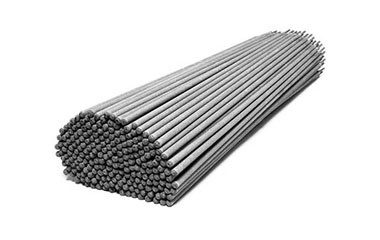
Ensuring Traceability: The Importance of Heat Number Verification
The heat number listed on the MTC is useless if it cannot be tied to the physical product in your facility. Lot traceability is a system that allows you to track a group of parts through every stage of production, processing, and delivery using this unique identifier. For critical applications, this is non-negotiable.
Imagine a scenario where a weld fails in a high-pressure pipeline. Without heat number traceability, it would be impossible to determine if the failure was due to a faulty welding process or a bad batch of material. You would be unable to quarantine other potentially faulty components from the same batch, leading to widespread and expensive uncertainty. With proper traceability, you can immediately isolate all materials from the specific heat number, investigate the MTC for anomalies, and take targeted corrective action.
How to Verify Traceability
- Purchase Order Specification: Your PO should explicitly state that each item must be traceable to a unique heat number and be accompanied by a corresponding MTC.
- Physical Inspection: Upon receipt, your quality control team must physically check the products. The heat number should be clearly marked on the rod, its tag, or its bundle packaging.
- Cross-Reference: The number marked on the product must match the heat number listed on the MTC provided with the shipment. Any discrepancy is a major red flag and should result in the rejection of the material until the supplier can resolve the inconsistency.
This simple cross-referencing process is a powerful tool for preventing material fraud and ensuring you are using materials that meet your engineering specifications. It is a fundamental practice for any company serious about quality control.
Advanced Verification Methods: When to Request PMI Testing
While an MTC is the supplier's declaration of quality, there are situations where independent verification is prudent. Positive Material Identification (PMI) is a non-destructive testing (NDT) method used to verify the chemical composition of a material. It provides an on-the-spot analysis of the alloy grade and the percentages of its constituent elements.
The most common method for PMI is X-Ray Fluorescence (XRF). A handheld XRF analyzer is pointed at the material, and it bombards the surface with X-rays. The atoms in the material emit secondary, "fluorescent" X-rays, with each element emitting at a unique energy level. The analyzer detects these energies to rapidly determine the alloy's composition.
When is PMI Necessary?
- Critical Applications: For components used in aerospace, petrochemical plants, pharmaceutical equipment, or nuclear facilities, PMI is often a mandatory requirement. Material failure in these contexts can be catastrophic.
- New Supplier Qualification: When working with a new or unproven supplier, conducting random PMI tests on the first few shipments is a wise due diligence step to verify their MTCs are accurate. * Receiving Inspection: Many companies incorporate random PMI testing into their standard receiving inspection process as an ongoing quality audit. This helps catch any accidental material mix-ups before they enter the production line.
- Verifying Existing Stock: If material traceability has been lost for stock in your warehouse, PMI is the only reliable way to re-identify it before use.
Requesting a PMI report, either from the supplier (performed by a third party) or by conducting it yourself, provides the ultimate assurance that the chemical composition of the stainless steel rod matches the MTC and your purchase order specifications.
Navigating International Standards and Supplier Qualifications
The global supply chain for industrial materials is complex. A rod produced in one country may need to meet the standards of another. Therefore, it is essential to specify the exact international standard required in your purchasing documents. Common standards for stainless steel products include ASTM (American Society for Testing and Materials), EN (European Norm), and JIS (Japanese Industrial Standards). A material certified to one standard is not automatically compliant with another, even if the grades seem similar.
Beyond certificates, evaluating a supplier's overall capability is crucial for long-term partnership. A supplier's infrastructure and production capacity are strong indicators of their ability to deliver consistent quality at scale. For example, a facility covering 1000 square meters with six production lines and a capacity of 100 tons per day demonstrates an ability to handle large, demanding orders for global clients in markets such as Brazil, Thailand, and Malaysia. This level of operational maturity often correlates with robust quality control systems necessary for producing reliable welding materials and consumables.
Other documents that may be relevant, depending on your industry and import requirements, include:
- Certificate of Conformance (CoC): A simpler document where the supplier certifies that the product meets the requirements of the purchase order. It is less detailed than an MTC.
- ISO 9001 Certificate: Confirms the supplier operates under an internationally recognized quality management system.
- Certificate of Origin: Required for international trade to verify the country where the goods were manufactured.
When selecting consumables for welding these materials, similar diligence is required. The choice of electrode or wire must be compatible with the base metal, and these products should also come with their own certificates of conformance to ensure weld integrity. For specialized applications, you may also need to source specific welding fluxes designed to protect the weld pool and ensure a clean, strong bond.
A Buyer's Final Checklist for Quality Assurance
To ensure every purchase of a stainless steel rod meets your quality standards, integrate the following steps into your procurement and receiving processes:
- Specify Standards on the PO: Clearly state the required material grade and the specific standard it must conform to (e.g., ASTM A276 Type 316L).
- Mandate Mill Test Certificates: Your terms should require an MTC for each heat number in the shipment.
- Verify Heat Numbers: Upon receipt, physically inspect the material and ensure the heat numbers on the product match the MTC.
- Audit the MTC Data: Review the chemical and mechanical properties on the certificate to confirm they fall within the acceptable range for the specified standard.
- Consider Strategic PMI Testing: For critical parts or new suppliers, schedule PMI testing as an independent verification step.
- Confirm Supplier Certification: Ensure your supplier holds relevant quality certifications, like ISO 9001, as evidence of a mature quality management system.
- Define Packaging and Labeling: Specify how materials should be packaged and labeled to maintain traceability and prevent damage during transit.
By implementing this structured approach, you move from simply buying a commodity to strategically sourcing a critical engineered component. This diligence protects your projects, your reputation, and your bottom line. A trustworthy supplier will not only provide this documentation willingly but will also have the systems in place to ensure its accuracy and consistency, order after order.