
Electroslag Welder: Joining Thick Steel with ESW
How an Electroslag Welder Joins Thick Steel Sections with Precision and Efficiency
For industries requiring the joining of exceptionally thick steel plates, traditional welding methods often fall short in terms of efficiency, quality, and cost-effectiveness. This is where the Electroslag Welder (ESW) emerges as a superior solution. An Electroslag Welder is a specialized piece of equipment designed to create strong, high-integrity welds in materials ranging from 25 mm to several hundreds of millimeters thick in a single pass. Its unique process, relying on a molten slag bath to melt filler metal and base materials, makes it indispensable in heavy fabrication sectors such as shipbuilding, bridge construction, and the manufacturing of large industrial components.
At Oldwelders, we understand the critical demands of heavy industries. As an ISO 9001 certified manufacturer, we are committed to supplying reliable welding machines and welding materials that meet the highest standards of performance and durability. Our state-of-the-art plant, covering 1000 square meters and housing six production lines, boasts a daily supply capacity of 100 tons, ensuring consistent availability for even the most demanding large-scale projects. This robust infrastructure, combined with our expertise in producing high-quality welding fluxes, positions us as a trusted partner for businesses in target markets like Brazil, Thailand, Australia, and Malaysia.
The Fundamental Principles of Electroslag Welding (ESW)
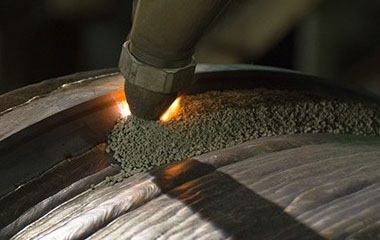
Electroslag Welding is a vertical welding process primarily used for joining thick sections of metal. Unlike conventional arc welding, ESW does not rely on a continuous electric arc between the electrode and the workpiece. Instead, it utilizes the resistance heating generated by an electric current passing through a molten, conductive slag bath. This slag bath, which floats on top of the molten weld metal pool, serves multiple critical functions: it melts the filler wire and the edges of the base metal, purifies the weld metal, and protects it from atmospheric contamination.
The process typically begins with an arc strike that melts a small amount of flux, initiating the conductive slag pool. Once the slag is molten and conductive, the arc extinguishes, and the current flows through the slag itself. The heat generated by the resistance of this molten slag is sufficient to continuously melt the electrode wire (or wires) fed into it, along with the adjacent edges of the base metal. The molten metal then collects in a pool beneath the slag, solidifying from the bottom upwards to form the weld. Copper shoes, cooled by water, are typically used to contain the molten slag and weld metal, preventing them from flowing out of the joint and shaping the weld bead.
Key Components of an Electroslag Welder System
A complete Electroslag Welder system comprises several interconnected components, each playing a vital role in the execution of the weld:
- Power Source: A high-current, low-voltage power source, usually DC, is essential to maintain the molten slag pool and melt the filler metal effectively.
- Wire Feeder: This unit precisely controls the rate at which the welding wire (or multiple wires) is fed into the molten slag bath. Oldwelders provides a wide range of welding materials, including various solid wire and flux-cored wire options, optimized for ESW applications.
- Guide Tube: The electrode wire passes through a guide tube, which directs it into the center of the joint and into the molten slag.
- Flux Hopper: A reservoir that supplies the granular flux necessary to create and replenish the slag bath. Our premium welding fluxes are crafted from excellent dolomite, bauxite, cryolite, silica, and fluorine ore, melted at 2000 °C to guarantee superior performance and weld integrity.
- Water-Cooled Copper Shoes: These movable shoes are clamped against the sides of the joint, forming a mold that contains the molten slag and weld metal. Their cooling prevents the shoes from melting and accelerates the solidification of the weld metal.
- Control System: An integrated control panel allows operators to precisely manage welding parameters such as current, voltage, wire feed speed, and travel speed, ensuring consistent and high-quality welds.
- Travel Mechanism: The entire welding head, including the wire feeder and guide tube, is mounted on a mechanism that allows it to travel vertically upwards along the joint as the weld progresses. This ensures continuous operation and uniform weld deposition.
The Step-by-Step ESW Process for Thick Steel
The Electroslag Welding process, while appearing complex, follows a systematic sequence to achieve robust welds in thick steel sections:
- Joint Preparation and Fit-Up: The edges of the thick steel plates to be joined are typically prepared with a square butt joint or a slight bevel, as ESW can bridge large gaps. The plates are positioned vertically, often with a gap of 20-35 mm between them. Water-cooled copper shoes are then clamped against the sides of this gap, creating a temporary mold.
- Initiation of the Process: A small amount of granular flux is poured into the bottom of the joint between the copper shoes. The welding electrode wire is then fed down through the guide tube, touching the base metal through the flux. An electric arc is struck between the electrode and the base metal, which rapidly melts the flux to form a molten slag pool.
- Slag Pool Formation and Arc Extinction: As the slag pool deepens and becomes sufficiently conductive, the electric arc extinguishes. From this point onward, the heat required for welding is generated by the resistance heating of the current passing through the molten slag. This transition from arc heating to resistance heating is a defining characteristic of the Electroslag Welder.
- Continuous Melting and Deposition: The intense heat of the molten slag pool melts the continuously fed electrode wire and the adjacent edges of the base metal. The molten metal, being denser than the slag, sinks to the bottom of the pool.
- Weld Metal Solidification: As the welding head and copper shoes slowly move upwards along the joint, the molten weld metal at the bottom of the pool progressively solidifies. The water cooling of the copper shoes plays a crucial role in controlling the solidification rate and forming the desired weld bead profile. The slag pool remains molten, continuing its melting and refining functions for the new material entering it.
- Slag Removal: After the weld is completed and cooled, the solidified slag layer on the surface of the weld can be easily chipped away.
This continuous, single-pass nature of the Electroslag Welder process is what makes it so efficient for extremely thick materials, significantly reducing the time and labor compared to multi-pass conventional welding.
Advantages and Applications of Electroslag Welding
Electroslag Welding offers distinct advantages that make it the preferred choice for specific heavy fabrication challenges.
Benefits for Heavy Fabrication
- High Deposition Rates: ESW boasts exceptionally high deposition rates, often 10 to 20 times greater than conventional arc welding processes. This translates to significantly faster completion times for thick section welds.
- Single-Pass Welding: It can join very thick plates (from 25mm up to 1 meter or more) in a single pass, eliminating the need for multiple passes and interpass cleaning, which saves considerable time and labor.
- Minimal Distortion: Due to the slow cooling rates and uniform heat input across the entire joint thickness, ESW produces welds with very low angular distortion and residual stresses compared to multi-pass methods. This reduces the need for post-weld straightening.
- Good Mechanical Properties: Despite the large heat input, ESW typically yields welds with good mechanical properties, including acceptable strength and toughness, often comparable to the base material. The refining action of the slag bath also contributes to a cleaner weld metal.
- Cost-Effectiveness: For the right applications, the high efficiency and reduced labor requirements of an Electroslag Welder can lead to significant cost savings.
- Deep Penetration: The process inherently achieves full penetration through the entire thickness of the joint, ensuring a sound, homogeneous weld.
Typical Industries and Materials
The unique capabilities of the Electroslag Welder make it invaluable in several heavy industries and for specific types of materials:
- Bridge Construction: For welding massive girders and structural components where thick sections of steel need to be joined rapidly and reliably.
- Shipbuilding: Joining thick hull plates, bulkheads, and other large structural elements of ships and offshore platforms.
- Heavy Machinery Manufacturing: Fabrication of large gears, press frames, heavy machinery components, and excavator arms.
- Pressure Vessels and Storage Tanks: Constructing large pressure vessels, reactors, and storage tanks where thick walls are required to withstand high internal pressures.
- Structural Steel Fabrication: Used for columns, beams, and other load-bearing structures in large buildings and industrial plants.
- Materials: Primarily used for carbon steels and low-alloy steels. It can also be adapted for certain stainless steels and other alloys, though these applications may require specialized fluxes and parameters.
Catering to a global clientele in markets such as Brazil, Thailand, Australia, and Malaysia, Oldwelders supports projects of various scales, with a minimum order quantity of 1 ton for many of our specialized welding materials, ensuring that even large-scale industrial demands are met with efficiency and precision.
Ensuring Quality and Reliability in ESW Operations
Achieving consistent quality with an Electroslag Welder requires careful attention to several factors, from equipment selection to consumable quality and operational expertise. The quality of the welding wire and welding fluxes is paramount. Poor quality consumables can lead to porosity, cracking, and inadequate mechanical properties in the final weld. Oldwelders offers a comprehensive range of welding materials, including specialized welding rods and wires, all manufactured to stringent quality controls to ensure optimal performance in ESW. Our fluxes, as mentioned, are produced from excellent dolomite, bauxite, cryolite, silica, and fluorine ore, melted at 2000 °C, guaranteeing superior performance and weld integrity.
Process control is another critical element. Operators must be skilled in setting and monitoring parameters such as current, voltage, wire feed speed, and travel speed. Deviations can lead to defects or compromise the weld's integrity. Regular maintenance and calibration of the automatic welding machine components, including the power source, wire feeder, and cooling system for the copper shoes, are essential to ensure consistent operation and prevent downtime.
At Oldwelders, our commitment to quality extends beyond our products. We provide robust support, ensuring our clients receive not only high-performing equipment but also the confidence that comes with a reliable supplier. Our robust support system includes a 30-day policy, ensuring client satisfaction and confidence in their investment. We are dedicated to partnering with businesses to enhance their fabrication capabilities, whether they are in need of a new MIG-MAG-TIG welding machine, specialized submerged arc welding flux HJ431, or comprehensive solutions for heavy-duty applications. Our goal is to empower industries worldwide with the tools and materials necessary for successful and efficient welding operations.
Conclusion
The Electroslag Welder remains an indispensable technology for joining extremely thick steel sections, offering unparalleled efficiency, high deposition rates, and sound metallurgical properties. Its ability to create robust, single-pass welds in heavy fabrication applications sets it apart from other welding processes. For fabrication engineers and technical buyers evaluating solutions for their most demanding projects, understanding the principles and benefits of ESW is crucial.
Oldwelders stands ready to support your heavy fabrication needs with our ISO 9001 certified welding machines, premium welding materials, and high-quality welding fluxes. With our extensive production capacity and dedication to excellence, we are a reliable partner for industries across Brazil, Thailand, Australia, and Malaysia, helping you achieve superior weld quality and operational efficiency.