
Electrode Holder Pricing Comparing Brass and Copper
How to Evaluate Electrode Holder Pricing Beyond the Unit Cost
For procurement managers and welding supervisors, evaluating supplier quotations is a routine task. When sourcing a fundamental tool like an Electrode Holder, you might receive multiple offers with seemingly minor differences but significant price variations. Often, this price gap comes down to one key factor: the material of the conductive components, typically a choice between brass and copper alloys. While it's tempting to select the lower-priced brass option to meet budget targets, this decision can lead to higher operational costs, increased downtime, and compromised weld quality over the long term.
A true cost analysis requires looking beyond the initial invoice. Understanding the performance differences between brass and copper allows you to calculate the total cost of ownership (TCO) and make a procurement decision that benefits your bottom line and operational efficiency. This guide provides a framework for comparing quotations, ensuring you invest in a tool that delivers value, reliability, and safety for your welding team.
Understanding the Core Materials: Brass vs. Copper Alloys
At first glance, both brass and copper electrode holders look similar and perform the same basic function: to securely grip a welding electrode and conduct electrical current to it. However, their underlying material composition dictates their performance under the demanding conditions of industrial welding, particularly in high-amperage Shielded Metal Arc Welding (SMAW) applications.
Brass Alloys: Brass is an alloy primarily composed of copper and zinc. The addition of zinc makes the material harder and more durable than pure copper, and it is generally less expensive to produce. While it is a good electrical conductor, its conductivity is significantly lower than that of high-purity copper. This lower conductivity means higher electrical resistance, which generates more waste heat within the body of the tool itself rather than directing that energy to the arc.
High-Conductivity Copper: The "copper" used in premium electrode holders is typically a high-purity or alloyed copper designed for maximum electrical and thermal conductivity. These materials offer minimal electrical resistance. This efficiency ensures that the maximum amount of power from the welding machine is delivered to the arc, resulting in a more stable, efficient, and controllable weld. While softer than brass, its superior thermal properties allow it to manage heat far more effectively, which is a critical factor in tool longevity and operator safety.
Analyzing Key Performance Metrics that Impact Long-Term Cost
The initial price difference between a brass and a copper Electrode Holder is just the beginning of the cost story. The true value is revealed when you analyze how each material performs over thousands of hours of operation. These performance metrics directly translate into tangible operational costs.
Electrical Conductivity and Energy Efficiency
Electrical resistance is the enemy of efficiency in any welding circuit. Every bit of energy lost to resistance is converted into heat where it is not wanted—in the cable, the connections, and the holder itself. This is where copper's primary advantage lies.
- Copper: With its superior conductivity, a copper holder minimizes resistive heating. More of the machine's power is concentrated at the arc, leading to easier arc starts, a more stable arc, and better penetration. Over time, this slight efficiency gain can add up to measurable energy savings, especially in large-scale operations with dozens of welders working full shifts.
- Brass: A brass holder's higher resistance means it will inherently run hotter. This waste heat represents lost energy that should have been used for welding. The handle can become uncomfortably warm for the operator, and the power supply must work slightly harder to deliver the required amperage at the arc, leading to marginal but cumulative increases in energy consumption.
Thermal Management and Component Durability
The heat generated by the welding process is intense. An effective Electrode Holder must not only withstand this heat but also manage it to protect both its internal components and the welder.
- Copper: Copper's excellent thermal conductivity allows it to dissipate heat quickly away from the jaws and into the connected welding cable. This rapid heat transfer prevents the holder's body from overheating, protecting the insulating covers, springs, and other non-metallic parts from premature degradation. The result is a longer service life and a cooler, more comfortable handle for the operator.
- Brass: Brass does not dissipate heat as effectively. It tends to retain heat in the head of the tool, which can cause the insulating handle and tip insulators to become brittle, crack, or even melt over time. This not only necessitates more frequent replacement of parts (or the entire tool) but also poses a potential safety risk if the insulation fails.
Mechanical Strength and Lifespan
A welding workshop is a tough environment. The holder will be dropped, subjected to spatter, and have electrodes clamped and re-clamped thousands of times. Mechanical durability is crucial.
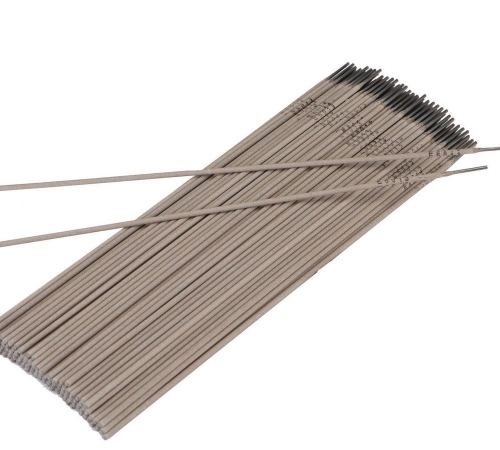
While standard brass is harder than pure copper, the high-performance copper alloys used in quality tools are engineered for toughness. The key factor in lifespan is often not brute strength but resistance to heat-related degradation. Because copper holders run cooler, their mechanical components, such as the clamping spring and hinge pin, are subjected to less thermal stress. This means they retain their clamping force and alignment for longer, ensuring a solid, low-resistance connection to the aws e6013 welding electrodes. A poor connection is a primary source of excess heat and premature failure, a problem more common in holders that overheat.
A Practical Model for Comparing Electrode Holder Quotes
To make an informed decision, you need a simple model to normalize quotations and estimate the total cost of ownership. When you receive a quote, evaluate it using these factors:
- Initial Unit Price: The baseline cost of one unit. (e.g., Brass Holder = $15, Copper Holder = $25).
- Amperage Rating and Duty Cycle: Ensure you are comparing tools with the same specifications. A 400A copper holder may have a much higher duty cycle and last longer than a 400A brass model due to its superior heat management.
- Estimated Replacement Factor: Based on historical data or an objective assessment of the material properties, estimate how many brass units you would need to purchase over the lifespan of a single copper unit. A conservative estimate might be 2:1 or even 3:1 in high-amperage, high-duty-cycle environments.
- TCO Example: 1 Copper Holder @ $25 vs. 2 Brass Holders @ $15 ($30 total).
- Cost of Downtime: Calculate the cost of lost productivity each time a welder has to stop work to walk to the tool crib and replace a failed holder. Even 10 minutes of downtime can cost more than the tool itself.
- TCO Example: 1 extra replacement per cycle x 10 minutes downtime = significant hidden cost.
- Consumable and Repair Costs: Factor in the cost of replacing heat-damaged insulators or other parts on a lower-quality holder. These are often not necessary for premium models.
By applying this TCO model, the initial $10 price difference quickly evaporates. The copper Electrode Holder, despite its higher upfront cost, often emerges as the more economical and reliable long-term investment.
Sourcing from a Reliable, ISO 9001 Certified Partner
The quality of your welding accessories directly impacts your operational output. Sourcing from a partner who understands the demands of industrial production is essential. As an ISO 9001 certified manufacturer, Oldwelders is committed to quality and consistency across our entire product line, from advanced welding machines to essential welding accessories.
Our experience supplying to demanding markets in Brazil, Thailand, Australia, and Malaysia has shown that reliability is paramount. For large-scale industrial buyers, consistency in performance is key to maintaining productivity. Our manufacturing processes ensure that every Electrode Holder we produce meets stringent standards for conductivity, durability, and safety. This commitment to quality gives you the confidence that the specifications on our data sheets are accurate, allowing for precise and reliable TCO calculations.
With a comprehensive portfolio that includes welding consumables like our high-quality welding fluxes, we can serve as a single-source supplier for your needs. We manage a minimum order quantity of 1 ton with a typical lead time of 30 days, providing clear and dependable parameters for your international procurement planning. Choosing a proven supplier mitigates supply chain risks and ensures you receive tools that enhance, rather than hinder, your welding operations.