
E7018 Electrode: A Guide to MOQ, Certification & Storage
The E7018 electrode is a vital consumable for high-strength structural welding applications.
For distributors, project managers, and procurement specialists, selecting the right welding consumable goes beyond simple performance metrics. It involves understanding the entire supply chain, from manufacturing quality and certification to logistics and proper handling. The E7018 electrode, renowned for its low-hydrogen properties and exceptional weld quality, is a prime example where these considerations are paramount. This guide provides detailed answers to frequently asked questions about procurement, certification, and storage, ensuring you can confidently source and manage this critical welding product for your projects.
As a leading manufacturer, we understand that our clients in demanding markets like Brazil, Thailand, and Australia require not only a superior product but also a transparent and reliable supply partner. This article will delve into the specifics that matter most when making a purchasing decision, backed by our commitment to quality and large-scale production capabilities.
What is an E7018 Electrode and Why Is It Preferred?
The E7018 electrode is a shielded metal arc welding (SMAW) consumable, highly regarded for producing strong, ductile, and crack-resistant welds. Its unique characteristics make it a top choice for critical applications across various industries, including construction, shipbuilding, pressure vessel fabrication, and heavy machinery repair. The designation "E7018" is defined by the American Welding Society (AWS) A5.1 specification, and understanding it is key to appreciating its capabilities.
The primary feature of this consumable is its low-hydrogen coating. This coating contains a high percentage of iron powder and other mineral agents that serve multiple functions. During welding, it creates a protective gaseous shield to prevent atmospheric contamination from oxygen and nitrogen, which can compromise weld integrity. More importantly, it is formulated to introduce minimal hydrogen into the weld pool. Excess hydrogen is a primary cause of hydrogen-induced cracking or delayed cracking, a serious defect in high-strength steels. By minimizing this risk, the E7018 electrode ensures a more reliable and safer weld, especially on thick or restrained joints.
Key Benefits and Applications
- High-Quality Welds: The iron powder in the coating contributes to a higher deposition rate, resulting in smooth, uniform beads with minimal spatter. The resulting weld deposit is of X-ray quality, making it suitable for applications requiring stringent inspection.
- Excellent Mechanical Properties: Welds made with an E7018 electrode exhibit a minimum tensile strength of 70,000 psi (480 MPa), along with superior toughness and ductility, even at low temperatures.
- All-Position Capability: While some variants are designed for specific positions, the "1" in its designation indicates it can be used in all welding positions—flat, horizontal, vertical, and overhead—providing versatility on the job site.
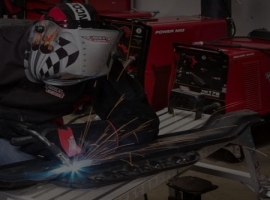
- Versatile Use: It is ideal for welding carbon steels, low-alloy steels, and high-strength steels that are difficult to weld with other electrodes. It is often paired with a powerful arc welding machine to achieve optimal arc characteristics and penetration.
Understanding Key Technical Specifications and Certifications
For a B2B buyer, verifying technical specifications and supplier certifications is a non-negotiable step in the procurement process. It guarantees that the product meets industry standards and will perform as expected in critical applications. The AWS classification for the E7018 electrode provides a wealth of information at a glance.
Decoding the AWS A5.1 Classification: E7018
- E: Stands for "Electrode," indicating it is used in electric arc welding.
- 70: Represents the minimum tensile strength of the deposited weld metal in thousands of pounds per square inch (ksi). In this case, it is 70 ksi, or 70,000 psi.
- 1: Indicates the welding position capability. The number "1" signifies that the electrode is suitable for use in all positions (flat, horizontal, vertical, and overhead).
- 8: This digit provides information about the type of coating and the appropriate welding current. The "8" specifies a low-hydrogen, iron powder coating, suitable for use with both Alternating Current (AC) and Direct Current Reverse Polarity (DCEP).
Beyond the AWS classification, ensuring your supplier adheres to international quality management standards is crucial. As an ISO 9001 certified manufacturer, Oldwelders guarantees that every batch of our E7018 electrode is produced under a rigorous quality control system. This certification reflects our commitment to process consistency, traceability, and continuous improvement, providing our clients with the assurance of a reliable and high-performing product. We provide complete documentation, including Mill Test Reports (MTRs) and Certificates of Conformance (CoC), with every shipment to validate the chemical composition and mechanical properties of our products.
Procurement and Logistics: Your FAQs Answered
Navigating the logistics of a bulk order is a critical part of the purchasing process. At Oldwelders, we aim to make this process seamless and transparent for our global partners. Here are answers to some of the most common questions we receive from distributors and project buyers.
What is the Minimum Order Quantity (MOQ)?
To optimize production efficiency and offer competitive pricing, we have established a Minimum Order Quantity (MOQ). For the E7018 electrode, our standard MOQ is 1 ton. This quantity is ideal for stocking distributors, large-scale construction projects, and fabrication shops with consistent consumption. An MOQ allows us to manage our production runs effectively, ensuring that we can maintain our high standards of quality while delivering value to our customers. It also facilitates more economical freight and logistics arrangements, which is particularly important for international shipments.
What is the typical lead time for an order?
Our standard lead time for production and preparation for shipment is approximately 30 days from the confirmation of the order. This timeframe allows for meticulous raw material sourcing, manufacturing, quality assurance testing, and secure packaging. Our significant production capacity is a key asset in meeting this commitment. The Oldwelders plant covers an area of 1000 square meters and is equipped with six modern production lines, enabling us to supply up to 100 tons of welding consumables per day. This robust infrastructure ensures we can handle multiple large orders simultaneously and consistently meet our delivery timelines for clients in markets like Malaysia and Brazil.
Do you provide international shipping and documentation?
Yes, international logistics are a core part of our business. We have extensive experience exporting our full range of welding materials to clients across the globe, including established partners in Australia, Thailand, Brazil, and Malaysia. We manage all necessary export documentation, including the bill of lading, commercial invoice, packing list, and certificate of origin, to ensure a smooth customs clearance process for our clients. Our logistics team works with trusted freight forwarders to secure reliable and cost-effective shipping solutions, whether by sea or air.
Proper Storage and Handling of the E7018 Electrode
The performance of any low-hydrogen electrode is directly linked to its handling and storage. The coating on an E7018 electrode is hygroscopic, meaning it can absorb moisture from the atmosphere. If the moisture content in the coating becomes too high, it will release hydrogen into the weld pool during welding, negating the primary benefit of the electrode and creating a significant risk of hydrogen-induced cracking.
Guidelines for Proper Storage
To prevent moisture absorption, all low-hydrogen electrodes must be stored in a dry, controlled environment. Upon delivery, our E7018 electrodes are supplied in hermetically sealed containers that protect them from atmospheric moisture. Once a container is opened, the following storage practices are essential:
- Holding Ovens: Unused electrodes from an opened container should be immediately placed in a heated holding oven. These ovens are typically maintained at a temperature between 120°C and 150°C (250°F to 300°F). This keeps the electrodes dry and ready for immediate use.
- Limited Exposure: Electrodes should only be removed from the holding oven in quantities that will be used within a specific timeframe (e.g., a few hours), as recommended by welding procedure specifications (WPS). Any unused electrodes at the end of a shift should be returned to the holding oven.
Re-conditioning (Re-baking) Exposed Electrodes
If electrodes have been exposed to the atmosphere for longer than the permitted time, they must be re-conditioned before use. This process, known as re-baking, drives out the absorbed moisture. A typical re-baking procedure for an E7018 electrode involves heating them in a specialized oven at a temperature between 260°C and 430°C (500°F to 800°F) for one to two hours. It is critical to follow the manufacturer's specific recommendations, as overheating can damage the coating. Electrodes should generally only be re-baked once to avoid compromising their performance.
The Oldwelders Advantage: Quality from Core to Coating
The superior performance of our E7018 electrode is not an accident; it is the result of a vertically integrated manufacturing process that emphasizes quality at every stage. We control the entire production chain, starting with the formulation of our own high-performance coatings.
The raw materials for our product coatings, including our specialized welding fluxes, are sourced from premium ores. We utilize excellent dolomite, bauxite, cryolite, silica, and fluorine ore, which are meticulously blended and then melted in our furnaces at extreme temperatures of 2000°C. This proprietary process creates a homogenous, high-purity flux that forms the basis of our electrode coatings. This ensures exceptional arc stability, low spatter, easy slag removal, and the all-important low-hydrogen characteristic of the final weld deposit.
Our 1000-square-meter facility, powered by six production lines with a daily capacity of 100 tons, gives us the scale to serve global markets without compromising on quality. This deep commitment to manufacturing excellence is why leading distributors and project engineers trust Oldwelders for their most critical welding applications.
By choosing Oldwelders, you are not just buying an E7018 electrode; you are investing in a product backed by ISO 9001 certification, robust production capacity, and a proven history of serving international markets. Contact our team today to discuss your project requirements and discover how our welding solutions can enhance your operations.