
E6013 Welding Rod: Your Guide to Welding Thin Steel
Understanding How the E6013 Welding Rod Excels on Thin Steel
For fabricators, maintenance teams, and welding distributors, selecting the right consumable is a critical decision that impacts project quality, efficiency, and cost. When working with thin gauge mild steel—materials commonly found in automotive panels, ductwork, and general sheet metal fabrication—the risk of burn-through is a primary concern. The challenge lies in depositing sufficient filler metal to create a strong joint without overpowering the base material. This is precisely where the unique characteristics of the E6013 electrode shine, making it a staple consumable for light-duty applications worldwide.
This comprehensive guide explores the mechanics behind why this specific type of electrode is so effective on thin steel. We will delve into its composition, arc characteristics, and the practical techniques required to achieve clean, high-quality welds. For businesses evaluating their stock of welding materials, understanding these principles is key to making informed purchasing decisions and equipping teams for success.
What is an E6013 Electrode?
The designation "E6013" is not an arbitrary name; it is a classification from the American Welding Society (AWS) that provides specific information about the electrode's capabilities and composition. Understanding this code is the first step in appreciating its suitability for particular jobs.
- E: This simply stands for "electrode," indicating that it is intended for use in electric arc welding, specifically Shielded Metal Arc Welding (SMAW or "stick" welding).
- 60: These first two digits represent the minimum tensile strength of the deposited weld metal, measured in thousands of pounds per square inch (psi). In this case, "60" signifies a minimum tensile strength of 60,000 psi. This is more than adequate for most mild steel applications, where the base metal itself often has a lower tensile strength.
- 1: The third digit indicates the welding positions in which the electrode can be used. A "1" means it is an all-position electrode, suitable for flat, horizontal, vertical, and overhead welding. This versatility is a major advantage for fabricators who work on components in various orientations.
- 3: The final digit is the most crucial for our discussion. It specifies the type of flux coating and the required welding current. A "3" denotes a high-titania rutile-based coating. This type of coating is designed for use with either AC or DC (straight or reverse polarity) and is known for producing a very soft, stable arc with minimal spatter and a smooth bead appearance.
The Role of the Rutile Flux Coating
The performance of an E6013 electrode on thin steel is largely determined by its flux coating. This coating is a carefully formulated mixture of minerals and chemicals that performs several critical functions during the welding process:
- Arc Stabilization: The high concentration of titanium dioxide (rutile) in the flux helps to create a very smooth and stable arc. A stable arc is easier for the operator to control, which is essential when trying to manage heat input on thin, unforgiving materials.
- Slag Formation: As the flux burns, it forms a protective layer of molten slag over the weld puddle. This slag insulates the weld from atmospheric contaminants like oxygen and nitrogen, which can cause porosity and brittleness. For E6013, the slag is fluid and provides excellent coverage, but it also solidifies quickly, helping to hold the molten metal in place, especially in out-of-position welding. It is also notably easy to remove post-weld, reducing cleanup time.
- Shallow Penetration: The chemical composition of the rutile flux is specifically designed to produce shallow penetration. Unlike "digging" electrodes like the E6010, the E6013 deposits metal on the surface rather than cutting deep into the base material. This is the single most important characteristic that prevents burn-through on thin steel.
The Science Behind Welding Thin Steel with E6013 Electrodes
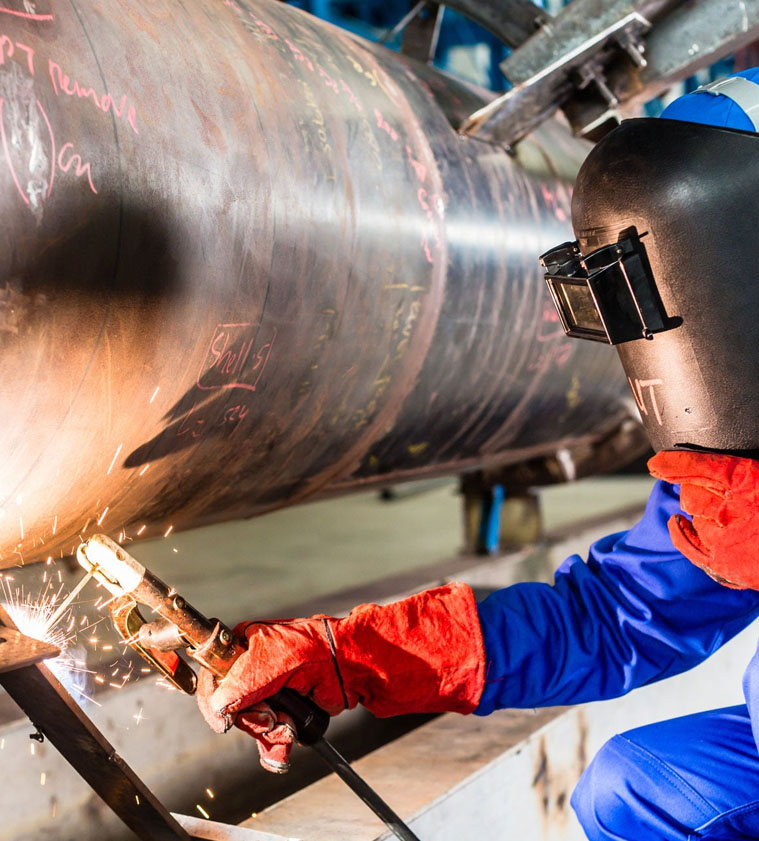
Welding thin sheet metal is a delicate balance of heat management. The goal is to melt the electrode and the edges of the base metal to achieve fusion, but without introducing so much thermal energy that the material warps or a hole is created. The E6013 electrode facilitates this balance through several key operational characteristics.
Low Heat Input and Soft Arc
The primary reason the E6013 welding rod is preferred for thin materials is its characteristically soft arc and low penetration profile. An arc's "forcefulness" is a major factor in how deep it penetrates the workpiece. Electrodes with cellulose-based coatings (like E6010/E6011) produce a violent, forceful arc that digs deep into the metal, making them ideal for cutting through rust and scale but disastrous for thin gauges.
In contrast, the rutile-based E6013 produces a much quieter, less forceful, and more stable arc. This "soft" arc deposits filler metal gently onto the surface of the steel. The heat is concentrated enough to fuse the materials but not so intense that it blows through. This allows the operator greater control over the weld puddle, enabling them to move quickly and precisely without overwhelming the workpiece.
Slag Control and Puddle Support
On thin materials, especially in vertical or overhead positions, gravity is the enemy. A fluid weld puddle can easily sag or fall away. The slag produced by an E6013 electrode plays a supportive role. It has a relatively fast-freezing characteristic, meaning it solidifies quickly behind the weld puddle.
This rapid solidification acts like a small, temporary dam or shelf, holding the molten weld metal in place as it cools. This feature is invaluable for maintaining a consistent bead profile and preventing sagging on vertical joints. The slag's easy removability is also a significant advantage, as aggressive chipping or grinding to remove stubborn slag could easily damage the thin base material.
Practical Techniques for Using E6013 on Thin Materials
While the electrode itself is well-suited for the task, proper technique is still paramount to achieving professional results. Operators should focus on the following parameters when welding thin steel with an E6013 electrode.
Amperage Setting
This is the most critical setting. Use the lowest possible amperage that still allows for a stable arc and proper fusion. A general rule is to start at the lower end of the manufacturer's recommended range for the given electrode diameter. It is always better to start too cold and increase the amperage slightly than to start too hot and immediately burn through the material. Running a few test beads on scrap material of the same thickness is a non-negotiable step.
Travel Speed
A faster travel speed is generally required for thin steel. Lingering in one spot for too long will concentrate heat and lead to burn-through. The goal is to move quickly enough to prevent excessive heat buildup but slowly enough to ensure proper metal deposition and fusion. The key is consistency. A steady, even travel speed will produce a uniform bead with consistent penetration.
Rod Angle
The angle of the electrode influences the shape of the bead and the direction of the arc force. A "drag" technique, where the electrode is angled back towards the direction of travel at about 15-20 degrees from perpendicular, is typically recommended. This angle helps to preheat the metal just ahead of the puddle and allows the operator a clear view of the weld as it forms. For very thin material, a slight "push" angle can sometimes be used to further reduce penetration, but the drag technique is standard.
Arc Length
Maintain a tight, consistent arc length. A long arc increases voltage, which in turn increases heat and spatter, making burn-through more likely. A short arc, roughly equal to the diameter of the electrode's core wire, provides better control, concentrates the heat in a smaller area, and results in a more stable welding process. This requires a steady hand, which is why a reliable arc welding machine with stable output is essential.
Advantages and Limitations for Thin Steel Applications
No single welding consumable is perfect for every situation. Understanding the specific pros and cons of the E6013 electrode allows for its proper application.
Advantages:
- Excellent for Poor Fit-Up: The E6013's ability to deposit metal smoothly makes it very effective at bridging gaps between poorly fitted parts, a common issue in general fabrication.
- Ease of Use: The soft, stable arc and easy slag removal make it one of the most user-friendly electrodes, reducing the training curve for new welders.
- All-Position Capability: Its versatility allows for welding on components that cannot be easily moved into the flat position.
- Smooth Bead Appearance: It produces a visually appealing, almost ripple-free weld bead that requires minimal post-weld finishing.
Limitations:
- Lower Strength: With a 60,000 psi tensile strength, it is not suitable for welding high-strength steels or for applications subject to extreme stress or dynamic loading.
- Lower Ductility: Compared to low-hydrogen electrodes like the E7018, the weld deposit from an E6013 is less ductile and not recommended for critical structural work.
- Potential for Slag Inclusions: If the travel speed is too fast or the technique is poor, slag can become trapped in the weld metal, creating a weak point.
Sourcing High-Quality Consumables for Your Operations
For distributors and large-scale fabricators in markets from Brazil and Thailand to Australia and Malaysia, the consistency and quality of welding consumables are non-negotiable. A poor-quality electrode can lead to inconsistent arc performance, difficult slag removal, and ultimately, weld defects that require costly rework. Partnering with a reliable manufacturer is crucial for operational success.
At Oldwelders, we operate as an ISO 9001 certified manufacturer, a testament to our commitment to stringent quality control. Our production process for welding consumables, including our line of AWS E6013 welding electrodes, is built on a foundation of superior raw materials. We utilize excellent dolomite, bauxite, cryolite, and silica, which are melted at 2000°C to ensure purity and optimal formulation. This process guarantees the consistent performance that professionals demand from an E6013 welding rod.
Our 1000-square-meter facility is equipped with six production lines, giving us the capacity to supply up to 100 tons of welding products per day. This scale allows us to reliably fulfill large-volume orders with a standard lead time of 30 days and a minimum order quantity (MOQ) of just 1 ton, ensuring your supply chain remains robust and predictable. By controlling every step of the manufacturing process, we deliver the quality and reliability your business depends on.