
Cryolite Powder Specifications for Welding Flux Performance
Cryolite powder is a critical component in high-performance welding fluxes.
In the world of industrial welding, the final quality of a weld bead is determined by a complex interplay of factors: the skill of the operator, the quality of the equipment, and, crucially, the chemical composition of the consumables. Among these consumables, welding flux plays a pivotal role, particularly in processes like submerged arc welding (SAW) and in the manufacturing of coated electrodes. A key ingredient that defines the performance of many high-quality fluxes is Sodium Hexafluoroaluminate (Na3AlF6), more commonly known as Cryolite Powder. Understanding its technical specifications is not merely an academic exercise; for technical purchasers and welding engineers, it is fundamental to achieving consistent, reliable, and high-integrity welds.
This mineral, either naturally occurring or synthetically produced, acts as a powerful fluxing agent. Its primary function is to lower the melting point and viscosity of the slag, ensuring it flows smoothly to protect the molten weld pool from atmospheric contamination. A well-formulated slag provides thermal insulation, shapes the weld bead, and helps remove impurities from the weld metal. The effectiveness of the slag is directly tied to the quality of its constituent components, with cryolite being one of the most influential. Choosing the right grade of Na3AlF6, based on specific chemical and physical properties, can be the difference between a flawless joint and a costly failure.
The Essential Role of Cryolite (Na3AlF6) in Welding Flux Formulations
Welding flux is a granular, fusible material that becomes a protective liquid slag blanket over the weld area during the welding process. This slag layer serves multiple essential functions: shielding the molten metal from oxygen and nitrogen, stabilizing the arc, adding alloying elements to the weld metal, and shaping the finished weld bead. The composition of the flux dictates its melting point, viscosity, and chemical reactivity—all of which must be precisely controlled.
Cryolite's unique properties make it an invaluable component in achieving this control. Its primary contributions include:
- Melting Point Depression: It acts as a powerful solvent for metal oxides like alumina (Al2O3) and silica (SiO2), which are often present as impurities or as major flux components. By dissolving these high-melting-point oxides, cryolite significantly lowers the overall melting temperature of the slag system, creating a more fluid and manageable slag at typical welding temperatures.
- Viscosity and Fluidity Control: The addition of Na3AlF6 reduces the viscosity of the molten slag. A fluid slag provides better coverage over the weld pool, ensuring complete protection from the atmosphere. It also allows gases to escape more easily, reducing the risk of porosity in the finished weld. After welding, a slag with the correct fluidity is easier to detach, minimizing post-weld cleaning time.
- Arc Stabilization: The elements within cryolite, particularly sodium, have low ionization potentials. This means they readily release electrons in the arc plasma, making it easier to initiate and maintain a stable, consistent electric arc. A stable arc is crucial for uniform heat input and a smooth, consistent weld bead.
- Wetting and Surface Tension: A well-formulated flux containing cryolite can modify the surface tension between the molten slag and the molten weld metal. This promotes better "wetting" of the base metal by the filler metal, leading to a smoother bead profile and reducing defects like undercut.
The selection of appropriate welding materials is paramount for any industrial application. The precise amount and grade of cryolite used in a flux formulation are tailored to the specific welding process (e.g., SAW, SMAW) and the materials being joined. Its influence is so significant that even minor variations in its specifications can have a noticeable impact on operational characteristics and final weld quality.
Key Chemical Specifications of Cryolite Powder and Their Impact
When evaluating a supplier for industrial minerals, technical purchasers must scrutinize the certificate of analysis. For Na3AlF6, several chemical parameters are non-negotiable for ensuring flux performance and weld integrity. Impurities, even in small percentages, can introduce defects or alter the mechanical properties of the weldment.
Purity and Molecular Ratio (MR)
The primary measure of quality is the purity, or the weight percentage of Na3AlF6 in the material. Higher purity generally leads to more predictable and consistent performance. Closely related is the Molecular Ratio (MR) of NaF to AlF3, which ideally should be close to the stoichiometric ratio of 3. A higher ratio indicates an excess of sodium fluoride, while a lower ratio indicates excess aluminum fluoride. This balance affects the melting point and fluidity of the resulting slag. For most welding flux applications, a consistent and specified MR is critical for batch-to-batch repeatability in flux manufacturing.
Silica (SiO2) Content
Silica is one of the most critical impurities to control in Cryolite Powder intended for high-quality welding fluxes. While silica is a common component in many flux formulations (as a slag former), its uncontrolled introduction via an impure raw material is highly undesirable. During the high-temperature welding process, silica can be reduced, transferring silicon (Si) into the molten weld pool. An excess of silicon in ferritic steels can increase the strength and hardness of the weld metal but significantly decrease its toughness and ductility, making it more susceptible to cracking, especially at low temperatures. Therefore, a specification with a very low maximum SiO2 content is essential for applications requiring high-impact toughness.
Iron Oxide (Fe2O3) Content
Iron oxide is another detrimental impurity. Like silica, it can be reduced in the arc, introducing excess oxygen into the weld pool. This oxygen can react with elements like manganese and silicon to form non-metallic inclusions, or it can lead to porosity if not properly managed by deoxidizers in the flux or wire. These inclusions act as stress concentrators within the weld metal, reducing its mechanical properties, particularly fatigue strength and toughness. For critical applications, the Fe2O3 content must be kept to a minimum.
Moisture Content
Moisture (H2O) is a source of hydrogen, which is the primary cause of hydrogen-induced cracking (HIC), also known as delayed cracking or cold cracking. At the high temperatures of the welding arc, water molecules dissociate into hydrogen and oxygen. The atomic hydrogen is readily dissolved in the molten weld metal. As the weld cools, the solubility of hydrogen decreases, and it attempts to escape, creating immense internal pressures that can lead to microscopic cracks, especially in high-strength steels. For this reason, all flux components, including cryolite, must have a very low moisture content, and fluxes must be stored in controlled, dry conditions. Reputable suppliers ensure their product is properly dried and packaged to prevent moisture absorption.
Physical Properties That Influence Flux Behavior
Beyond chemical composition, the physical characteristics of the cryolite particles play a significant role in the manufacturing of the flux and its performance during welding. These properties affect how the material handles, mixes, and reacts in the arc.
Particle Size Distribution (Mesh Size)
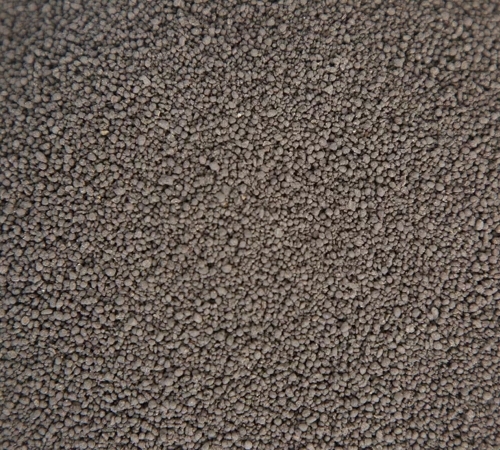
The size of the cryolite particles is a critical parameter. A consistent particle size distribution ensures homogeneity when blended with other flux components like dolomite, bauxite, and fluorine ore. If the particles are too fine, they can create excessive dust during handling and may be lost in the arc. If they are too coarse, they may not melt completely or react uniformly, leading to an inconsistent slag and potential weld defects. Manufacturers specify a target mesh size range (e.g., -100 mesh, -200 mesh) to ensure the powder integrates seamlessly into their production process, whether for extruded electrode coatings or agglomerated submerged arc welding fluxes. A controlled distribution is key for consistent melting rates and slag formation.
Bulk Density
Bulk density affects packaging, transportation, and storage logistics. From a production standpoint, it influences the volume of material that can be loaded into mixers and hoppers for automated feeding systems. A consistent bulk density from batch to batch is important for maintaining volumetric feed rates in continuous production processes, ensuring the final flux composition remains within its specified tolerance. Variations can lead to incorrect formulations, impacting the performance of the final product, such as a submerged arc welding flux hj431.
Sourcing Quality Cryolite for Industrial Welding Applications
For businesses operating in demanding markets like Brazil, Thailand, Australia, and Malaysia, securing a reliable supply of high-quality raw materials is paramount to maintaining a competitive edge. The consistency of welding consumables directly impacts productivity, reduces rework, and ensures the structural integrity of the final welded product. Therefore, partnering with a supplier who demonstrates a robust quality management system is essential.
At Oldwelders, we understand the criticality of raw material quality. Our commitment to excellence is validated by our ISO 9001 certification, which governs every stage of our process, from raw material sourcing to final product delivery. Our modern 1000-square-meter plant is equipped with six production lines, giving us a formidable capacity of 100 tons per day. This scale allows us to meet the demands of large industrial clients while maintaining strict quality control. We process premium raw materials, including dolomite, bauxite, and fluorine ore, melting them at temperatures reaching 2000°C to produce pure, consistent, and high-performance welding fluxes.
By controlling the entire manufacturing process, we can guarantee that the cryolite and other components used in our fluxes meet the stringent chemical and physical specifications required for critical welding applications. With a minimum order quantity of 1 ton and a typical lead time of 30 days, we are structured to serve as a reliable partner in your global supply chain. Whether you require a standard flux formulation or a custom blend, the quality of our components, powered by superior raw materials like precisely specified cryolite, ensures you have the right consumables to pair with your welding machine for optimal results.