
Choosing Optimal Carbon Steel Electrodes for Pipe Work
Choosing the Optimal Carbon Steel Electrode for Diverse Pipe Welding Applications
Selecting the correct carbon steel electrode is a critical decision for any pipe welding project, directly impacting the integrity, performance, and longevity of the welded joint. Procurement engineers and welding supervisors face the challenge of matching electrode properties with specific project requirements, environmental conditions, and regulatory standards. An informed choice minimizes rework, enhances safety, and ensures compliance with stringent industry specifications.
This guide provides a comprehensive overview for shortlisting stick electrodes designed for carbon-steel pipe applications. We will explore the key factors influencing selection, delve into common electrode classifications, and discuss how to optimize your material procurement. Oldwelders, an ISO 9001 certified manufacturer, understands these complexities and provides high-quality welding materials tailored to meet the demands of global industrial projects, serving markets including Brazil, Thailand, Australia, and Malaysia.
Understanding Carbon Steel Electrode Classifications
The American Welding Society (AWS) A5.1 and A5.5 specifications are the primary standards for classifying covered carbon steel and low-alloy steel electrodes for shielded metal arc welding (SMAW). Understanding these classifications is fundamental to selecting the right electrode for pipe work.
An electrode designation, such as E7018, provides crucial information:
- "E" indicates an electrode for arc welding.
- The first two or three digits (e.g., "70") denote the minimum tensile strength in thousands of pounds per square inch (psi). So, E70xx indicates a minimum tensile strength of 70,000 psi.
- The third or fourth digit (e.g., "1") signifies the welding position(s) the electrode can be used in:
- 1: All positions (flat, horizontal, vertical, overhead)
- 2: Flat and horizontal positions only
- 4: Flat, horizontal, overhead, and vertical down positions
- The last two digits (e.g., "18") indicate the type of coating, welding current, and penetration characteristics. This is a critical indicator of the electrode's performance and suitability for various applications.
For instance, an E6010 electrode is known for its deep penetration and suitability for root passes, particularly in vertical-down pipe welding, while an E7018 is favored for its high strength, ductility, and excellent impact toughness, making it ideal for fill and cap passes in critical applications.
Key Factors Influencing Electrode Selection for Pipe Welding
Choosing the appropriate electrode for pipe welding involves a careful evaluation of several interconnected factors. These considerations ensure that the chosen filler material provides the required mechanical properties, weldability, and operational efficiency for the specific project.
Pipe Material Composition and Thickness
The type of carbon steel (e.g., A53, A106, API 5L grades) and its thickness are paramount. Different steel grades have varying carbon equivalents and alloy content, which influence weldability and the need for pre-heat or post-weld heat treatment. Thicker materials often require electrodes that provide higher deposition rates and excellent mechanical properties, such as low-hydrogen electrodes.
Welding Position
Pipe welding frequently involves all-position welding, including challenging vertical-up (3G) and overhead (4G) positions, as well as critical root passes in vertical-down (5G) and horizontal fixed (2G) pipe configurations. Electrodes are specifically designed for certain positions. For example, E6010 and E6011 are excellent for root passes in all positions, especially vertical-down, due to their fast-freezing slag. E7018, while all-position capable (except vertical-down), excels in vertical-up and overhead positions for fill and cap passes.
Joint Design and Fit-Up
The geometry of the weld joint (e.g., V-bevel, U-bevel, root gap) dictates the penetration requirements and the need for specific electrode characteristics. A tight root gap might favor an electrode with deep penetration, while a wider gap might benefit from an electrode with better gap-bridging capabilities.
Required Mechanical Properties
The application of the pipeline dictates the necessary mechanical properties of the weld, including tensile strength, yield strength, impact toughness (especially at low temperatures), and ductility. Critical applications, such as high-pressure pipelines or those operating in demanding environments, often require low-hydrogen electrodes like E7018 to achieve superior mechanical properties and reduce the risk of hydrogen-induced cracking.
Welding Procedure and Process
While this article focuses on SMAW, the overall welding procedure, including pre-heat, interpass temperature control, and post-weld heat treatment (PWHT) requirements, must be considered. The choice of electrode must be compatible with these procedural parameters. For a broader range of welding machine options, including MIG-MAG-TIG welding machine, different filler materials are used, but for stick welding, the electrode is key.
Environmental Conditions
Field welding conditions can be challenging, involving exposure to wind, moisture, and varying temperatures. Electrodes with robust coatings and good arc stability are preferred in such environments. Low-hydrogen electrodes, though sensitive to moisture absorption, are indispensable for critical applications where hydrogen cracking is a concern, requiring proper storage and handling.
Common Carbon Steel Electrodes for Pipe Applications
Several types of electrodes are routinely selected for carbon steel pipe welding, each offering distinct advantages depending on the specific pass and application.
E6010 (Cellulosic)
- Characteristics: Deep penetration, strong arc force, fast-freezing slag, minimal slag to remove. Produces a rougher bead appearance.
- Applications: Excellent for root passes in all positions, especially vertical-down pipe welding, where its deep penetration ensures good fusion and its fast-freezing slag helps control the molten puddle. Ideal for dirty, rusty, or galvanized steels due to its strong arc cleaning action.
E6011 (Cellulosic)
- Characteristics: Similar to E6010 but formulated for use with AC power supplies, as well as DC. Offers good penetration and arc stability.
- Applications: A versatile alternative to E6010 when only AC power is available, particularly for root and hot passes in pipe welding where deep penetration is required. Good for maintenance and field repair work.
E6013 (Rutile)
- Characteristics: Smooth, stable arc, minimal spatter, easy slag removal, aesthetically pleasing bead. Good for thin materials and light fabrication.
- Applications: While not typically used for critical root passes in heavy-wall pipe, E6013 is excellent for fill and cap passes on thinner-walled carbon steel pipes where appearance is important and lower penetration is acceptable. It is also suitable for general purpose welding and is very user-friendly. Oldwelders offers high-performance aws e6013 welding electrodes designed for consistent results.
E7018 (Low Hydrogen)
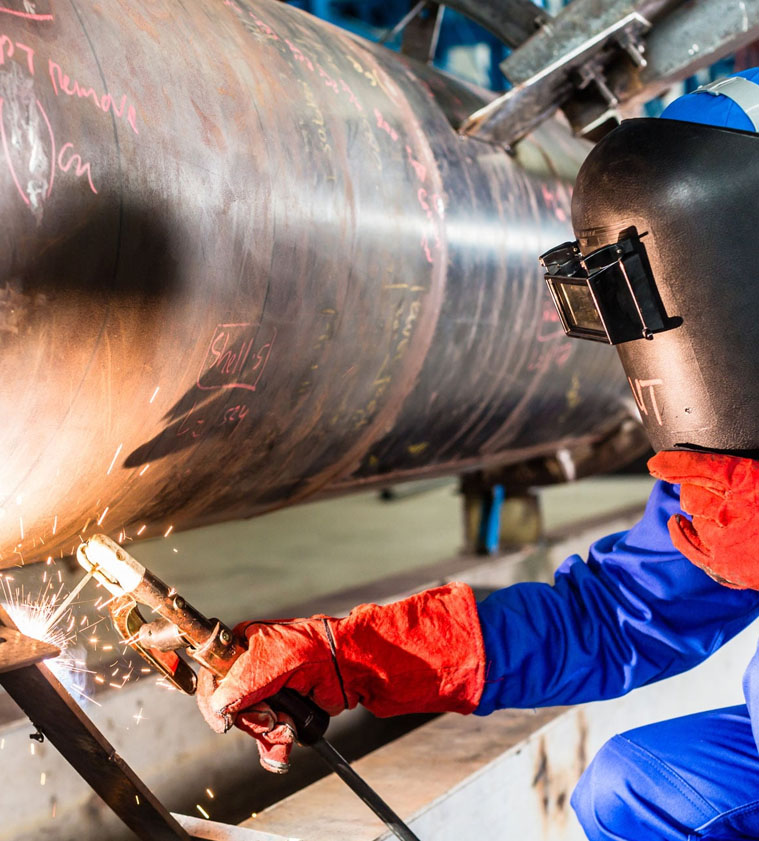
- Characteristics: High strength, excellent ductility, superior impact toughness (especially important at low temperatures), low hydrogen content, and all-position capabilities (except vertical-down in some cases). Produces a smooth, uniform bead with minimal spatter and easy slag removal.
- Applications: The preferred electrode for critical applications requiring high mechanical properties, such as pressure pipelines, structural pipework, and heavy-wall carbon steel pipes. It is excellent for hot passes, fill passes, and cap passes, where its low hydrogen content significantly reduces the risk of hydrogen-induced cracking. Proper storage in heated ovens is crucial to maintain its low-hydrogen integrity.
E7016 (Low Hydrogen)
- Characteristics: Similar properties to E7018 but designed for both AC and DC current, offering good mechanical properties and low hydrogen content.
- Applications: Used in applications similar to E7018 where AC power might be preferred or necessary.
J422 (Chinese Standard)
- Characteristics: This is a rutile-type carbon steel electrode, similar in characteristics and application range to AWS E6013. It offers good weldability, stable arc, and smooth bead appearance.
- Applications: Widely used for general purpose welding of mild steel structures and thinner carbon steel pipes where moderate strength and good cosmetic finish are required.
Optimizing Your Procurement: Partnering with Oldwelders
For procurement engineers and welding supervisors, the selection of a reliable supplier for welding materials is as crucial as the electrode choice itself. Oldwelders is committed to delivering quality and consistency, backed by robust manufacturing capabilities and stringent quality control.
Our commitment to quality begins at the foundational level. The raw materials used for our welding fluxes, which are integral to electrode performance, include excellent dolomite, bauxite, cryolite, silica, and fluorine ore. These select ores are melted at extremely high temperatures, up to 2000 °C, to ensure optimal purity and consistency in every batch. This meticulous approach to material science directly translates into the superior performance of our welding electrodes, providing stable arcs, consistent penetration, and reliable mechanical properties for your carbon steel pipe projects.
Oldwelders operates a state-of-the-art manufacturing plant covering an area of 1000 square meters. This facility houses six advanced production lines, enabling us to achieve a substantial daily supply capacity of 100 tons. This high-volume capability ensures that we can meet the demands of large-scale industrial projects without compromising on delivery timelines or product quality, providing a consistent supply for our clients in diverse markets such as Brazil, Thailand, Australia, and Malaysia.
We understand that project requirements vary, and flexibility in procurement is essential. Oldwelders supports projects of various scales, offering a minimum order quantity (MOQ) of just 1 ton. This flexibility allows businesses, from specialized contractors to large industrial enterprises, to access high-quality carbon steel electrodes without excessive inventory commitments. Our ISO 9001 certification further assures our clients of our adherence to international quality management standards, underscoring our dedication to operational excellence and continuous improvement.
When you partner with Oldwelders, you gain access to a knowledgeable team that understands the nuances of carbon steel electrode selection for pipe work. We are equipped to assist in specifying the right electrodes for your unique project parameters, ensuring that you receive products that not only meet but exceed your performance expectations. Our comprehensive product range covers various electrode types, enabling you to consolidate your procurement needs with a single, reliable vendor.
Conclusion
The judicious selection of a carbon steel electrode is paramount for the success and safety of any pipe welding endeavor. By thoroughly understanding the pipe material, welding position, required mechanical properties, and electrode classifications, procurement engineers and welding supervisors can make informed decisions that ensure robust, high-quality welds. Whether your project demands the deep penetration of an E6010 for root passes or the high strength and ductility of an E7018 for critical fill and cap passes, Oldwelders provides the expertise and quality products to meet your specific needs.
With our ISO 9001 certified manufacturing processes, extensive production capacity of 100 tons per day, premium raw materials, and a commitment to serving global markets, Oldwelders stands ready to be your trusted partner for all your welding electrode requirements. We encourage you to reach out to our team to discuss your upcoming projects and discover how our high-performance electrodes can contribute to your operational success.