
Calculate E7018 Electrode Landed Cost by Pack Size | Oldwelders
Calculating the True Landed Cost of Your E7018 Electrode Order
For procurement managers and import buyers in industrial sectors, evaluating supplier quotations for welding consumables is a critical task. When sourcing an essential product like the E7018 electrode, the price on the quotation is often just the beginning of the story. The Free on Board (FOB) price is an important figure, but it doesn't represent the total investment required to get the product from the manufacturer's factory to your facility. To make a truly informed purchasing decision and accurately budget for your projects, you must calculate the total landed cost. This comprehensive cost includes not only the product price but also logistics, insurance, duties, and local handling fees—all of which can be significantly influenced by a seemingly minor detail: the packaging size.
This guide will walk you through the essential components of a landed cost calculation, with a special focus on how different pack sizes for your welding rods can impact everything from container space utilization to final per-unit costs. Understanding these variables will empower you to compare supplier quotes more effectively and optimize your international procurement strategy.
Why FOB Price is Only the Starting Point for an E7018 Electrode
The quoted FOB price for an E7018 electrode typically covers the cost of the product itself, standard packaging, and the expense of transporting it to the designated port of departure. While this is a major part of the overall cost, it omits several substantial expenses that the buyer is responsible for. Relying solely on the FOB price can lead to unexpected budget overruns and logistical challenges. The true cost—the landed cost—provides a complete picture of your financial commitment.
Consider two suppliers. Supplier A offers a 5% lower FOB price than Supplier B. On the surface, Supplier A seems like the better choice. However, if Supplier A's packaging is less efficient, leading to higher freight costs per ton, or if their documentation is incomplete, causing delays and extra fees at customs, their total landed cost could easily exceed that of Supplier B. A thorough landed cost analysis protects your bottom line and ensures a smoother supply chain.
For international buyers, especially in markets like Brazil, Thailand, Australia, and Malaysia, navigating the complexities of international shipping and customs is a daily reality. A reliable supplier understands these challenges and provides transparent information to help you calculate these costs accurately. As an ISO 9001 certified manufacturer, we prioritize this transparency, ensuring the quality and specifications you order are precisely what you receive, preventing costly downstream issues from product inconsistencies.
Key Components of Your E7018 Electrode Landed Cost
To calculate the total landed cost, you need to sum up all expenses incurred from the factory door to your warehouse. Let's break down the typical components.
1. Product Cost (FOB Price)
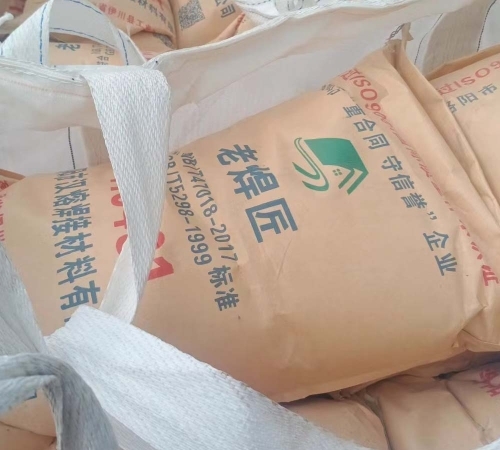
This is the base price of the goods from your supplier. It is influenced by raw material costs, manufacturing processes, and the supplier's margin. At Oldwelders, we produce our welding fluxes and electrode coatings from premium raw materials like dolomite, bauxite, and silica, melted at 2000°C to ensure superior performance. This commitment to quality forms the foundation of the product's value.
2. Ocean or Air Freight
This is the cost to transport the goods from the port of origin to the port of destination. This is one of the most significant variables. Costs are determined by:
- Shipping Mode: Full Container Load (FCL) is generally more cost-effective per unit for large orders, while Less than Container Load (LCL) is suitable for smaller quantities, such as our minimum order of 1 ton.
- Volume & Weight: Freight forwarders charge based on whichever is greater: the actual weight (in tons) or the volumetric weight (in cubic meters, or CBM). Efficient packaging is key to minimizing CBM.
- Route & Carrier: Shipping lanes, fuel surcharges (BAF), and carrier availability all affect the final price.
3. Insurance
Protecting your investment against loss or damage during transit is non-negotiable. If your terms are Cost, Insurance, and Freight (CIF), the seller arranges insurance. If the terms are FOB, the buyer is responsible for securing marine insurance. The cost is typically a small percentage of the total invoice value.
4. Customs Duties, Tariffs, and Taxes
Every country has its own import regulations. These costs are calculated based on the Harmonized System (HS) code of the product and the value of the goods. For a specific consumable like an E7018 electrode, the duty rate can vary significantly between countries. It's crucial to consult with a local customs broker to get an accurate estimate of these government-mandated charges.
5. Local Handling and Port Charges
Once the shipment arrives at the destination port, a new set of costs begins. These are often referred to as Terminal Handling Charges (THC) and can include:
- Unloading the container from the vessel.
- Port storage fees (demurrage) if the container is not cleared quickly.
- Customs clearance fees paid to your broker.
- Inland transportation (drayage) from the port to your final destination.
By adding all these components together, you arrive at the total landed cost. Dividing this total by the number of units (e.g., kilograms or tons) gives you the true per-unit cost of your product.
How Packaging Choices Directly Impact Your Total Cost
The way your welding rods are packaged is not just about protection; it's a critical factor in logistics and cost efficiency. Suppliers typically offer various options, such as 2.5kg, 5kg, or 20kg boxes, which are then packed into larger master cartons and palletized. Here’s how these choices affect your landed cost.
Container Space Utilization
The primary goal in sea freight is to maximize the use of a container's volume and weight capacity (typically around 25-27 tons for a 20-foot container). The dimensions of the master cartons and how they fit onto a standard pallet determine your shipment's total CBM. For example, larger 20kg master cartons might stack more densely on a pallet than multiple smaller 5kg cartons, resulting in less wasted space and a lower CBM per ton. This efficiency means you can ship more product for the same freight cost, effectively lowering your per-kilogram shipping expense.
When requesting a quote for an E7018 electrode, ask your supplier for the dimensions and weight of their palletized configurations for different pack sizes. A knowledgeable supplier can provide a detailed packing list that helps you or your freight forwarder calculate the CBM and optimize the container load.
Handling and Labor Costs
Packaging also affects labor costs at both the point of origin and the final destination. Larger, palletized cartons are faster to load and unload with a forklift, reducing labor hours and associated costs. However, if your end-users or distributors require smaller, more manageable pack sizes for retail or job site use, the initial savings from bulk packaging might be offset by the need to break down pallets and re-package the goods later. It’s essential to consider the entire supply chain. For large industrial projects, receiving full pallets of 20kg cartons may be ideal. For distribution to smaller workshops, 5kg boxes might be more practical despite slightly higher initial freight costs.
Product Protection and Quality
The low-hydrogen nature of the E7018 electrode is critical to its performance. The coating is hygroscopic, meaning it readily absorbs moisture from the atmosphere, which can lead to hydrogen-induced cracking and weld defects. Therefore, packaging must provide an excellent moisture barrier. Vacuum-sealed foil bags inside sturdy cardboard boxes offer the best protection but may come at a premium. Standard packaging might be sufficient for dry climates or when the product will be used quickly, but for long-distance sea voyages to humid regions like Malaysia or Brazil, superior packaging is a wise investment to prevent product spoilage and waste.
Partnering with a Reliable Supplier for Cost-Effective Sourcing
Calculating landed cost is complex, but a transparent and experienced manufacturing partner can simplify the process. A reliable supplier does more than just provide a competitive FOB price; they become a partner in optimizing your supply chain.
When evaluating suppliers, look for signs of professionalism and capability. For instance, a manufacturer with a large production capacity—our plant, for example, can supply 100 tons a day from six production lines—is better equipped to handle large volume orders without compromising on quality or lead times. Our standard lead time is 30 days, providing predictability for your project planning. This scale ensures a stable supply of high-quality welding materials for your operations.
An experienced supplier should be able to provide you with all the necessary information for your calculations, including:
- Detailed Packing Specifications: Dimensions and weights for all packaging options.
- Accurate HS Codes: To ensure correct duty and tax calculations.
- Certificates of Origin: Which may be required for preferential tariff rates under certain trade agreements.
- Logistical Support: Recommendations for freight forwarders and experience shipping to your region.
By choosing a partner who understands the intricacies of international trade, you can mitigate risks, avoid unexpected costs, and ensure that the high-quality E7018 electrode you procure delivers maximum value. A powerful arc welding machine is only as good as the consumables used with it, making the quality of your electrodes paramount.
Ultimately, the goal is to find the optimal balance between product cost, logistical efficiency, and end-use requirements. By moving beyond the FOB price and meticulously calculating your total landed cost, you can make smarter procurement decisions that strengthen your company's competitive advantage. Whether you are sourcing a single pallet or multiple containers of welding electrode products, this detailed approach is the key to successful global sourcing.