
Basic Welding Rod: Low-Hydrogen Properties
Understanding How a Basic Welding Rod Achieves its Low-Hydrogen Properties
For industrial fabrication and repair, the choice of welding materials is paramount to ensuring structural integrity and preventing costly defects. Among the myriad options, the basic welding rod stands out for its specific metallurgical properties, particularly when formulated as low-hydrogen. This article delves into the technical aspects of what makes a basic welding rod low-hydrogen, exploring the science behind its composition, manufacturing, and the critical benefits it offers to professional welders and project managers.
A basic welding rod, often referred to as a low-hydrogen electrode, is designed to minimize the introduction of hydrogen into the weld metal. Hydrogen, even in trace amounts, can lead to severe defects such as hydrogen-induced cracking (HIC) or delayed cracking, particularly in high-strength steels. These defects can compromise the structural integrity of a welded joint, leading to premature failure and significant safety risks. Therefore, understanding and utilizing low-hydrogen electrodes is not just a best practice; it is often a mandatory requirement in critical applications across various industries.
The Core Principles of Low-Hydrogen Electrodes
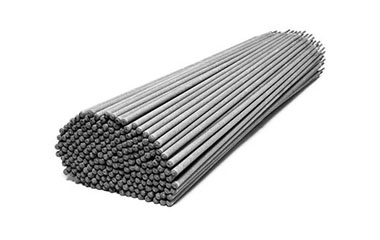
The primary objective of a low-hydrogen welding rod is to prevent or significantly reduce hydrogen absorption in the weld pool. This is achieved through a combination of carefully selected flux ingredients and stringent manufacturing processes. The flux coating on these electrodes contains minimal amounts of hydrogen-bearing compounds, such as cellulose or moisture. Instead, they rely on basic minerals that, when decomposed during welding, produce a shielding gas that is inherently low in hydrogen.
The term "basic" in basic welding rod refers to the chemical nature of its flux coating. These coatings typically contain high proportions of calcium carbonate (limestone), fluorspar (calcium fluoride), and other basic oxides. When these compounds dissociate at high temperatures during the welding process, they generate a gas shield rich in carbon dioxide and fluorine, which effectively displaces atmospheric hydrogen and minimizes its presence in the arc and weld pool. Furthermore, the slag produced by these basic fluxes is highly fluid and has excellent scavenging properties, helping to absorb any residual hydrogen and keep it out of the solidifying weld metal.
The strict control over moisture content in the flux is another critical factor. Moisture, being H₂O, is a direct source of hydrogen. Low-hydrogen electrodes are therefore manufactured and packaged under conditions that minimize moisture absorption. They often require specific storage conditions, such as heated electrode ovens, to ensure their low-hydrogen properties are maintained until the moment of use. Oldwelders understands these requirements, maintaining controlled environments throughout the production and packaging of our electrodes to guarantee optimal performance.
Manufacturing Excellence for Your Basic Welding Rod Needs
The production of high-quality low-hydrogen basic welding rod products demands meticulous attention to detail, from raw material selection to the final packaging. At Oldwelders, our commitment to quality is underscored by our ISO 9001 certification, ensuring that every stage of our manufacturing process meets international standards for quality management. This rigorous approach is fundamental to producing consumables that consistently deliver superior performance in demanding industrial environments.
Raw Material Selection and Processing
The journey of a premium basic welding rod begins with the careful selection of raw materials for its flux coating. For our flux products, we utilize excellent dolomite, bauxite, cryolite, silica, fluorine ore, and other high-grade ores. These raw materials are chosen for their specific contributions to the flux properties, including slag formation, arc stability, and, crucially, their low hydrogen content. These selected ores are then subjected to a melting process at an extremely high temperature of 2000 °C. This high-temperature melting is critical for purifying the materials, removing impurities, and creating a homogeneous blend that will form the backbone of the low-hydrogen flux coating.
The core wire around which the flux is extruded also plays a vital role. It must be of consistent quality and composition to ensure stable arc performance and predictable metallurgical results. Our manufacturing facilities are equipped to process these materials with precision, ensuring that the core wire and flux composition are perfectly matched for optimal welding characteristics.
Advanced Production Capabilities
Our plant, spanning an area of 1000 square meters, is a testament to our advanced production capabilities. It houses six state-of-the-art production lines, designed for efficiency and precision in manufacturing welding rod products. This extensive infrastructure allows us to maintain a high production capacity, capable of supplying up to 100 tons of flux products per day. This substantial output ensures that Oldwelders can meet the demands of large-scale industrial projects and maintain consistent supply for our global clientele in markets such as Brazil, Thailand, Australia, and Malaysia.
Each production line incorporates advanced extrusion technology to apply the flux coating uniformly around the core wire. Consistency in flux thickness and concentricity is vital for stable arc performance and consistent weld quality. Following extrusion, the rods undergo a precise baking process. This baking is critical for drying the flux and consolidating its structure, further reducing any potential for hydrogen introduction. The temperature and duration of the baking cycle are meticulously controlled to achieve the desired metallurgical properties and ensure the low-hydrogen characteristics are fully developed and maintained.
The Critical Role of Flux Composition in Low-Hydrogen Welding
The chemical composition of the flux coating is the most defining characteristic that determines a welding rod's low-hydrogen properties. Unlike rutile or cellulosic electrodes, which may contain organic compounds that break down into hydrogen in the arc, basic fluxes are formulated to be free from such contaminants. The specific ingredients and their ratios are carefully balanced to achieve several critical functions during welding:
- Hydrogen Suppression: The primary function is to minimize hydrogen generation. Ingredients like calcium carbonate (CaCO₃) decompose into CaO and CO₂, with the CO₂ providing an inert shielding gas. Fluorspar (CaF₂) introduces fluorine, which can react with hydrogen to form hydrogen fluoride (HF), a compound that is less soluble in molten steel than elemental hydrogen, effectively removing it from the weld pool.
- Arc Stability: Certain flux components, such as potassium compounds, are added to improve arc stability, ensuring a smooth and consistent welding process. A stable arc reduces spatter and promotes better weld bead appearance and penetration.
- Slag Formation: Basic fluxes produce a dense, easily removable slag. This slag helps to protect the molten weld pool from atmospheric contamination and provides additional deoxidizing and refining actions. The high basicity of the slag also facilitates the absorption of non-metallic inclusions and promotes the formation of fine-grained weld metal.
- Deoxidation and Alloying: Ferromanganese and ferrosilicon are often included in the flux to deoxidize the weld metal, improving its mechanical properties. Alloying elements can also be incorporated into the flux to transfer desired properties to the weld, such as increased strength or toughness.
- Moisture Resistance: While basic electrodes require careful storage, some flux formulations include ingredients that offer improved resistance to moisture regain, though this does not negate the need for proper handling and storage.
The precise blending and melting of raw materials at 2000 °C ensure that these intricate chemical interactions occur optimally, resulting in a flux that performs consistently and reliably under various welding conditions. This meticulous approach to flux formulation is a cornerstone of Oldwelders' commitment to delivering superior welding fluxes and electrodes.
Key Benefits and Applications of Low-Hydrogen Basic Welding Rods
The use of low-hydrogen basic welding rods offers a multitude of advantages, particularly when welding critical structures or high-strength steels where metallurgical integrity is non-negotiable. These benefits translate directly into improved weld quality, enhanced structural reliability, and reduced risk of costly failures.
Enhanced Mechanical Properties
One of the most significant benefits is the superior mechanical properties imparted to the weld metal. Low-hydrogen welds typically exhibit higher tensile strength, yield strength, and impact toughness compared to welds made with hydrogen-rich electrodes. This is because the absence of hydrogen prevents the formation of internal microcracks and voids that can act as stress concentrators, leading to brittle fracture. The resulting weld metal is denser, more homogeneous, and capable of withstanding higher stresses and dynamic loads.
Prevention of Hydrogen-Induced Cracking (HIC)
Hydrogen-induced cracking, also known as cold cracking or delayed cracking, is a major concern when welding high-strength steels, heavy sections, or restrained joints. This type of cracking occurs hours or even days after welding, making it insidious and difficult to detect immediately. By minimizing hydrogen input, low-hydrogen basic welding rods effectively eliminate one of the three critical factors required for HIC (the others being susceptible microstructure and tensile stress). This makes them indispensable for applications where HIC is a significant risk.
Versatility and Wide Range of Applications
Due to their excellent mechanical properties and crack resistance, low-hydrogen electrodes are highly versatile and are specified for a vast array of critical applications across numerous industries:
- Pressure Vessels and Boilers: Where high integrity and resistance to internal pressure are vital.
- Pipelines: For oil, gas, and water transmission, ensuring leak-free and durable joints.
- Heavy Fabrication: In the construction of bridges, power generation equipment, and structural components that endure significant loads.
- Shipbuilding: For hulls, decks, and structural frameworks requiring high strength and fatigue resistance.
- Offshore Structures: Platforms and rigs exposed to harsh marine environments.
- Repair and Maintenance: For repairing critical components where the original material is high-strength steel.
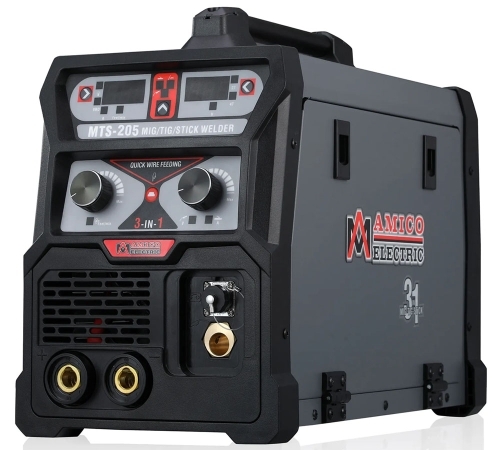
For these applications, pairing the right low-hydrogen electrode with an appropriate arc welding machine is crucial for optimal results. Oldwelders provides a comprehensive range of welding machine solutions to complement our premium consumables.
Oldwelders' Commitment to Quality and Global Supply
At Oldwelders, we are dedicated to supplying the global industrial sector with welding consumables that meet the highest standards of quality and performance. Our extensive production capabilities, backed by ISO 9001 certification, ensure that every AWS E6013 Welding Electrodes and other specialized welding rods we produce are of consistent, reliable quality.
Our commitment extends beyond product quality to efficient service. With a daily production capacity of 100 tons from our six production lines, we are well-positioned to fulfill large orders and ensure timely delivery to our international customers. While specific delivery times can vary based on order size and destination, Oldwelders aims for efficient processing, often achieving turnaround within 30 days for various orders, demonstrating our dedication to customer satisfaction.
We understand the demanding requirements of professional welders and fabrication buyers. That's why we invest in advanced manufacturing processes, from the high-temperature melting of raw materials at 2000 °C to the precise extrusion and baking of electrodes. This meticulous approach ensures that our welding rods not only meet but exceed industry expectations for low-hydrogen performance, arc stability, and mechanical properties.
Whether your projects are in Brazil, Thailand, Australia, Malaysia, or elsewhere, Oldwelders is your trusted partner for high-quality welding consumables and equipment. Our comprehensive range of products, including various welding wire types and advanced welding machines, is designed to support diverse industrial applications worldwide.
Conclusion
The low-hydrogen basic welding rod is an indispensable tool in modern industrial welding, offering critical advantages in preventing hydrogen-induced cracking and ensuring the longevity and reliability of welded structures. Its effectiveness is rooted in the carefully controlled flux composition, which utilizes basic minerals processed at high temperatures to minimize hydrogen input into the weld metal.
Oldwelders stands at the forefront of manufacturing these essential consumables, combining ISO 9001 certified quality management with significant production capacity and a deep understanding of metallurgical science. By choosing Oldwelders, you are selecting a partner committed to delivering superior welding solutions, empowering your projects with strength, durability, and uncompromising quality.