
BFA Powder: Safety, Applications, and Grade Selection Guide
Understanding BFA Powder for Your Industrial Applications
In demanding industrial environments, the choice of abrasive material is critical to achieving desired outcomes in surface preparation, finishing, and manufacturing. For technical buyers evaluating materials for grinding, blasting, polishing, or refractory applications, understanding the nuances of Brown Fused Alumina, or BFA powder, is essential. This high-purity, durable abrasive is valued for its hardness, toughness, and thermal stability. However, selecting the correct grade and implementing proper handling procedures are paramount to maximizing performance and ensuring workplace safety. This guide provides the detailed information necessary to validate if this material fits your specific operational requirements.
At Oldwelders, we leverage our extensive manufacturing expertise to produce high-quality industrial materials. Our commitment to quality is underscored by our ISO 9001 certification, ensuring that every batch of abrasive or welding consumable we produce meets stringent international standards. This focus on process control and consistency is vital for our partners in demanding markets across Brazil, Thailand, Australia, and Malaysia.
What is BFA Powder and How Is It Produced?
BFA powder is a synthetic corundum produced through the electric arc furnace smelting of high-quality bauxite. The process involves heating the raw material to extreme temperatures, typically around 2000 °C, to melt and purify it. This intense heat burns off impurities, leaving a dense, crystalline material composed primarily of aluminum oxide (Al₂O₃). After cooling, the solidified mass is crushed, and the resulting grains are meticulously screened and graded according to particle size distribution, typically following FEPA (Federation of European Producers of Abrasives) or ANSI standards.
The key properties that make this material so versatile include:
- High Hardness: With a Mohs hardness of 9, it is second only to diamond, making it capable of cutting, grinding, and etching even the hardest metals and alloys.
- Exceptional Toughness: Unlike some other hard materials that can be brittle, brown fused alumina possesses high toughness, allowing it to resist fracturing under pressure. This makes it ideal for high-pressure applications like abrasive blasting and heavy-duty grinding.
- Thermal Stability: Its high melting point and low thermal expansion make it an excellent choice for refractory products, such as bricks, castables, and furnace linings, where it can withstand extreme temperature cycles.
- Chemical Inertness: It is resistant to most chemical agents, ensuring that it does not contaminate the workpiece or react negatively with other materials during processing.
The manufacturing process is critical to the final quality of the abrasive. At our 1000-square-meter facility, we utilize a combination of excellent raw materials—including select bauxite, dolomite, and silica—and a precisely controlled fusion process. With six dedicated production lines, we have the capacity to supply up to 100 tons per day, ensuring a reliable supply chain for large-scale industrial consumers.
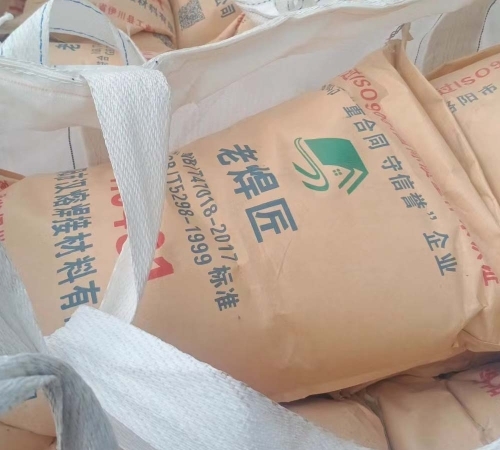
Critical Safety Protocols for Handling Brown Fused Alumina
While BFA powder is generally considered a stable and non-toxic material, its abrasive nature and the potential for fine dust generation necessitate strict safety protocols. The primary hazards are respiratory irritation from inhaled dust and eye irritation from airborne particles. Adhering to established safety measures is not just a matter of compliance but a crucial step in protecting your workforce.
Respiratory Protection
The most significant risk associated with handling any fine powder is the inhalation of airborne dust. Prolonged exposure can lead to respiratory tract irritation and more severe conditions. To mitigate this risk:
- Ventilation: Ensure work areas are equipped with adequate local exhaust ventilation (LEV) systems to capture dust at the source. This is especially important in enclosed spaces where blasting, grinding, or material transfer occurs.
- Personal Protective Equipment (PPE): Mandate the use of appropriate respiratory protection. For environments with moderate dust levels, an N95-rated disposable respirator may be sufficient. In high-concentration areas, such as during abrasive blasting, a powered air-purifying respirator (PAPR) or a supplied-air respirator is recommended.
- Wet Methods: Whenever possible, use wet grinding or blasting techniques to suppress dust generation. This can significantly reduce the concentration of airborne particles.
Eye and Skin Protection
The sharp, angular particles of brown fused alumina can cause serious eye injury and skin abrasion. Standard PPE is essential for all personnel handling the material.
- Eye Protection: Safety glasses with side shields are the minimum requirement. In high-dust or high-velocity applications like blasting, fully sealed safety goggles or a face shield should be worn to prevent particles from entering the eyes.
- Skin Protection: Durable gloves and full-coverage clothing or coveralls should be worn to protect the skin from cuts and abrasions, especially during manual handling or cleanup.
Safe Storage and Handling
Proper storage and handling procedures can further minimize exposure risks. Store bags or containers of BFA powder in a dry, well-ventilated area away from incompatible materials. Use dedicated scoops and equipment for transfer, and clean up spills promptly using a HEPA-filtered vacuum instead of compressed air, which can re-aerosolize the dust.
Matching BFA Powder Grades to Specific Applications
The effectiveness of BFA powder is entirely dependent on selecting the right grade for the job. Grades are defined by their particle size, or grit, which determines the material removal rate and the resulting surface finish. Mismatched grades can lead to inefficient processing, damaged workpieces, or a failure to meet surface specifications.
Grinding and Bonded Abrasives
For grinding wheels, cutting discs, and other bonded abrasives, coarser grits (e.g., FEPA F12 to F36) are used for rapid material removal, such as in snagging and rough grinding of castings and forgings. The toughness of the abrasive allows it to withstand the high pressures involved. Medium grits (F40 to F80) offer a balance between removal rate and surface finish, making them suitable for general-purpose grinding of carbon steels, alloy steels, and hard bronze. Finer grits (F90 and above) are used for precision grinding where a smoother finish is required.
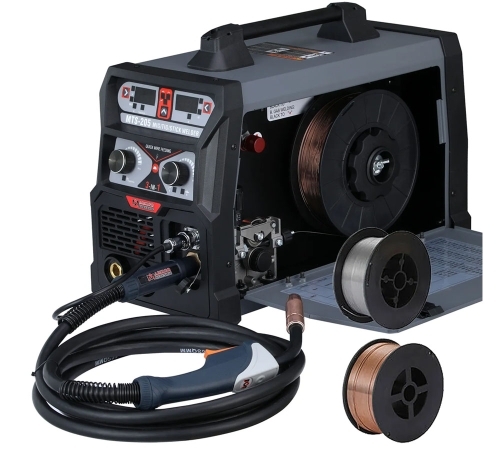
Surface Preparation and Blasting
Abrasive blasting is a common application where the sharp, angular nature of the material excels. The choice of grit depends on the objective:
- Aggressive Cleaning: Coarse grits (F16 to F40) are used for removing heavy scale, rust, and thick coatings from steel surfaces. The high impact energy of these particles quickly strips away contaminants.
- Surface Profiling: Medium grits (F46 to F100) are ideal for creating an anchor pattern on a substrate before painting or coating. The resulting surface profile enhances adhesion, leading to a more durable finish.
- Delicate Cleaning: Finer grits (F120 to F220) are used for cleaning more sensitive surfaces or when a very fine profile is needed. They are suitable for applications like mold cleaning or deburring precision parts.
Polishing, Lapping, and Coated Abrasives
For applications requiring a high-quality surface finish, finer micro-grits are used. In lapping and polishing, these fine powders (typically F240 to F1200 and finer) are mixed with a carrier liquid to create a slurry that abrades the workpiece to a smooth, often reflective, finish. In coated abrasives like sandpaper and belts, the particles are bonded to a flexible backing. The consistent particle size of high-quality BFA powder ensures a uniform scratch pattern, which is critical for achieving consistent aesthetic and functional surfaces.
Refractory and High-Temperature Uses
Beyond abrasives, the thermal and chemical properties of brown fused alumina make it a key component in the refractory industry. Its high melting point (above 2000 °C) and excellent thermal shock resistance allow it to be used in products that line furnaces, kilns, and reactors. It is incorporated into refractory bricks, monolithic castables, and ramming mixes to provide structural integrity and resistance to slag and chemical attack at extreme temperatures. The purity and controlled particle size distribution are crucial for creating dense, stable refractory linings.
Sourcing and Quality Assurance for Industrial Abrasives
For any industrial operation, a reliable and consistent supply of raw materials is non-negotiable. When sourcing an abrasive like BFA powder, quality assurance and supply chain stability should be primary considerations. Inconsistent particle size, impurities, or supply disruptions can halt production and compromise the quality of your finished products.
As an ISO 9001 certified manufacturer, we adhere to rigorous quality control protocols at every stage of production. From the inspection of incoming bauxite to the final grading and packaging of the finished powder, we ensure that every batch meets the specified physical and chemical properties. This dedication to quality has made us a trusted supplier for industrial partners in demanding markets from Brazil to Australia. With a minimum order quantity of 1 ton and a standard lead time of 30 days, we provide a predictable and scalable supply solution for businesses of all sizes.
Integrating Abrasives with Your Welding Operations
Proper surface preparation is the foundation of a high-quality weld. Contaminants like rust, scale, oil, and old paint can introduce defects into the weld pool, leading to porosity, cracking, and a weak joint. Abrasive methods using materials like BFA powder are essential for preparing metal surfaces to ensure they are clean and have the appropriate profile for welding.
Whether you are using a powerful welding machine for heavy fabrication or performing precision TIG welding, starting with a pristine surface is non-negotiable. Blasting or grinding a joint area removes impurities that could compromise the performance of welding materials. For example, a clean, properly prepared surface allows for optimal wetting and flow of molten metal when using products like our aws e6013 welding electrodes, resulting in a stronger, more uniform bead. Similarly, in submerged arc welding, a clean base metal ensures the protective slag from the welding fluxes can do its job effectively without reacting with surface contaminants. By integrating high-performance abrasives into your pre-welding workflow, you enhance the reliability and integrity of every weld you produce.