
A Guide to Submerged Arc Welder Duty Cycle
Understanding the Duty Cycle of Your Submerged Arc Welder
For fabrication managers overseeing large-scale industrial projects, maximizing productivity without compromising quality is the primary objective. The Submerged Arc Welding (SAW) process is a cornerstone of this effort, prized for its high deposition rates and deep penetration. However, the true productivity of any SAW system is fundamentally governed by a single, often misunderstood specification: the duty cycle. Selecting a Submerged Arc Welder with an inappropriate duty cycle can lead to unplanned downtime, premature equipment failure, and production bottlenecks that ripple through your entire operation. This guide provides a detailed examination of duty cycle, specifically for fabrication managers aiming to expand production capacity or specify a new SAW system with confidence.
What is Duty Cycle in Submerged Arc Welding?
In the simplest terms, duty cycle is a measurement of the amount of time a welding machine can operate continuously at a given output within a standard ten-minute period before it must cool down. It is expressed as a percentage. For example, a power source rated at 60% duty cycle at 1000 amperes can weld continuously for six minutes at that amperage. For the remaining four minutes of the ten-minute cycle, the machine must remain idle with its cooling systems (typically fans) running to dissipate the internal heat generated during operation.
It is critical to understand that this is not an optional guideline; it is an essential thermal operating limit. The internal components of a welding power source, such as transformers, rectifiers, and control boards, generate significant heat under load. Exceeding the duty cycle pushes these components beyond their designed thermal capacity, leading to a risk of damage and significantly shortening the lifespan of the equipment. Modern machines have thermal overload protection circuits that will automatically shut down the welding output to prevent catastrophic failure, but relying on these safeties as a production management tool is inefficient and indicates a mismatch between the equipment and the application.
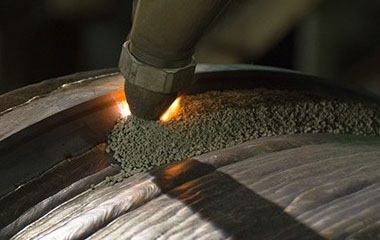
The SAW process, by its nature, often involves very long, continuous welds on thick materials, such as in pipe manufacturing, pressure vessel fabrication, and shipbuilding. These applications demand high arc-on time, making a thorough understanding of duty cycle non-negotiable. An underrated machine will constantly be tripping its thermal protection, while an overrated machine may represent an unnecessary capital expenditure. The key is to precisely match the machine’s capabilities to the demands of the job.
How to Interpret Duty Cycle Specifications
A machine's duty cycle is not a single number but rather a curve. The higher the welding amperage, the shorter the duty cycle, and vice versa. Manufacturers provide these specifications to give a complete picture of the machine's operational envelope. A typical rating might look like this:
- 1000A / 44V @ 60% Duty Cycle
- 800A / 44V @ 100% Duty Cycle
This tells a fabrication manager several important things. At the maximum rated output of 1000 amps, the machine can run for six minutes out of every ten. However, if the welding procedure is adjusted to run at 800 amps, the machine can operate continuously without any required cooling-off period. This 100% duty cycle rating is often the most important figure for automated or long-seam applications where stopping is highly undesirable.
When comparing different models, it's crucial to look at the amperage available at a 100% duty cycle. A machine advertised as a "1200-amp" power source might only achieve that output at a 40% or 50% duty cycle, while its 100% rating could be closer to 900 amps. For a production line running continuous welds, the 900-amp rating is the realistic maximum for sustained throughput. This is a critical detail for clients in demanding markets like Brazil and Thailand, where production efficiency is paramount.
Furthermore, ensure you are comparing specifications based on the same standard. The two most common standards are NEMA (National Electrical Manufacturers Association) and IEC (International Electrotechnical Commission). NEMA ratings are typically more conservative and tested at higher ambient temperatures, often providing a more realistic picture of performance in a demanding industrial environment. Always verify which standard is being used when evaluating equipment from different manufacturers.
Real-World Factors That Influence Effective Duty Cycle
The duty cycle rating on a specification sheet is determined under controlled laboratory conditions. In a real fabrication facility, several environmental and operational factors can impact the machine's ability to cool itself, thereby affecting its effective duty cycle.
Ambient Temperature
The most significant factor is the ambient air temperature. Duty cycle ratings are usually based on a standard temperature, often 40°C (104°F). If your facility is located in a hotter climate, like those found in parts of Australia or Malaysia, or if the welding station is near heat-treating furnaces, the machine's cooling efficiency will be reduced. The temperature difference between the internal components and the cooling air is smaller, slowing heat dissipation. In such conditions, a machine may not be able to achieve its full rated duty cycle. Conversely, operating in a colder environment can slightly improve performance.
Airflow and Machine Placement
Welding power sources rely on fans to pull cool air over hot components. If the air vents on the machine are blocked or restricted, the duty cycle will be compromised. It is essential to ensure there is adequate clearance around the machine (typically 12-18 inches on all sides) for proper ventilation. The air in a busy fabrication shop is also filled with dust, grinding particles, and metal fumes. This particulate can accumulate on internal components, acting as an insulator and hindering heat transfer. A regular preventative maintenance schedule that includes blowing out the machine with clean, dry compressed air is vital for maintaining thermal performance and equipment longevity.
Input Power Quality
A stable and correct input voltage is crucial for the machine to operate as designed. If the input voltage is consistently low, the machine will have to draw more current to produce the desired welding output, leading to increased internal heat generation and a reduction in the effective duty cycle. Fluctuations in the plant's power grid can have a similar effect. Ensuring the arc welding machine is connected to a robust electrical circuit is a prerequisite for reliable performance.
Matching the Submerged Arc Welder to Production Demands
For a fabrication manager, the goal is to select a Submerged Arc Welder that meets but does not excessively exceed production requirements. This involves a careful analysis of your welding applications.
Calculating Required Duty Cycle
Start by analyzing your most demanding jobs. For long, continuous welds, such as fabricating large tanks or structural beams, you will likely need a machine with a 100% duty cycle at the required welding amperage. To determine this amperage, consult your Welding Procedure Specification (WPS). If your WPS calls for 900 amps for a critical longitudinal seam, you must procure a power source rated for at least 900 amps at a 100% duty cycle.
For more intermittent work, such as short stitches or jobs with frequent repositioning, a machine with a lower duty cycle may be sufficient. However, it's always wise to build in a buffer. A machine that is consistently pushed to its absolute thermal limit will have a shorter service life than one that operates comfortably within its capacity. A good rule of thumb is to select a machine whose 100% duty cycle rating is at least 15-20% higher than your most common continuous operating amperage.
The System-Wide Approach
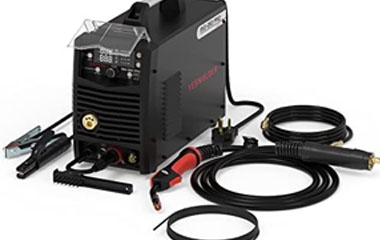
The power source is only one part of the equation. The entire SAW system, including the wire feeder, tractor or manipulator, and consumables, must be designed for the intended workload. The quality and consistency of your consumables are just as important as the machine's duty cycle. Just as our 1000-square-meter plant with six production lines is designed for high output, your SAW system must be specified to meet your throughput goals. Using high-quality welding materials ensures consistent arc stability and weld properties, even during long, high-amperage runs. Poor quality flux or wire can lead to an unstable arc, forcing operators to make adjustments that can affect both productivity and the thermal load on the machine.
At Oldwelders, we understand the demands of industrial production. Our commitment to quality is validated by our ISO 9001 certification, ensuring that every batch of product meets stringent standards. When sourcing high-quality submerged arc welding flux hj431 to support these demanding cycles, partners like us can supply industrial quantities, with a minimum order quantity of 1 ton, ensuring you have the materials needed to maintain continuous production.
Ultimately, investing in a Submerged Arc Welder with the appropriate duty cycle is an investment in your plant's productivity and reliability. By carefully analyzing your applications, considering real-world operating conditions, and taking a holistic view of the entire welding system, you can specify equipment that will serve as a productive asset for years to come, enabling you to meet production targets and deliver high-quality products to your customers.