
A Guide to Choosing Pipe Welding Flux for Copper & Steel
Selecting the right pipe welding flux is critical for joining copper and steel
In industrial fabrication and maintenance, the integrity of a welded pipe joint is paramount. Whether constructing a high-pressure pipeline or a commercial plumbing system, the strength and durability of the weld depend on a combination of skilled technique, appropriate filler metal, and a crucial but often misunderstood component: the welding flux. The choice of flux is not universal; a formula that creates a perfect bond on a steel pipe can be completely ineffective or even damaging when used on copper. The distinct metallurgical properties of these two metals demand different chemical compositions and performance characteristics from their fluxes.
Understanding these differences is essential for procurement managers, fabrication supervisors, and maintenance teams. Selecting an incompatible flux can lead to a host of problems, including poor filler metal flow, porosity, slag inclusions, and ultimately, premature joint failure. This guide provides a comprehensive overview of the factors to consider when selecting a pipe welding flux for both steel and copper applications, ensuring you make an informed decision that supports the safety, quality, and longevity of your projects.
Understanding the Fundamental Role of Flux in Pipe Welding
Before differentiating between fluxes for copper and steel, it's vital to appreciate what flux does during the welding, brazing, or soldering process. At its core, flux is a chemical cleaning, flowing, and shielding agent. When heated, it becomes active and performs several critical functions that are impossible to achieve on an unprepared surface.
Key Functions of Welding Flux
- Cleaning and Deoxidation: The primary role of flux is to remove oxides from the surfaces of the base metals. All metals, especially when heated, form an oxide layer that prevents the filler metal from properly bonding. Flux contains chemical agents that react with these oxides, dissolving them and leaving a clean, metallurgically pure surface ready for joining.
- Shielding from Contamination: As the metal is heated to a molten state, it is highly susceptible to reacting with oxygen and nitrogen in the atmosphere. This reaction, known as oxidation, creates a weak, brittle joint. The flux melts to form a protective barrier over the molten weld pool, shielding it from atmospheric gases until it has solidified.
- Promoting Wetting and Flow: Flux reduces the surface tension of the molten filler metal, allowing it to flow more easily into the joint. This action, known as "wetting," ensures complete capillary action in close-fitting joints, resulting in a strong, continuous bond without voids or gaps.
- Slag Formation: After the chemical reactions are complete, the spent flux and the impurities it has collected form a glassy layer called slag on top of the finished weld bead. This slag continues to protect the weld as it cools, slowing the cooling rate to improve the mechanical properties of the joint. Once cooled, the slag is chipped or brushed away.
The efficacy of these functions depends entirely on the flux's chemical composition. At Oldwelders, we produce our flux products from premium raw materials like dolomite, bauxite, and fluorine ore, which are melted at an extreme 2000 °C. This meticulous, high-temperature process ensures the creation of a homogenous, high-purity mixture capable of performing these demanding functions reliably under industrial conditions.

Key Considerations for Selecting Flux for Steel Pipes
Steel piping is ubiquitous in structural, industrial, and energy applications. The choice of flux is heavily influenced by the type of steel (e.g., carbon, stainless, alloy), the welding process being used, and the required mechanical properties of the final weld.
Flux and Welding Process Compatibility
For steel pipe, flux is most commonly associated with two key processes: Submerged Arc Welding (SAW) and Flux-Cored Arc Welding (FCAW).
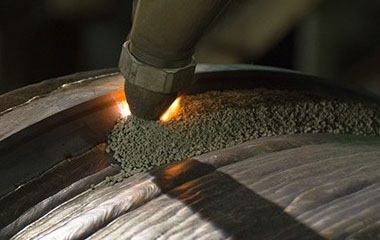
- Submerged Arc Welding (SAW): This high-productivity process uses a granular flux to completely cover the arc. The flux melts to shield the weld and shape the bead. Fluxes for SAW are classified by their basicity index (BI), which affects the weld's toughness and crack resistance. Basic fluxes are preferred for applications requiring high impact strength, while acidic fluxes offer a smoother bead appearance and easier slag removal. For heavy-duty applications, a product like our submerged arc welding flux hj431 is specifically designed to deliver consistent performance.
- Flux-Cored Arc Welding (FCAW): In this process, the flux is contained within the core of the continuously fed welding wire. This eliminates the need for external shielding gas (in self-shielded FCAW-S) or works in tandem with it (in gas-shielded FCAW-G). The flux composition determines the arc stability, deposition rate, and weld metal properties.
Factors for Steel Flux Selection
When evaluating a pipe welding flux for steel, consider the following:
- Basicity Index (BI): As mentioned, this is a critical factor for SAW fluxes. A higher basicity generally corresponds to lower oxygen content in the weld metal, leading to improved toughness and resistance to cracking, which is essential for critical infrastructure.
- Slag Detachability: In high-volume production, the ease with which slag can be removed directly impacts productivity. A flux that produces self-detaching or easily removed slag can significantly reduce post-weld cleaning time.
- Current Type: Some fluxes are formulated specifically for AC or DC welding currents. Using the wrong type can lead to poor arc stability and an inconsistent weld bead.
- Joint Design: The joint configuration, such as a narrow groove or a wide V-joint, can influence the choice of flux. Some fluxes have better "wall-wetting" characteristics needed for narrow gaps.
Choosing the Correct Flux for Copper Pipe Applications
Copper pipe is a standard in plumbing, HVAC, and medical gas systems due to its corrosion resistance and excellent thermal conductivity. However, these same properties make it challenging to work with. Flux selection for copper is governed by the joining process—typically lower-temperature soldering or higher-temperature brazing.
Soldering vs. Brazing Flux
While both processes join metals without melting the base material, the temperature and filler metals differ, necessitating different fluxes.
- Soldering Flux: Used for joining copper pipes with tin-based solders at temperatures below 450°C (840°F). The flux must be active at these lower temperatures. It is typically a paste made with zinc chloride or ammonium chloride. For potable water systems, fluxes must be lead-free and water-soluble to ensure they can be flushed from the system to prevent long-term corrosion.
- Brazing Flux: Used with brazing alloys (often containing silver) at temperatures above 450°C (840°F). These fluxes are chemically more aggressive and have a wider active temperature range to accommodate the higher heat. They are designed to dissolve the stubborn copper oxides that form rapidly at brazing temperatures.
Factors for Copper Flux Selection
- Active Temperature Range: The flux must become active before the filler metal melts and remain active throughout the heating cycle without breaking down or burning away. The manufacturer's specifications will indicate this range.
- Corrosiveness and Residue: Flux residue can be corrosive, especially on copper. For plumbing and HVAC, it is critical to use a water-soluble flux and to thoroughly clean the joint after the operation. Inadequate cleaning is a primary cause of post-installation pinhole leaks and joint failure.
- Application and Form: For pipe joining, paste flux is the most common form. It is easy to apply with a brush, and its consistency helps it stay in place during heating. It also provides a visual indication of temperature as it melts and clarifies.
The quality of the flux is non-negotiable for both safety and performance. As an ISO 9001 certified manufacturer, we adhere to strict quality control standards, ensuring every batch of our welding fluxes provides the consistent, reliable performance required for critical applications.
Common Pitfalls and Best Practices in Flux Application
Even the highest-quality flux will fail if not used correctly. Proper technique is essential for achieving a sound joint, whether on steel or copper.
Mistakes to Avoid
- Inadequate Surface Preparation: Flux is not a substitute for cleaning. Surfaces must be mechanically cleaned with a wire brush or abrasive pad to remove dirt, oil, and heavy oxidation before flux is applied.
- Using the Wrong Flux: Never use a steel welding flux on copper or a soldering flux for a high-temperature brazing application. The chemical incompatibility will result in a failed joint.
- Over-application: Applying too much flux can trap residue inside the pipe, leading to corrosion. A thin, even layer is all that is required.
- Insufficient Cleaning: Failing to remove flux residue after welding is a major cause of long-term failure, particularly in copper plumbing systems where corrosive residues can eat through the pipe wall. A good set of welding accessories, including wire brushes, is essential for proper cleaning.
Partnering with a Reliable Flux Manufacturer
For industrial buyers, the choice of supplier is as important as the choice of product. A reliable partner ensures not only product quality but also supply chain stability and technical support. When sourcing a pipe welding flux, look for a manufacturer that demonstrates a commitment to quality and has the capacity to meet your demands.
Supply chain resilience is critical for keeping large-scale projects on schedule. With a 1000-square-meter plant equipped with six production lines, Oldwelders has the capacity to supply up to 100 tons of flux per day. This robust production capability ensures we can meet large-volume orders with a standard lead time of 30 days, serving our clients in demanding markets from Brazil and Thailand to Australia and Malaysia.
Ultimately, selecting the correct flux is a technical decision that directly impacts project outcomes. By understanding the distinct requirements of steel and copper, adhering to best practices, and partnering with a knowledgeable and capable manufacturer, you can ensure every pipe joint is strong, secure, and built to last.