
What is BFA Abrasive Used For in Surface Preparation?
What is BFA Abrasive Used For in Surface Preparation?
In the world of metal fabrication, manufacturing, and industrial finishing, the quality of the final product often depends on the quality of the initial surface preparation. A clean, properly textured surface is critical for strong welds, durable coatings, and precise component fitting. This is where industrial abrasives play a pivotal role. Among the most versatile and widely used is Brown Fused Alumina, a tough, durable, and cost-effective material. Understanding its properties and applications is essential for any team looking to optimize their surface preparation processes.
This guide provides a comprehensive overview of Brown Fused Alumina, exploring its manufacturing process, key characteristics, and primary applications in surface preparation. We will delve into how it compares to other common abrasives and identify the industries that benefit most from its use, helping fabrication and finishing managers make informed decisions for their operational needs.
Understanding Brown Fused Alumina (BFA)
Brown Fused Alumina, often abbreviated as BFA, is a synthetic mineral manufactured from high-grade bauxite ore. It is a member of the fused aluminum oxide family, prized for its exceptional hardness, strength, and thermal stability. Its unique combination of properties makes it a workhorse abrasive suitable for a wide range of demanding applications.
The Manufacturing Process
The production of BFA is an energy-intensive process that transforms raw bauxite into a highly refined and powerful abrasive. The process begins with calcined bauxite, which is mixed with reducing agents like iron filings and anthracite coal.
This mixture is then loaded into an electric arc furnace. At Oldwelders, our expertise in high-temperature material science, such as the 2000 °C melting process used for our welding fluxes, gives us a deep appreciation for the precision required in these thermal processes. In the furnace, the bauxite is smelted at temperatures exceeding 2000°C (3632°F). This intense heat melts the material and allows impurities to separate, resulting in a dense, purified ingot of aluminum oxide. Once cooled, this large ingot is crushed, and the resulting material is meticulously screened and graded into specific grain sizes according to industry standards like FEPA (Federation of European Producers of Abrasives).
Key Properties and Characteristics
The performance of any abrasive is dictated by its physical and chemical properties. BFA's effectiveness stems from a balance of several key traits:
- Hardness: With a Mohs hardness of approximately 9, it is one of the hardest minerals available, surpassed only by materials like silicon carbide and diamond. This hardness allows it to effectively cut, grind, and etch even the toughest metals and alloys.
- Toughness and Durability: Unlike some harder materials that can be brittle, BFA possesses high toughness. This means it can withstand significant impact and pressure without shattering, allowing the grains to be recycled multiple times in blasting applications, which lowers overall media consumption and cost.
- Particle Shape: After crushing, BFA grains have a sharp, angular shape. This aggressive profile is ideal for stripping contaminants, creating deep anchor patterns for coatings, and rapid material removal.
- High Purity: While it contains small amounts of titanium oxide (which contributes to its toughness), it is largely free of contaminants that could embed in a substrate and cause issues like rust blooming. It is low in iron, making it suitable for use on non-ferrous metals like aluminum and stainless steel.
- Thermal Stability: Its high melting point makes it an excellent choice for applications involving significant friction and heat, such as heavy-duty grinding.
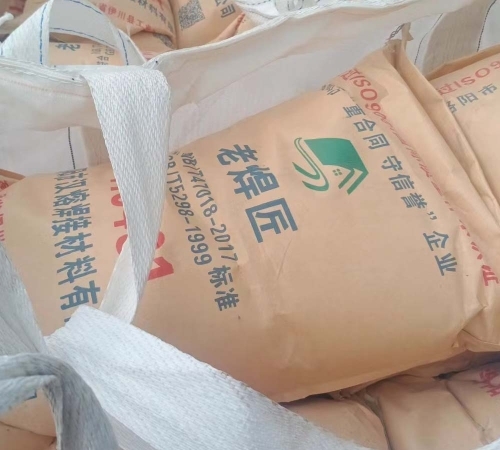
Core Applications of BFA Abrasive in Surface Preparation
The robust properties of Brown Fused Alumina make it suitable for a diverse range of surface preparation tasks, from aggressive material removal to fine finishing. Its versatility is a key reason for its popularity across numerous industries.
Abrasive Blasting and Cleaning
This is arguably the most common application. Abrasive blasting involves propelling media at high velocity against a surface to clean, strip, or profile it.
- Rust and Scale Removal: BFA's aggressive cutting action makes quick work of heavy rust, mill scale, and old, failed coatings on steel structures, pipes, and machinery.
- Surface Profiling: Before painting, powder coating, or thermal spraying, a specific surface profile or "anchor pattern" is required for the coating to properly adhere. BFA creates a clean, uniform, and deeply etched surface that promotes maximum coating adhesion and longevity.
- Weld Preparation and Cleaning: It is used to remove oxides and contaminants from a joint before welding and to clean spatter, slag, and discoloration after welding, ensuring a clean finish and a sound base for subsequent coatings.
Grinding, Cutting, and Machining
BFA is a primary component in bonded and coated abrasives due to its hardness and durability.
- Bonded Abrasives: It is the grain of choice for manufacturing grinding wheels, cutting discs, and mounted points. These tools are used for everything from snagging castings in a foundry to precision grinding of engine components.
- Coated Abrasives: Sandpaper, belts, and discs often use Brown Fused Alumina grains bonded to a backing material. These are essential for deburring, finishing, and shaping metal, wood, and composite parts.
Lapping and Polishing
While often associated with aggressive tasks, finer grits of BFA are used for precision finishing operations. Lapping involves using an abrasive slurry between two surfaces to achieve exceptional flatness and a fine finish. Micro-grits of BFA are used to lap metal seals, valve components, and optical lenses where precision is paramount.
Comparing BFA with Other Common Abrasives
Choosing the right abrasive media is crucial for achieving the desired outcome efficiently and cost-effectively. Here’s how BFA stacks up against other popular options.
BFA vs. White Fused Alumina (WFA)
WFA is a higher-purity, more friable (brittle) version of aluminum oxide. While BFA is tougher, WFA is harder. WFA breaks down more quickly, exposing new sharp edges, which makes it ideal for precision grinding applications where heat buildup must be minimized and a very fine finish is required.
- Use BFA for: General-purpose blasting, heavy stock removal, grinding wheels for tough metals.
- Use WFA for: Heat-sensitive alloys, precision grinding, micro-dermabrasion, and applications where purity is critical.
BFA vs. Silicon Carbide
Silicon Carbide is harder than BFA but also more brittle. Its extremely sharp, shard-like grains are excellent for cutting very hard materials like stone, glass, and ceramics. However, its brittleness makes it less suitable for heavy-impact applications on steel.
- Use BFA for: Blasting and grinding most ferrous and non-ferrous metals.
- Use Silicon Carbide for: Grinding non-ferrous and non-metallic materials, wire sawing, and finishing very hard metals.
BFA vs. Steel Shot & Grit
Steel abrasives are dense and tough, offering a powerful impact. Steel shot (round) is used for peening and cleaning, while steel grit (angular) is used for aggressive profiling. They are highly recyclable but can cause ferrous contamination on non-ferrous metals and are prone to rusting if not handled correctly.
- Use BFA for: Applications requiring an aggressive profile without ferrous contamination (e.g., stainless steel, aluminum).
- Use Steel Media for: Heavy-duty descaling of carbon steel in enclosed, recycling blast systems.
Industries and Sectors Benefiting from BFA
The versatility of Brown Fused Alumina ensures its use across a wide spectrum of industries where surface integrity is a priority.
- Welding and Metal Fabrication: From preparing structural steel for assembly to cleaning welds on pressure vessels, BFA is a staple. A properly prepared surface is the foundation of a strong weld, a principle we emphasize across our entire range of welding materials.
- Aerospace and Automotive: Used for shot peening components to increase fatigue life, preparing surfaces for thermal spray coatings on engine parts, and general deburring and finishing.
- Foundries: Essential for removing scale and excess material from raw castings and for finishing parts to final specifications.
- Refractories: Due to its high melting point and thermal stability, BFA is also used as a raw material in the manufacturing of high-performance refractory bricks and castables for furnaces and kilns.
Partner with a Supplier Who Understands Industrial Demands
Selecting the right abrasive is only the first step. To ensure consistent results, operational efficiency, and a reliable supply chain, you need a partner who understands the rigorous demands of industrial production. A dependable supplier provides not just a product, but also quality assurance and logistical support.
At Oldwelders, we are an ISO 9001 certified manufacturer with a proven track record of supplying high-quality industrial materials to demanding markets, including Brazil, Thailand, and Australia. Our state-of-the-art plant, covering 1000 square meters with six production lines, has the capacity to supply up to 100 tons a day, ensuring we can meet project deadlines. With a standard lead time of 30 days and a minimum order quantity of 1 ton, we are equipped to handle both large-scale industrial contracts and specialized project needs.
Whether you require abrasives for surface preparation, high-performance fluxes like our submerged arc welding flux hj431, or a complete fabrication solution including a robust welding machine, partnering with an experienced and certified manufacturer guarantees quality and reliability for your critical operations.