
Understanding Acidic vs Basic Slag Behavior in Welding Flux
Understanding Acidic vs Basic Slag Behavior in Welding Flux
For welding engineers and procurement managers, selecting the right consumable is a critical decision that directly impacts weld quality, operator efficiency, and structural integrity. While factors like wire diameter and gas mixture are often discussed, the chemical composition of the welding flux is a fundamental variable that dictates performance. The behavior of the resulting slag, specifically whether it is acidic or basic in nature, determines everything from the weld bead's appearance to its low-temperature toughness.
Understanding this distinction is not merely academic; it is essential for matching a consumable to the specific demands of an application. Whether you are fabricating general structural steel or welding critical pressure vessels, the choice between an acidic and basic flux system will have profound consequences on the final product. This guide provides a detailed comparison of their slag behaviors, mechanical properties, and ideal use cases to inform your selection process.
What is Flux and Why is Slag Chemistry Crucial?
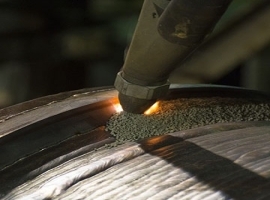
In various arc welding processes, such as submerged arc welding (SAW), flux-cored arc welding (FCAW), and shielded metal arc welding (SMAW), flux is a granular or powdered chemical mixture that plays a multifunctional role. When subjected to the intense heat of the arc, it melts to perform several key tasks:
- Shielding: It generates a protective gas shield to prevent the molten weld pool from atmospheric contamination (oxygen and nitrogen), which can cause porosity and embrittlement.
- Deoxidation: It contains deoxidizers (like manganese and silicon) that react with and remove oxygen from the weld metal, refining its structure.
- Alloying: It can introduce specific alloying elements into the weld metal to achieve desired mechanical properties, such as increased strength or corrosion resistance.
- Arc Stabilization: It contains elements that ionize in the arc, helping to create a stable, smooth, and consistent electrical discharge.
After these reactions occur, the molten flux cools and solidifies on top of the weld bead, forming a protective layer called slag. The chemical nature of this slag is where the distinction between "acidic" and "basic" becomes paramount. This chemistry is quantified using a formula known as the Basicity Index (BI), which helps classify a specific welding flux formulation.
The Basicity Index (BI) Explained
The Basicity Index is a ratio that compares the concentration of basic compounds to acidic compounds within the flux. While the exact formula can vary, it generally follows this principle:
BI = (CaO + MgO + BaO + SrO + Na2O + K2O + Li2O + CaF2 + 0.5(MnO + FeO)) / (SiO2 + 0.5(Al2O3 + TiO2 + ZrO2))
Fluxes are generally categorized as follows:
- Acidic: BI < 1.0. Dominated by silicon dioxide (SiO2) and titanium dioxide (TiO2).
- Neutral: BI ≈ 1.0. A balanced mixture of acidic and basic components.
- Basic: BI > 1.0. Dominated by calcium carbonate (CaCO3), calcium fluoride (CaF2), and magnesium oxide (MgO).
- Highly Basic: BI > 1.5. A higher concentration of basic compounds for critical applications.
These chemical differences directly influence slag viscosity, freezing range, and its ability to refine the weld metal, leading to distinct operational characteristics and mechanical outcomes.
The Characteristics of Acidic Flux Systems
Acidic fluxes, often based on rutile (TiO2) or silicate (SiO2) formulations, are prized for their exceptional operator appeal and weldability. The slag they produce is typically fluid with a low melting point and a wide freezing range. This behavior translates into several practical advantages during welding.
Superior Weldability and Bead Profile
The primary benefit of an acidic slag system is its smooth, stable arc and excellent wetting action. The fluid slag spreads easily, helping to shape the molten weld metal into a smooth, flat, or slightly convex bead with a fine ripple pattern. This makes it easier for welders to control the puddle, especially in fillet welds and out-of-position work. The resulting weld is aesthetically pleasing with minimal spatter, reducing the need for post-weld cleaning.
Furthermore, the slag from an acidic flux is often self-detaching or easily removed with light chipping. This significantly boosts productivity in multi-pass applications by minimizing inter-pass cleaning time. For high-volume fabrication where speed is a priority, these operational benefits are a major consideration.
Mechanical Properties and Limitations
While unbeatable in usability, acidic fluxes have significant metallurgical limitations. The high proportion of silicon dioxide and other oxides results in a higher transfer of oxygen to the weld metal. This leads to a higher inclusion content (primarily silicate inclusions) within the solidified weld. While these inclusions are microscopic, they act as initiation points for fractures.
Consequently, welds made with acidic flux typically exhibit:
- Lower Ductility: The weld metal is less able to deform without fracturing.
- Reduced Impact Toughness: The material has a lower capacity to absorb energy before fracturing, especially at low temperatures.
Because of these properties, acidic fluxes are generally unsuitable for applications involving high stress, dynamic loading, or service in cold environments. They are best suited for general-purpose fabrication, single-pass welds on mild steel, and situations where mechanical demands are not critical.
The Characteristics of Basic Flux Systems
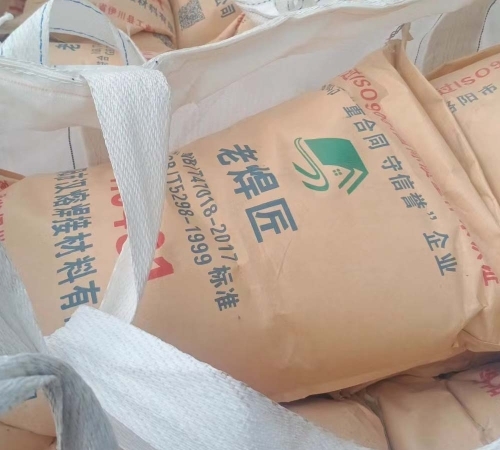
Basic fluxes are formulated with high concentrations of calcium carbonate (CaCO3) and calcium fluoride (CaF2). Upon heating, calcium carbonate decomposes into calcium oxide (CaO) and carbon dioxide, providing excellent gas shielding. These basic compounds create a slag that is chemically opposite to acidic systems, offering superior metallurgical quality at the expense of operator comfort.
Exceptional Metallurgical Purity and Toughness
The primary advantage of a basic flux is its ability to produce exceptionally clean and tough weld metal. The basic slag is highly effective at removing impurities like sulfur and phosphorus from the molten weld pool. Furthermore, the presence of calcium fluoride (CaF2) helps control the hydrogen content. Hydrogen is a major cause of cold cracking, especially in thick or high-strength steels.
This refining action results in a weld deposit with very low levels of inclusions and diffusible hydrogen. The resulting mechanical properties are excellent:
- High Ductility: The clean weld metal can undergo significant plastic deformation.
- Superior Impact Toughness: The material offers outstanding resistance to fracture, even at sub-zero temperatures (e.g., -20°C to -50°C).
This makes basic fluxes the mandatory choice for critical applications such as pressure vessels, offshore structures, bridge construction, and welding high-strength, low-alloy (HSLA) steels. When weld integrity is non-negotiable, a basic system is required.
Operational Challenges
The trade-off for this superior quality is reduced weldability. Basic slag is more viscous (thicker) and has a higher melting point with a shorter freezing range. This can make it more difficult for the welder to control. The arc can be harsher, and the resulting weld bead may have a more convex profile with a coarser ripple pattern. A great example of a consumable that balances these properties is a submerged arc welding flux hj431, designed for specific structural steel applications.
Perhaps the most notable challenge is slag removal. The fast-freezing, thick slag often adheres tightly to the weld and can be difficult to remove, sometimes requiring vigorous chipping or grinding. This increases inter-pass cleaning time and can reduce overall productivity compared to acidic systems. Welders often require more skill and training to produce optimal results with basic fluxes.
Choosing the Right Flux for Your Application
The decision between acidic and basic flux systems is a classic engineering trade-off between productivity and performance. There is no single "best" option; the correct choice is entirely dependent on the application's requirements.
Choose an Acidic Flux when:
- The primary goal is high productivity and fast welding speeds.
- The application involves thin to medium-thickness mild steel.
- Weld appearance and a smooth bead profile are important.
- The welded component will not be subjected to high stress, dynamic loads, or low-temperature service.
- Operator skill levels vary, and an easy-to-use consumable is preferred.
Choose a Basic Flux when:
- The weld must meet stringent code requirements for toughness and ductility (e.g., ASME, AWS D1.1).
- The base material is a thick-section, high-strength, or crack-sensitive steel.
- The component will operate in a low-temperature or dynamically loaded environment.
- Hydrogen cracking is a significant risk.
- Metallurgical purity is more important than welding speed or bead appearance.
In addition to flux, the choice of equipment, such as a robust arc welding machine, is crucial for maintaining stable parameters required for both flux types.
Oldwelders: A Foundation of Quality in Flux Manufacturing
At Oldwelders, we understand that consistent flux chemistry is the foundation of reliable welding. Our ISO 9001 certified manufacturing process ensures that every batch meets exacting standards. Our 1000-square-meter plant, equipped with six production lines, has the capacity to supply up to 100 tons of high-quality flux per day, ensuring we can meet the demands of large-scale industrial projects.
We begin with superior raw materials, including carefully selected dolomite, bauxite, cryolite, silica, and fluorine ore. These materials are melted at 2000 °C to create a homogenous, high-purity molten glass, which is then processed into the final flux product. This meticulous control over our inputs guarantees the predictable slag behavior and consistent mechanical properties that our customers in Brazil, Thailand, Australia, and Malaysia have come to rely on. Whether you require general-purpose welding materials or highly specialized basic fluxes for critical applications, our products are engineered for performance and reliability.