
Submerged Arc Flux for Multi-Pass Welds | Oldwelders
Selecting the Right Submerged Arc Flux for Demanding Multi-Pass Welds
In the world of heavy industrial fabrication, from pressure vessel manufacturing to shipbuilding and structural steel erection, multi-pass welding on thick plates is a daily reality. The Submerged Arc Welding (SAW) process is the undisputed leader for these applications, prized for its high deposition rates and deep penetration. However, the success of any multi-pass SAW procedure is not determined by the machine alone. The granular, fusible material that gives the process its name—the welding flux—is the critical variable that governs weld metal chemistry, mechanical properties, and operational efficiency. Choosing the correct consumable is a foundational step that can prevent costly rework and ensure the structural integrity of the final product. This guide provides fabrication teams with the essential criteria for selecting a high-performance flux tailored for the unique challenges of multi-pass applications.
Understanding the Role of Flux in Multi-Pass Submerged Arc Welding
Before diving into selection criteria, it is crucial to appreciate the multifaceted role of the flux. In any SAW operation, the flux is more than just a protective blanket. It is an active chemical component that performs several jobs simultaneously. First, as it melts under the heat of the arc, it creates a gaseous shield that protects the molten weld pool from atmospheric oxygen and nitrogen, which can cause porosity and embrittlement. Second, it contains arc stabilizers that ensure a smooth, consistent, and spatter-free welding process, which is essential for maintaining control over a large molten puddle.
Third, the molten flux forms a liquid slag that covers the solidifying weld metal. This slag layer performs two vital functions: it shapes the weld bead to create the desired profile and contour, and it controls the cooling rate of the weld. A slower cooling rate allows dissolved gases like hydrogen to escape, reducing the risk of hydrogen-induced cracking, a common concern in thick-section welding. Finally, the flux can act as a vehicle for adding or removing elements from the weld metal. It can introduce deoxidizers to cleanse the weld pool and even add specific alloys to achieve targeted mechanical properties like strength and toughness.
In multi-pass welding, these functions are amplified, with one attribute becoming paramount: slag detachability. Each weld pass, or bead, must be thoroughly cleaned of its slag covering before the next layer is deposited. If the slag is difficult to remove and fragments become trapped between layers, they create slag inclusions. These inclusions are serious weld defects that act as stress risers, compromising the joint's strength and fatigue life. A flux designed for multi-pass work will create a slag that lifts away easily and cleanly, even from the deep, narrow grooves typical of V- or J-prep joints. This characteristic not only ensures weld quality but also dramatically improves productivity by minimizing inter-pass cleaning time.
Key Selection Criteria for Multi-Pass Welding Fluxes
The selection of a welding flux is a technical decision that requires balancing chemical properties with operational demands. For multi-pass applications, three primary characteristics must be evaluated: the Basicity Index (BI), the slag system and its detachability, and the flux's alloying and deoxidation capabilities.
Basicity Index (BI) and its Impact on Mechanical Properties
The Basicity Index is a numerical value that quantifies the chemical nature of the flux by comparing the concentration of basic oxides (like calcium oxide, magnesium oxide, and calcium fluoride) to acidic oxides (like silicon dioxide and titanium dioxide). This ratio is arguably the most important factor influencing the final mechanical properties of the weld deposit.
- Acidic Fluxes (BI < 1.0): These fluxes typically contain high levels of silica and manganese oxide. They offer excellent operational characteristics, including a very smooth arc, a wide and fluid weld puddle, and a smooth bead appearance. However, they transfer a significant amount of oxygen to the weld metal, which results in lower toughness and impact strength. They are generally not recommended for critical, multi-pass work on thick materials.
- Neutral Fluxes (BI ≈ 1.0): Offering a balance of properties, neutral fluxes have minimal effect on the weld metal's silicon and manganese content across a range of welding parameters. They provide good performance and are a reliable choice for many applications.
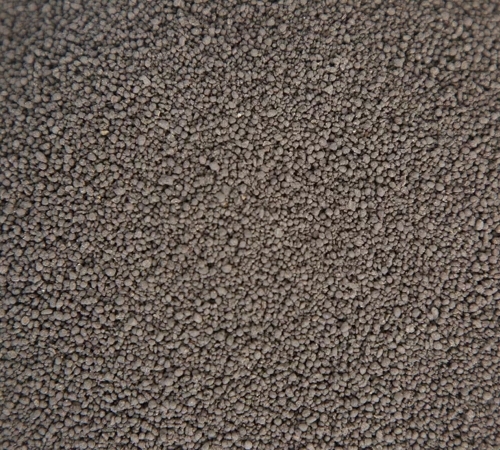
- Basic Fluxes (BI > 1.5): Highly basic fluxes contain high proportions of calcium fluoride and calcium oxide. Their primary benefit is their ability to produce weld metal with very low oxygen content. This cleanliness leads to exceptionally high toughness and excellent resistance to cracking, especially at low service temperatures. For demanding applications like offshore structures, pressure vessels, and cryogenic storage tanks, a highly basic Submerged Arc Flux is often specified. The trade-off is that these fluxes can have a more convex bead profile and a slag that can be more challenging to remove than acidic types, requiring a formulation specifically optimized for multi-pass work.
For most multi-pass heavy fabrication, a neutral to basic flux is the preferred choice, as it provides the necessary toughness and crack resistance required to build up a sound, full-penetration joint.
Slag System and Detachability
As mentioned, easy and complete slag removal is non-negotiable for productive, high-quality multi-pass welding. The slag system is determined by the flux's chemical formulation, which controls the slag's melting point, viscosity, and solidification range. A flux designed for multi-pass welding will create a slag that solidifies into a brittle, glass-like crust that ideally self-releases or can be removed with minimal effort. This is particularly important in deep groove preparations where slag can become trapped at the toes of the weld. A flux with poor slag release will force operators to spend significant time on manual grinding and chipping between passes, drastically reducing the overall deposition rate and introducing the risk of injury. When evaluating a flux, always inquire about its performance in narrow-groove or deep-V joint configurations, as this is the ultimate test of its slag system.
Alloying and Deoxidation Capabilities
Fluxes can be categorized by how they influence the final chemistry of the weld deposit. This is a critical consideration that must be matched with the chosen welding wire and base material.
- Neutral Fluxes: These fluxes do not significantly add or subtract alloying elements like manganese (Mn) and silicon (Si) from the weld metal. The final chemical composition of the weld is therefore almost entirely determined by the welding wire. This makes them highly predictable and reliable, especially when welding procedures require tight control over a range of heat inputs.
- Active Fluxes: These fluxes contain controlled amounts of deoxidizers, primarily Mn and Si. They are designed to "actively" compensate for mill scale or rust on the base plate and to improve bead appearance. However, the amount of Mn and Si transferred to the weld is dependent on the arc voltage. Higher voltages increase the amount of flux melted and thus increase the alloy transfer. This variability makes active fluxes less suitable for critical multi-pass work where consistent mechanical properties layer after layer are required.
- Alloying Fluxes: These fluxes are specifically designed to add alloys such as chromium (Cr), molybdenum (Mo), or nickel (Ni) to the weld deposit. They are used to create a high-strength or corrosion-resistant weld metal using a standard carbon steel wire. This approach requires very strict control of all welding parameters to ensure the correct amount of alloy is consistently deposited.
For general structural and pressure vessel work involving multiple passes, a neutral flux is often the safest and most consistent choice, as it isolates the weld chemistry to the well-defined composition of the solid wire and base material.
Oldwelders' Manufacturing Excellence for Consistent Performance
The theoretical properties of a flux mean little if they cannot be delivered consistently from batch to batch. At Oldwelders, we understand that reliability is paramount. Our ISO 9001-certified manufacturing process is designed to produce welding fluxes of the highest quality and uniformity. The journey begins with the selection of premium raw materials, including excellent dolomite, bauxite, cryolite, silica, and fluorine ore. These materials are carefully analyzed and blended to precise specifications.
The mixture is then melted in an electric furnace at temperatures reaching 2000 °C. This complete fusion process ensures that every grain of the final product is chemically homogeneous, eliminating the inconsistencies that can plague mechanically blended fluxes. After cooling, the resulting glassy material is crushed, screened, and graded to a tightly controlled particle size distribution, which is critical for consistent feeding and arc stability. Our state-of-the-art plant covers 1000 square meters and houses six dedicated production lines, giving us the capacity to supply up to 100 tons per day. This scale allows us to support the largest fabrication projects while maintaining the rigorous quality control that our customers demand.
Partnering for Success in Heavy Fabrication Projects
Selecting the optimal Submerged Arc Flux is a collaborative process. The final choice depends on the base material, the selected welding wire, joint design, required mechanical properties, and project specifications. At Oldwelders, we serve as more than just a supplier; we are a technical partner for our clients. We have extensive experience supporting major projects in demanding international markets, including Brazil, Thailand, Australia, and Malaysia, and we understand the logistical and technical challenges involved.
Our team works with your welding engineers to review your Welding Procedure Specifications (WPS) and recommend the ideal flux-wire combination. The performance of any consumable is part of a system that includes the power source, and our extensive range of arc welding machine solutions ensures compatibility and optimal performance. Whether you need a versatile agglomerated flux like our submerged arc welding flux hj431 or a specialized formula for a unique application, we can provide it. With a minimum order quantity of 1 ton and flexible partnership terms for established clients, we are structured to be a reliable link in your supply chain.
Ultimately, the goal of multi-pass welding is to create a single, monolithic joint that is as strong or stronger than the parent material. This can only be achieved with consumables that deliver unwavering consistency, pass after pass. By focusing on the core principles of basicity, slag systems, and manufacturing quality, fabrication teams can confidently select a flux that enhances productivity, reduces defects, and ensures the long-term integrity of their most critical welds.