
Submerged Arc Flux and Its Critical Role in Weld Toughness
The Critical Role of Submerged Arc Flux in Determining Weld Toughness
For welding engineers tasked with fabricating critical components like pressure vessels, offshore platforms, and heavy structural steel, weld toughness is non-negotiable. While factors like base material, wire selection, and welding parameters are crucial, the granular material that defines the Submerged Arc Welding (SAW) process—the flux—plays a decisive and often underestimated role. The chemical and physical properties of the Submerged Arc Flux are directly responsible for shaping the final mechanical properties of the weld metal, most notably its resistance to brittle fracture. Understanding these mechanisms is essential for selecting the right consumable to meet stringent project specifications and ensure long-term structural integrity.
This article provides a detailed technical overview for engineers, exploring how the composition and manufacturing of SAW flux directly influence weld metal toughness. We will delve into the metallurgical principles at play, from impurity control and micro-alloying to the formation of optimal microstructures, demonstrating why a high-quality, consistently produced flux is a critical investment for any demanding welding application.
The Fundamentals of Weld Toughness in Critical Applications
Before examining the flux's specific role, it is essential to define what "toughness" means in the context of a welded joint. Toughness is a material's ability to absorb energy and deform plastically before fracturing. In practical terms, it is the opposite of brittleness. A tough weld can withstand sudden impacts, stress concentrations, and low-temperature environments without catastrophic failure. This property is commonly quantified using the Charpy V-notch (CVN) impact test, which measures the energy absorbed by a standardized specimen at a specific test temperature.
Why Toughness is Paramount
In many industries, the consequences of brittle fracture are severe. Consider these examples:
- Pressure Vessels: A brittle weld in a high-pressure vessel could lead to a catastrophic rupture, posing significant safety and environmental risks.
- Offshore Structures: Welds in oil rigs and pipelines are subjected to low temperatures, dynamic wave loading, and corrosive environments. High toughness is essential to prevent fatigue and fracture.
- Bridge Construction: Structural welds in bridges must endure cyclic loading from traffic and temperature fluctuations. Toughness ensures the structure's resilience over its service life.
- Heavy Machinery: Components for mining and construction equipment require welds that can withstand high-impact loads without failing.
Meeting the specified CVN impact values for these applications is not just a matter of compliance; it is a fundamental requirement for safe and reliable operation. The selection of welding consumables, particularly the flux, is a primary variable that engineers can control to achieve these targets.
The Chemical Influence of Flux on Weld Metal Composition
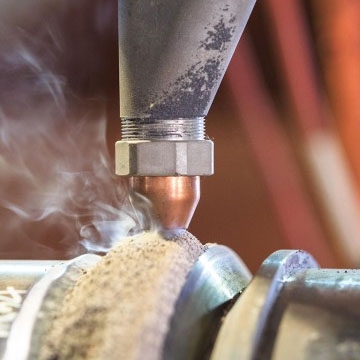
The primary function of a SAW flux is to protect the molten weld pool from atmospheric contamination (oxygen and nitrogen). However, its role extends far beyond that of a simple shield. Through complex chemical reactions in the high-temperature arc, the flux actively refines the weld metal, controlling its final chemical composition and, consequently, its mechanical properties.
Basicity Index (BI) and Its Control Over Oxygen
One of the most critical properties of a welding flux is its Basicity Index (BI). The BI is a calculated ratio of basic oxides (like CaO, MgO, BaO, CaF₂) to acidic oxides (like SiO₂, TiO₂). This ratio directly correlates with the flux's ability to produce a clean, low-oxygen weld metal.
- High-Basicity Fluxes (BI > 1.5): These fluxes are rich in basic oxides. They are highly effective at removing impurities like sulfur (S) and phosphorus (P) from the weld metal. More importantly, they result in a lower transfer of oxygen to the weld pool. Low oxygen content is a prerequisite for achieving high toughness, as it reduces the number of oxide inclusions that can act as initiation sites for cracks. -
- Acidic Fluxes (BI < 1.0): These fluxes, rich in silica, tend to have excellent operational characteristics like smooth bead appearance and easy slag removal. However, they transfer more silicon and oxygen to the weld metal, which typically results in lower toughness compared to basic fluxes.
For applications demanding superior toughness, especially at low temperatures, a high-basicity flux is almost always the required choice. The resulting clean weld metal, with fewer and smaller inclusions, has a significantly improved ability to resist fracture initiation.
Alloying Element Transfer
Fluxes can also be designed to be "active," meaning they intentionally add alloying elements to the weld metal. Elements like manganese (Mn) and silicon (Si) are key deoxidizers that combine with oxygen to form slag, cleaning the weld metal. However, their final concentration in the weld deposit, which is controlled by the flux, also affects strength and toughness.
Furthermore, some fluxes contain small amounts of other elements like molybdenum (Mo), nickel (Ni), or chromium (Cr). These elements can be transferred to the weld pool to enhance specific properties. For instance, nickel is a well-known addition for improving low-temperature toughness. The consistency of this transfer is paramount, which is why a precisely formulated flux is essential. At Oldwelders, our process involves melting premium raw materials like dolomite, bauxite, and fluorine ore at 2000 °C to create a homogenous, fused glass-like structure. This ensures that every granule of flux has the exact same chemical composition, guaranteeing predictable and repeatable alloying transfer from batch to batch.
How Flux Governs Weld Metal Microstructure
Beyond chemistry, the toughness of a weld is fundamentally determined by its microstructure—the arrangement and type of crystalline grains formed as the molten metal solidifies and cools. An ideal microstructure for high toughness in carbon and low-alloy steels is one dominated by fine, interlocking grains of acicular ferrite.
The Role of Inclusions in Nucleation
This is where the flux's control over oxygen and deoxidation becomes critical again. The small, non-metallic inclusions that inevitably form in the weld metal can be either detrimental or beneficial, depending on their size, shape, and distribution. A well-designed high-basicity Submerged Arc Flux produces tiny, dispersed oxide and sulfide inclusions. These microscopic particles act as nucleation sites for acicular ferrite grains to grow during cooling.
Instead of large, columnar grains or weak grain-boundary ferrite forming, the weld metal solidifies into a fine-grained, interwoven structure of acicular ferrite. This "basket-weave" microstructure is exceptionally tough because it presents a complex, tortuous path for any potential crack to propagate through, effectively absorbing energy and resisting fracture.
Controlling the Cooling Rate
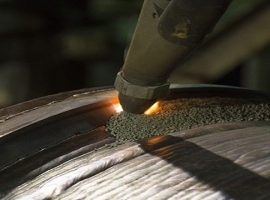
The flux also influences the cooling rate of the weld through the thermal properties of the slag blanket it creates. A thick, insulating slag blanket leads to a slower cooling rate, which can affect the final microstructure and hydrogen content. The viscosity and melting point of the slag, both controlled by the flux formulation, determine how well it covers the bead and shapes its profile. This thermal control is another subtle but important way the flux contributes to the final mechanical properties of the joint. For engineers working on complex projects, it's reassuring to know there are comprehensive welding materials available to meet these specific thermal and metallurgical requirements.
Selecting the Right Flux: A Manufacturer's Perspective
Achieving consistent weld toughness on a production scale is a direct result of using a consistently manufactured flux. The difference between a premium flux and a standard-grade one lies in the precision of the manufacturing process and the quality of the raw materials.
Manufacturing Consistency and Quality Control
At Oldwelders, our commitment to quality is validated by our ISO 9001 certification. Our 1000 square meter facility operates six dedicated production lines, capable of supplying up to 100 tons of flux per day. This scale allows us to serve large-scale industrial projects with demanding requirements. We begin with excellent raw materials—dolomite, bauxite, cryolite, silica, and fluorine ore—which are melted at an extreme temperature of 2000 °C. This complete fusion process ensures absolute chemical homogeneity, eliminating the inconsistencies that can be found in lower-quality agglomerated or blended products.
This rigorous process guarantees that the Basicity Index, alloying content, and physical properties are uniform throughout every batch. For a welding engineer, this means:
- Predictable Mechanical Properties: You can be confident that the toughness values achieved in procedure qualification tests will be replicated in production.
- Stable Arc Performance: Consistent particle size and chemistry lead to a smooth, stable arc and reliable operational characteristics.
- Reduced Rework: High-quality flux leads to cleaner welds with fewer defects, minimizing the costly and time-consuming process of rework and repair.
We provide reliable supply chains for clients in demanding markets, including Brazil, Thailand, Australia, and Malaysia. With a standard minimum order quantity of 1 ton and typical lead times of 30 days, we are structured to support both ongoing production needs and specific project timelines. Whether you are using a standard arc welding machine or a highly automated system, the quality of your consumables is paramount. For specific applications requiring exceptional toughness, our range of welding fluxes provides reliable solutions engineered for performance.
In conclusion, the Submerged Arc Flux is not a passive component in the welding process. It is an active metallurgical tool that directly engineers the toughness of the final weldment. By controlling oxygen content, refining impurities, transferring key alloys, and promoting the formation of an optimal acicular ferrite microstructure, a high-quality flux provides the assurance and performance necessary for the world's most critical fabrication projects.