
Submerged Arc Flux and Its Critical Effect on Weld Toughness
Understanding How Submerged Arc Flux Dictates Weld Toughness
For welding engineers and fabrication managers, ensuring the mechanical integrity of a welded joint is paramount. In critical applications, particularly in structural steel, pressure vessel fabrication, and offshore engineering, weld toughness is a non-negotiable property. While variables like base material, joint design, and welding parameters play a role, the selection of consumables is a decisive factor. In the Submerged Arc Welding (SAW) process, the granular flux is not merely a shielding agent; it is an active metallurgical component that profoundly influences the final properties of the weld metal. Understanding the intricate relationship between the flux and weld toughness is essential for making informed decisions that guarantee performance, safety, and reliability.
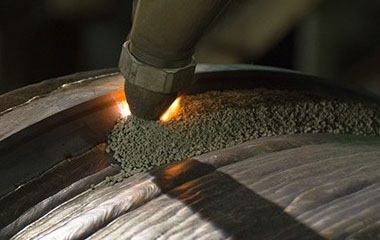
The SAW process is renowned for its high deposition rates and deep penetration, making it a go-to method for heavy fabrication. The arc operates under a blanket of granular, fusible flux, which melts to form a protective slag layer over the molten weld pool. This slag shields the weld from atmospheric contamination, but its role extends far beyond this. The chemical reactions that occur between the flux, the slag, and the molten metal directly control the weld's final chemical composition, its microstructure, and ultimately, its ability to resist fracture—its toughness. This article will delve into the key mechanisms by which the flux governs this critical mechanical property.
The Fundamental Metallurgical Role of Flux in SAW
To appreciate how flux impacts toughness, we must first look beyond its shielding function. The flux is a complex mixture of oxides and fluorides, which, upon melting, becomes a highly reactive metallurgical system. At Oldwelders, our flux products are derived from excellent raw materials like dolomite, bauxite, cryolite, silica, and fluorine ore, which are carefully processed to achieve specific chemical and physical characteristics. This meticulous formulation is central to the flux's performance.
The primary functions of the flux during the welding process include:
- Arc Stabilization: The chemical composition of the flux influences the electrical characteristics of the arc, ensuring a stable, consistent energy input, which is crucial for a uniform weld bead.
- Atmospheric Shielding: The molten slag and the gaseous shield created by the flux prevent the pickup of oxygen and nitrogen from the atmosphere. Excess oxygen and nitrogen in the weld metal form inclusions and cause embrittlement, drastically reducing toughness.
- Weld Pool Deoxidation: Fluxes contain deoxidizing elements, such as silicon (Si) and manganese (Mn). These elements have a higher affinity for oxygen than iron does. They react with oxygen in the weld pool to form oxides that are then absorbed into the slag, effectively cleaning the weld metal.
- Alloying Element Transfer: Fluxes can be formulated to be "active," meaning they intentionally transfer specific alloying elements like manganese and silicon to the weld metal. This allows for precise control over the weld's final chemical composition and mechanical properties, compensating for any elements lost through the arc.
- Slag Formation and Bead Shaping: The viscosity and freezing point of the molten slag shape the final weld bead profile. A well-formed bead with smooth transitions to the base metal minimizes stress concentrations, which is beneficial for fatigue life and toughness.
- Thermal Insulation: The slag blanket slows the cooling rate of the weld. This thermal control is critical, as it directly influences the resulting microstructure, a key determinant of toughness.
The interplay of these functions demonstrates that the flux is an engineered consumable. Its formulation is a deliberate balance of chemical compounds designed to produce a specific, predictable result in the final weldment. The ability to control these factors is what separates a standard weld from one engineered for high-performance, critical service.
Key Flux Characteristics Influencing Weld Toughness
Several quantifiable characteristics of a flux directly correlate with its ability to produce a tough weld. Welding engineers must consider these properties when selecting a flux for a specific application, especially when meeting stringent Charpy V-notch (CVN) impact test requirements.
Flux Basicity Index (BI)
Perhaps the single most important metric for predicting a flux's influence on toughness is its Basicity Index (BI). The BI is a calculated ratio that quantifies the proportion of basic oxides (like CaO, MgO, Na₂O, K₂O, CaF₂) to acidic oxides (like SiO₂, TiO₂) in the flux formulation. A higher BI indicates a more basic flux.
The significance of basicity lies in its relationship with weld metal oxygen content. Basic oxides are more stable than acidic oxides and are less likely to break down in the arc and release oxygen into the weld pool. Furthermore, the high fluoride content typical of basic fluxes actively cleanses the weld metal. The result is a direct, inverse correlation: as flux basicity increases, the oxygen content of the weld metal decreases.
Why is low oxygen critical for toughness? High oxygen levels promote the formation of a high number of large, non-metallic silicate inclusions. These inclusions act as stress risers and initiation sites for brittle fracture, severely degrading the material's toughness. By minimizing oxygen, basic fluxes reduce the volume and size of these inclusions, leading to a much cleaner weld metal with significantly improved impact properties. For applications requiring excellent low-temperature toughness, a highly basic Submerged Arc Flux is almost always the required choice.
Control of Microstructure
Toughness is fundamentally a product of the weld metal's microstructure. The ideal microstructure for a tough carbon or low-alloy steel weld is one dominated by acicular ferrite. Acicular ferrite is a fine, interlocking lattice of ferrite plates that is highly effective at deflecting and arresting the propagation of cracks. Its formation is a delicate process influenced by both chemistry and cooling rate.
The flux exerts control in two ways:
- Nucleation Sites: The clean weld metal produced by a basic flux provides ideal nucleation sites (often specific types of tiny inclusions) for acicular ferrite to form. In contrast, the larger inclusions present in welds made with acidic fluxes promote the formation of less tough microstructures, such as coarse grain boundary ferrite.
- Cooling Rate: The thickness and thermal properties of the slag blanket, determined by the flux, influence how quickly the weld cools through its critical transformation temperature range. A controlled cooling rate, neither too fast nor too slow, is essential to promote the formation of acicular ferrite over other, more brittle phases like upper bainite or ferrite-pearlite aggregates.
Therefore, the flux's ability to create a clean chemical environment and modulate the thermal cycle is central to achieving the desired tough microstructure.
Alloying Element Transfer
Fluxes are classified as neutral, active, or alloying. A neutral flux contributes minimal silicon and manganese to the weld, with the final chemistry being determined primarily by the welding wire and base metal dilution. These are often preferred for multi-pass welds where consistent chemistry throughout the joint is critical.
An active flux, however, is designed to transfer a controlled amount of Mn and Si to the weld pool. This is useful for single-pass welding on steel with light rust or mill scale, as the extra deoxidizers help to ensure a sound weld. However, this transfer is dependent on arc voltage. Higher voltage increases the amount of flux melted and thus increases the element transfer, which can lead to inconsistent properties if parameters are not tightly controlled. For toughness-critical applications, the inconsistent chemistry from active fluxes can be a liability. The selection of various welding materials must be a carefully considered process to ensure chemical and mechanical compatibility.
Types of Fluxes and Their General Impact on Toughness
Fluxes are manufactured in different ways, which also affects their performance. At Oldwelders, our manufacturing plant leverages six production lines to produce various flux types. Our process for fused fluxes involves melting the raw mineral components at temperatures around 2000 °C, ensuring a homogenous, glass-like product.
Fused Fluxes
Fused fluxes are produced by melting all raw ingredients together into a liquid, then cooling and crushing the resulting glass into a granular product. This process creates particles that are chemically homogenous, dense, and non-hygroscopic (they do not readily absorb moisture). This resistance to moisture absorption is a significant advantage in terms of handling and storage, as it reduces the risk of hydrogen-induced cracking.
However, the high-temperature manufacturing process makes it impossible to include strong deoxidizers or alloying elements, as they would be consumed during production. Consequently, fused fluxes are typically acidic or neutral in basicity and are best suited for applications where moderate toughness is acceptable. Their primary strengths are consistency and ease of use.
Agglomerated (Bonded) Fluxes
Agglomerated fluxes are made by mixing finely powdered raw materials with a liquid binder (like sodium or potassium silicate), forming pellets, and then baking them at a lower temperature (below the melting point). This "baking" process allows for the inclusion of metallic powders, strong deoxidizers, and various alloying elements that would not survive the fusing process.
This capability is what makes agglomerated fluxes the preferred choice for high-toughness applications. They can be formulated to be highly basic and can transfer specific alloys to the weld metal to achieve desired properties. For example, a specific submerged arc welding flux hj431 is designed to work with a specific wire to produce a weld deposit meeting stringent mechanical property requirements. The main drawback is that they are hygroscopic and require proper storage and often re-baking before use to drive off absorbed moisture and prevent hydrogen-related issues.
Partnering with a Reliable Flux Manufacturer
The selection of a Submerged Arc Flux is a critical engineering decision. It requires a deep understanding of the metallurgical principles at play and the specific demands of the application. Partnering with a knowledgeable and capable manufacturer is essential to ensure consistent quality and reliable performance.
At Oldwelders, our operations are underpinned by an ISO 9001 certified quality management system, ensuring that every batch of flux meets our rigorous specifications. Our state-of-the-art plant, covering 1000 square meters, has the capacity to supply up to 100 tons of high-quality welding consumables per day, making us a reliable partner for large-scale projects. We have established a strong presence in international markets, including Brazil, Thailand, Australia, and Malaysia, demonstrating our ability to meet global standards and logistical requirements.
With a typical lead time of 30 days and a minimum order quantity of 1 ton, we are equipped to serve industrial clients who demand both quality and scale. Whether your project involves a specialized welding machine or a standard fabrication process, the choice of flux will be a cornerstone of your success. By carefully considering the flux's basicity, its effect on microstructure, and its manufacturing type, welding engineers can confidently produce welded joints that possess the superior toughness required for the most demanding service environments.