
Submerged Arc Flux: Storage, Drying & Reuse Guide
Answering Your Key Questions on Submerged Arc Flux Handling and Reuse
In the world of heavy fabrication, submerged arc welding (SAW) stands as a pillar of productivity and quality. At the core of this process is the granulated flux, a seemingly simple consumable that plays a multifaceted role in shielding the arc, shaping the bead, and defining the final weld's chemical and mechanical properties. However, a surprising amount of operational waste and weld defects can be traced back to the improper handling of this critical material. For shop supervisors and welding engineers, mastering flux management is not just about best practices—it is about protecting profitability and ensuring structural integrity.
Mismanagement of welding flux often manifests in subtle yet costly ways: from difficult slag removal and poor bead appearance to severe issues like porosity and an increased risk of hydrogen-induced cracking. These problems lead to rework, wasted materials, and schedule delays. This guide addresses the most frequently asked questions about the storage, drying, and reuse of SAW flux, providing clear, actionable insights to help you optimize your welding operations, reduce consumable waste, and maintain the highest standards of quality control.
The Importance of Proper Storage for Granulated Flux
The journey to a perfect weld begins long before an arc is ever struck. It starts in the stockroom, where the condition of your consumables is either preserved or compromised. Welding flux is hygroscopic, meaning it readily absorbs moisture from the atmosphere. This single characteristic is the source of many subsequent welding problems.
FAQ 1: Why is flux storage so critical for weld quality?
Proper storage is paramount for two main reasons: preventing moisture absorption and avoiding contamination. When flux absorbs atmospheric moisture, the water (H₂O) breaks down in the intense heat of the welding arc. This process releases free hydrogen atoms, which can then dissolve into the molten weld pool and the heat-affected zone (HAZ). As the weld cools, this trapped hydrogen can lead to a dangerous phenomenon known as hydrogen-induced cracking or delayed cracking. These cracks can form hours or even days after welding is complete, posing a significant structural risk.
Contamination is the second major threat. Flux can be easily contaminated by dust, dirt, oil, grease, or other foreign materials found in a typical fabrication environment. These contaminants introduce impurities into the weld, which can lead to a host of defects:
- Porosity: Caused by gases trapped during solidification. Oil and grease are common culprits.
- Altered Weld Chemistry: Contaminants can change the alloy composition of the weld deposit, negatively affecting its mechanical properties like tensile strength and impact toughness.
- Unstable Arc: Foreign materials can disrupt the electrical stability of the arc, leading to inconsistent welds.
- Poor Slag Detachability: Some contaminants can alter the slag's properties, making it difficult to remove and slowing down production.
By implementing strict storage protocols, you directly control these variables and establish a foundation for consistent, high-quality welds.
FAQ 2: What are the ideal storage conditions for welding flux?
The ideal storage environment for welding flux is a clean, dry, and temperature-controlled area. The primary goal is to keep the material in its "as-manufactured" condition. Follow these guidelines:
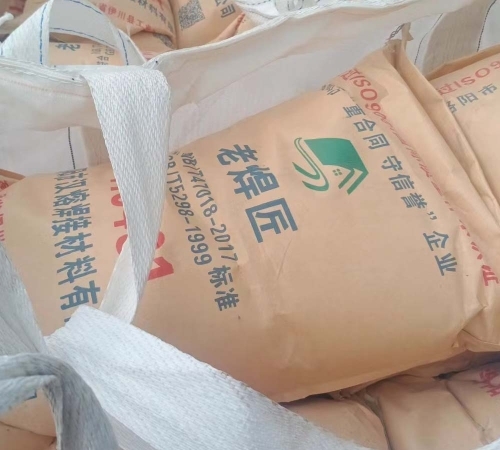
- Keep it Sealed: Leave the flux in its original, unopened, moisture-proof packaging for as long as possible. Most manufacturers use durable, multi-layer bags designed to protect the product during transit and storage.
- Store Indoors: Never store flux outdoors, even if it is covered by a tarp. Exposure to rain, humidity, and temperature swings will quickly degrade the material.
- Elevate Off the Floor: Always store bags of flux on pallets or shelves. Placing them directly on a concrete floor can lead to moisture absorption from the concrete itself.
- Control the Environment: The storage area should be heated and have a relatively low humidity. Avoid areas near open bay doors, wash bays, or other sources of moisture.
- First-In, First-Out (FIFO): Implement a FIFO inventory system to ensure that older stock is used before newer stock. This minimizes the total time any given bag of flux spends in storage.
Best Practices for Drying and Reconditioning Flux
Even with the best storage practices, flux may sometimes require drying or reconditioning before use. This is a critical step for applications requiring low-hydrogen weld deposits, as specified in many structural steel and pressure vessel codes.
FAQ 3: When and why should flux be dried before use?
Drying, often called re-baking, is necessary under several circumstances. The most common reason is to drive off any moisture the flux has absorbed after its packaging has been opened. You should dry your flux if:
- The original packaging has been damaged or opened for an extended period.
- The flux has been stored in a high-humidity environment.
- The Welding Procedure Specification (WPS) or applicable code explicitly requires it for a specific job.
- The flux is being reclaimed from a recycling system (more on this later).
The purpose of drying is to heat the flux to a temperature high enough to evaporate the absorbed moisture but not so high that it damages the chemical components of the flux itself. This is a crucial quality control step for preventing hydrogen-related defects.
FAQ 4: What is the correct procedure for drying flux?
The correct procedure for drying flux depends entirely on the type of flux (fused vs. bonded/agglomerated) and the manufacturer's specific instructions. Attempting to use a generic, one-size-fits-all approach can be ineffective or even damage the product. However, the general process involves using a purpose-built flux holding or re-baking oven.
- Consult the Manufacturer: Always refer to the Technical Data Sheet (TDS) for the specific flux you are using. It will provide the exact recommended temperature and time for drying. For example, our data sheets for products like submerged arc welding flux hj431 provide precise guidance.
- Preheat the Oven: Ensure the oven is at the correct temperature before adding the flux.
- Control the Depth: Spread the flux in shallow trays, typically no more than 25-50 mm (1-2 inches) deep. This ensures that heat penetrates the entire volume of flux evenly.
- Adhere to Time and Temperature: A common range for many fluxes is 250°C to 350°C (482°F to 662°F) for one to two hours. Do not rush this process. After drying, the flux should be transferred to a holding oven set at a lower temperature (e.g., 120-150°C) to keep it dry until it is issued to the welding station.
Never attempt to dry flux using makeshift methods like a torch or an open fire, as this will lead to contamination and overheating, rendering the flux unusable.
The Critical Question: Can You Reuse Welding Flux?
One of the benefits of the SAW process is that not all the flux delivered to the joint is consumed. The unfused flux can be collected and, under the right conditions, reused. This practice can lead to significant cost savings, but it must be managed by a strict, controlled procedure to avoid compromising weld quality.
FAQ 5: How do you safely reclaim and reuse flux?
Reclaiming flux requires a systematic approach. The unfused flux from the weld joint is typically collected by a vacuum-based flux recovery system. This system must be able to separate the reusable granulated flux from slag, metal fines, and other contaminants.
The process generally involves these steps:
- Collection: A vacuum system suctions the unfused flux from the workpiece.
- Separation: The collected material passes through a series of screens and magnetic separators. The screens filter out large pieces of slag (the glassy, melted flux), while magnets remove small metallic particles.
- Storage: The cleaned, reclaimed flux is stored in a hopper.
- Reintroduction: This reclaimed flux should never be used on its own. It must be mixed with new, virgin flux at a specific, pre-qualified ratio (e.g., 1 part new to 1 part reclaimed). This ensures that the overall chemistry of the flux remains consistent, as some deoxidizers and alloying elements can be depleted during each welding cycle.
- Redrying: The reclaimed portion or the entire new/reclaimed mixture should be redried according to manufacturer specifications to remove any moisture or contaminants picked up during the process.
It is critical to regularly test welds made with recycled flux to ensure they continue to meet the required mechanical properties. Any change in the process or materials requires requalification.
Partnering with a Reliable Flux Manufacturer
The consistency and quality of your welds are directly linked to the quality and consistency of your consumables. Partnering with a manufacturer that demonstrates a commitment to quality control from raw material to final packaging is essential for any serious fabrication enterprise. At Oldwelders, we understand that our products are a critical component of our customers' success.
Our operations are ISO 9001 certified, reflecting a deep commitment to process control and quality assurance. Our 1000-square-meter plant, equipped with six modern production lines, has the capacity to supply up to 100 tons of product per day, ensuring we can meet the demands of large-scale projects. We begin with excellent raw materials, including dolomite, bauxite, and silica, which are melted at 2000°C to create a pure, homogenous, and consistent Submerged Arc Flux. This meticulous process guarantees predictable performance batch after batch.
With a standard minimum order quantity of 1 ton and a typical 30-day lead time, we are structured to serve industrial clients efficiently. Our experience supplying demanding markets in Brazil, Thailand, Australia, and Malaysia has prepared us to meet global standards for quality and logistics. When you source your welding materials from us, you are not just buying a product; you are gaining a partner dedicated to the integrity of your work.
Ultimately, managing your Submerged Arc Flux correctly is an investment in operational excellence. By implementing robust procedures for storage, drying, and recycling, you minimize defects, reduce waste, and enhance the productivity of your SAW operations. For more information on selecting the right consumables for your application, explore our comprehensive range of welding fluxes and other high-performance products.