
Submerged Arc Flux: A Guide to Preventing Moisture Defects
Learn How to Prevent Moisture Defects with Your Submerged Arc Flux
In the world of heavy fabrication, Submerged Arc Welding (SAW) stands out for its high deposition rates, deep penetration, and exceptional weld quality. It is the backbone of manufacturing for pressure vessels, pipelines, structural steel, and shipbuilding. However, the success of this powerful process hinges on one critical, often overlooked variable: the condition of the welding flux. Moisture contamination in your welding flux is a silent threat that can introduce severe defects, compromise the integrity of the weldment, and lead to costly rework or catastrophic failures. For production supervisors, understanding the mechanisms of moisture-related defects and implementing rigorous control measures is not just best practice—it is essential for ensuring safety, quality, and operational efficiency.
The granular flux used in the SAW process serves multiple purposes. It stabilizes the arc, provides shielding from the atmosphere, forms a protective slag to shape the weld bead, and influences the final chemical composition and mechanical properties of the weld. When this flux absorbs moisture from the environment, its protective capabilities are severely diminished. This guide provides a detailed overview of how moisture causes defects and outlines the essential procedures for handling, storing, and reconditioning your welding flux to maintain weld integrity and prevent hydrogen-induced cracking.
Understanding the Threat: Hydrogen-Induced Cracking and Porosity
The primary antagonist introduced by moisture (H₂O) in the welding process is hydrogen. At the extreme temperatures of the welding arc, which can exceed 2000°C, water molecules dissociate into their constituent hydrogen and oxygen atoms. While much of the oxygen combines with deoxidizers in the flux and wire, the highly mobile atomic hydrogen readily dissolves into the molten weld pool. As the weld metal cools and solidifies, the solubility of hydrogen decreases dramatically. This forces the hydrogen atoms to attempt to escape the metal lattice.
This process can lead to two major types of defects:
Porosity and Wormholes
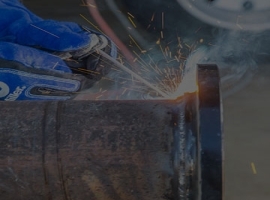
If hydrogen atoms are trapped during solidification, they can combine to form molecular hydrogen (H₂) gas, creating pockets or bubbles within the weld metal. These voids are known as porosity. When these gas pockets are elongated and extend to the surface, they are often called "wormholes." Porosity reduces the cross-sectional area of the weld, creating stress concentration points that significantly weaken the joint. A weld bead with visible surface porosity is a clear indicator of gas contamination, with moisture being a primary suspect. This defect not only impacts the mechanical strength but also provides potential leak paths in applications like pressure vessels and pipes.
Hydrogen-Induced Cracking (HIC)
A more insidious defect caused by hydrogen is Hydrogen-Induced Cracking, also known as delayed cracking or cold cracking. Not all of the dissolved atomic hydrogen forms gas bubbles. Some of it remains diffused within the atomic structure of the solid steel, particularly in the heat-affected zone (HAZ) and the weld metal. This diffusible hydrogen migrates to areas of high stress and microstructural imperfections. Over time—hours or even days after the weld has cooled—the accumulated hydrogen pressure builds, reducing the steel's ductility and leading to the formation of microscopic cracks. These cracks can then propagate under residual or service stresses, leading to sudden, brittle failure of the component.
The risk of HIC is highest in high-strength steels, thick sections, and highly restrained joints where residual stresses are significant. For supervisors overseeing critical projects, preventing hydrogen ingress is the most effective strategy to mitigate the risk of this dangerous and often undetectable form of cracking. Control over the moisture content in your submerged arc flux is the first and most important line of defense.
Identifying and Preventing Moisture Contamination
Since flux is often hygroscopic (meaning it readily absorbs moisture from the air), a proactive approach to management is crucial. This begins with knowing the signs of contamination and implementing strict handling protocols from the moment the product arrives at your facility.
Signs of Contaminated Flux
- Visual Cues: Fresh, dry flux should be free-flowing and granular. Flux that has absorbed significant moisture may appear clumpy, caked, or may contain hardened lumps that do not break apart easily.
- Inconsistent Arc Behavior: Excessive moisture can lead to an unstable or erratic arc during the welding process. Operators may report unusual sputtering or a "popping" sound from the arc zone.
- Weld Bead Appearance: As mentioned, surface porosity or wormholes are tell-tale signs. Another indicator can be a rough, pitted, or irregularly shaped weld bead surface. The slag covering the weld may also be difficult to remove or have a pockmarked appearance.
- Failed Mechanical Tests: The ultimate confirmation of a problem often comes from failed tensile or bend tests. Reduced ductility is a classic symptom of high diffusible hydrogen levels in the weld metal.
Best Practices for Storage and Handling
Prevention is always more effective and less costly than remediation. Implementing a robust storage and handling procedure is paramount for any fabrication shop using the SAW process. As a supplier to demanding markets in Brazil, Thailand, Australia, and Malaysia, we understand the challenges of varying climates and emphasize the following protocols.
- Keep Packaging Sealed: Flux should be kept in its original, hermetically sealed packaging until it is ready to be loaded into a welding machine hopper. Many manufacturers use moisture-proof bags or containers for this reason. Once a bag is opened, it should be used as quickly as possible.
- Controlled Storage Environment: Store all flux in a dedicated, dry, and climate-controlled area. The ideal storage room should be heated to maintain a temperature consistently above the ambient dew point to prevent condensation. Avoid storing flux directly on concrete floors, as they can transmit moisture. Use pallets or shelving.
- First-In, First-Out (FIFO): Implement a strict FIFO inventory system. This ensures that the oldest stock is used first, minimizing the total time any given container of flux is exposed to potential moisture absorption.
- Limit Exposure in Hoppers: Do not leave flux in machine hoppers overnight or over weekends, especially in humid environments. At the end of a shift, unused flux should be removed from the hopper and stored in a heated holding oven. Flux recycling systems should also be designed to prevent moisture contamination.
The Critical Role of Re-drying and Baking
Even with the best handling practices, flux can sometimes be exposed to moisture. In these cases, or if there is any doubt about the condition of the flux, it must be reconditioned by baking in a calibrated oven before use. This process drives out the absorbed moisture and restores the flux to its optimal condition. It is absolutely critical to follow the manufacturer's specific recommendations for re-drying, as temperatures and times can vary based on the flux type (fused vs. agglomerated).
General Re-drying Guidelines
- Use a Calibrated Oven: Only use an oven designed for re-drying welding consumables. It must have proper ventilation to allow moisture to escape and accurate temperature controls.
- Proper Loading: Spread the flux in shallow pans, typically no more than 1-2 inches (25-50 mm) deep. This ensures that heat penetrates the entire volume of flux evenly and allows moisture to escape effectively.
- Temperature and Time: While specific values depend on the manufacturer's data sheet, a common re-drying cycle for many fused fluxes involves heating to a temperature between 300°C and 400°C (570°F - 750°F) and holding for a minimum of one to two hours. Do not exceed the recommended temperature, as it can damage the flux particles and alter their chemical properties.
- Holding Ovens: After re-drying, the flux should be transferred to a holding oven maintained at a lower temperature, typically around 120°C to 150°C (250°F - 300°F). This keeps the flux dry and ready for immediate use. Flux can be stored in these holding ovens until it is loaded into the machine hopper. Properly reconditioned flux is a key component for any high-quality automatic welding machine setup.
Quality Control from Manufacturing to Application
The foundation of a moisture-free welding process begins long before the flux arrives at your facility. It starts with the manufacturer's commitment to quality. At Oldwelders, our process is designed to produce a stable, reliable, and inherently low-moisture product from the very start. Our manufacturing advantage stems from a meticulous, quality-driven approach certified under ISO 9001 standards.
Our process begins with the selection of excellent raw materials, including dolomite, bauxite, cryolite, silica, and fluorine ore. These components are precisely blended and then melted in an electric furnace at temperatures reaching 2000°C. This fusion process not only creates a homogenous, glassy flux with consistent chemical properties but also inherently drives off any volatile compounds and moisture. The molten material is then solidified and crushed into the final granular product. This production method results in a fused flux that is chemically stable and significantly less hygroscopic than other types of flux.
Our state-of-the-art plant, covering 1000 square meters with six production lines, has the capacity to supply 100 tons per day. This high-volume production ensures that our inventory is constantly refreshed, and our customers receive a product that has not been sitting in a warehouse for extended periods. When you order our submerged arc welding flux hj431, you are receiving a product manufactured under stringent controls. From production to packaging, every step is optimized to protect against moisture, ensuring that the flux you load into your hopper performs exactly as intended, delivering clean, strong, and defect-free welds. This detailed attention to the full lifecycle of all our welding materials is our commitment to your operational success.