
Sourcing a Flux Hopper for Your Automatic SAW System
Learn how to effectively source a flux hopper for your automatic Submerged Arc Welding operations.
In the world of heavy fabrication, efficiency, consistency, and quality are paramount. Submerged Arc Welding (SAW) is a cornerstone process for achieving high-deposition rates and deep weld penetration in applications like shipbuilding, pressure vessel manufacturing, and structural steel construction. At the heart of an automated SAW system is the flux delivery mechanism, and a critical component of this system is the flux hopper. Selecting the right equipment and, more importantly, the right supplier is a decision that directly impacts your operational uptime, weld quality, and overall profitability. This guide provides a detailed framework for procurement managers and fabrication engineers on how to evaluate and source this essential piece of equipment.
Understanding the Role of the Flux Hopper in Submerged Arc Welding
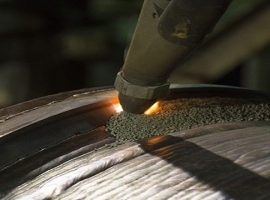
Before diving into sourcing criteria, it's essential to understand the function of a flux delivery system in the SAW process. Unlike other arc welding methods, SAW uses a blanket of granular, fusible material called flux to protect the arc and the molten weld pool from atmospheric contamination. This flux is continuously fed to the weld joint just ahead of the arc.
The flux hopper is the reservoir that holds and dispenses this granular material. Its primary role is to ensure a consistent, gravity-fed supply of flux to the welding head. An interruption or inconsistency in this supply can lead to severe weld defects, such as porosity, slag inclusions, or an unstable arc. In automated setups, where long, continuous welds are common, the reliability of the entire flux management system—including the hopper, valves, and hoses—is non-negotiable.
Key Functions and Benefits of a Proper System:
- Consistent Flux Shielding: A well-designed system prevents "starvation" of the arc, ensuring complete and uniform shielding of the weld puddle. This is critical for achieving the desired mechanical properties and radiographic soundness of the weld.
- Improved Operator Efficiency: In manual or semi-automatic operations, operators must frequently stop to add more flux. An appropriately sized hopper for an automated system minimizes these interruptions, allowing for longer, uninterrupted welding cycles and increasing the arc-on time.
- Flux Preservation: Many modern hoppers can be part of a closed-loop recovery system. Unfused flux is vacuumed up, filtered, and returned to the hopper, reducing waste and significantly lowering consumable costs over time. Some systems also include heating elements to keep the flux dry, preventing moisture absorption which is a primary cause of hydrogen-induced cracking.
The choice of a hopper is not merely about holding a certain volume of flux; it's about integrating a reliable component that supports a high-stakes, high-productivity welding process. When this system fails, the entire production line can come to a halt.
Key Specifications to Consider When Sourcing
When you begin drafting a request for quotation (RFQ) for a flux delivery system, several technical specifications must be clearly defined to ensure you receive a product that meets your operational needs. These details will form the basis of your technical evaluation of potential suppliers.
Capacity and Dimensions
The capacity of the hopper, typically measured in liters or kilograms, should be matched to your production demands. For single-shift operations with moderate welding, a smaller 25-50 kg capacity unit might suffice. However, for continuous, multi-shift operations on long seams, such as in pipe mills or wind tower manufacturing, capacities of 100 kg or more are common. Consider the physical space available on your welding gantry, manipulator, or tractor. The overall height, width, and weight of the filled unit must be compatible with your existing automatic welding systems.
Material and Construction
The hopper should be constructed from durable materials, typically steel or stainless steel, to withstand the rigors of an industrial environment. Pay attention to the quality of the welds and the finish. A smooth, conical interior is vital for ensuring uninterrupted, gravity-driven flow of the flux. Any internal ledges or rough surfaces can cause the flux to "bridge" or "rat-hole," impeding flow.
Mounting and Integration
How will the unit attach to your welding manipulator or tractor? Suppliers should offer various mounting options, such as brackets, flanges, or custom solutions, to fit common equipment. The outlet size and type (e.g., threaded or flanged) must be compatible with your existing or planned flux valves and hoses. Discussing these integration details upfront can prevent costly and time-consuming modifications during installation.
Pressurized vs. Gravity-Fed Systems
Most standard hoppers are gravity-fed. However, for applications requiring flux to be transported over long distances or to multiple weld heads from a central reservoir, a pressurized system is necessary. These systems use compressed air to move the flux, acting as a "flux pump." While more complex and expensive, they offer greater flexibility in large-scale automated facilities. Clarify which type is suitable for your specific production layout.
Optional Features
- Heating Elements: For applications using fluxes that are highly susceptible to moisture absorption, a heated hopper is a crucial feature. Thermostatically controlled heating elements maintain the flux at a specific temperature (e.g., 100-150 °C) to drive off moisture and prevent hydrogen-related weld defects.
- Low-Level Sensors: An electronic sensor can alert operators or automatically stop the process when flux levels are critically low, preventing weld defects from a starved arc. This is an invaluable feature for unattended or long-duration automated welding.
- Sight Glasses: A simple sight glass allows for quick visual inspection of the remaining flux level without having to open the unit.
Evaluating Supplier Capabilities for Long-Term Partnership
Sourcing a piece of industrial equipment goes beyond comparing technical datasheets and prices. You are entering into a relationship with a supplier who can impact your production for years to come. Evaluating their capabilities is as important as evaluating the product itself.
Quality Management and Certifications
A supplier's commitment to quality is a strong indicator of product reliability. Look for suppliers who adhere to internationally recognized quality management systems. For example, Oldwelders operates under an ISO 9001 certified system, which ensures that processes from raw material sourcing to final inspection are standardized and controlled. This level of quality management in a supplier provides confidence that the equipment and consumables they provide will perform consistently. Ask potential suppliers about their quality control procedures, material traceability, and any relevant certifications they hold.
Production Capacity and Supply Chain Reliability
While you may be purchasing a single piece of equipment, it's crucial to consider the supplier's overall stability and their ability to support you in the long run. This includes providing spare parts, technical support, and, most importantly, the consumables that the equipment uses. A supplier with significant production capacity, like our own 1000 square meter plant with the ability to supply 100 tons of high-quality welding fluxes per day, demonstrates a robust and reliable supply chain. This ensures that you won't face disruptions in your supply of critical consumables, which is just as important as the reliability of the hardware itself.
Technical Support and Market Experience
Does the supplier have a deep understanding of the welding process, or do they simply sell a product? A knowledgeable supplier can provide invaluable advice on system integration, troubleshooting, and process optimization. Look for evidence of their experience in demanding industrial markets. For instance, our experience serving clients in diverse markets such as Brazil, Thailand, Australia, and Malaysia has given us insight into a wide range of applications and operational challenges. An experienced partner can help you select not only the right hopper but also the optimal flux and wire combination for your specific material and application.
The Broader Ecosystem: Integrating Your Hopper with Welding Consumables
The flux hopper is one part of a larger system. Its performance is inextricably linked to the quality and characteristics of the welding flux it dispenses, as well as the welding wire and power source. A holistic approach to sourcing is essential.
When discussing your equipment needs with a supplier, you should also discuss the consumables. The particle size distribution, density, and flow characteristics of the flux can all affect how well it performs in a given delivery system. A supplier who manufactures both the equipment and the consumables can provide a fully optimized and tested solution. For example, the interaction between a specific grade of flux-cored welding wire and an agglomerated or fused flux is a complex metallurgical relationship. Partnering with a supplier who understands this relationship can help you avoid costly trial-and-error process development.
At Oldwelders, our fluxes are produced from meticulously selected raw materials like dolomite, bauxite, and cryolite, which are melted at 2000 °C to ensure purity and consistency. This rigorous production process guarantees that our fluxes have the flowability and chemical properties needed to perform reliably in any automated delivery system, preventing issues like clogging and ensuring consistent weld quality.
Logistics and Procurement: From Quotation to Delivery
The final stage of the sourcing process involves clarifying the commercial and logistical aspects of the purchase. A transparent and well-defined procurement process minimizes the risk of unexpected costs and delays.
Requesting a Comprehensive Quotation
Your RFQ should be detailed. Beyond the technical specifications, ask for:
- Unit price and any discounts for volume.
- The cost of recommended spare parts (e.g., gaskets, valves, heating elements).
- Lead time from order confirmation to shipment. A typical industrial standard might be a 30-day lead time.
- Shipping costs, terms (e.g., FOB, CIF), and estimated transit time.
- Warranty terms and conditions.
- Details on installation support and operator training, if available.
Understanding Minimum Order Quantities (MOQ)
While a single hopper is a discrete purchase, be aware of a supplier's policies, especially if you plan to bundle the purchase with consumables. Some manufacturers may have a Minimum Order Quantity (MOQ) for consumables, such as a 1-ton minimum for a specific type of welding flux. Factoring this into your budget and inventory planning from the outset is crucial for a smooth procurement process.
By taking a structured approach that evaluates technical specifications, supplier capabilities, and the total integrated welding system, you can confidently source a flux delivery system that enhances your automated SAW operations, delivering reliability and quality for years to come.