
Sourcing Welding Consumables for Mixed Processes | Oldwelders
A Strategic Guide to Sourcing Welding Consumables for Mixed Processes
For procurement managers in the industrial fabrication, construction, and manufacturing sectors, managing the supply chain for welding operations is a complex task. A single workshop often employs multiple welding processes—such as MIG, TIG, MMA, and SAW—each requiring a distinct set of consumables. Juggling multiple suppliers for different wires, rods, gases, and fluxes can lead to logistical inefficiencies, inconsistent quality, and inflated costs. This guide provides a strategic framework for sourcing high-quality welding consumables, helping you consolidate suppliers, ensure operational continuity, and optimize your procurement budget.
Understanding the Core Welding Processes and Their Consumables
Before diving into sourcing strategies, it's essential to have a clear understanding of the primary welding processes and the specific items they consume. A fabrication facility rarely relies on a single method; rather, it uses the best process for the job, material, and required quality. This versatility necessitates a diverse inventory of supplies.
- Gas Metal Arc Welding (GMAW / MIG/MAG): Known for its speed and efficiency, MIG/MAG welding uses a continuously fed wire electrode and a shielding gas. It's a go-to process for manufacturing and general fabrication on steel, stainless steel, and aluminum.
- Gas Tungsten Arc Welding (GTAW / TIG): Valued for its precision and clean, high-quality welds, TIG welding uses a non-consumable tungsten electrode and a separate filler rod. It is ideal for critical joints, thin materials, and non-ferrous metals like aluminum and magnesium.
- Manual Metal Arc Welding (MMA / SMAW): Often called "stick welding," this versatile and portable process uses a flux-coated consumable electrode. It is widely used in construction, repair, and field work due to its simplicity and effectiveness in various conditions.
- Submerged Arc Welding (SAW): A high-productivity, automated or semi-automated process where the arc is "submerged" under a blanket of granular flux. SAW is used for heavy fabrication, shipbuilding, and pressure vessel manufacturing, delivering high deposition rates and deep penetration.
Each of these processes has a unique "shopping list" of consumables. The challenge for a procurement manager is not just to buy these items, but to source them from a reliable partner who can provide consistent quality across the entire product range.

Sourcing for Gas Metal Arc Welding (GMAW/MIG/MAG)
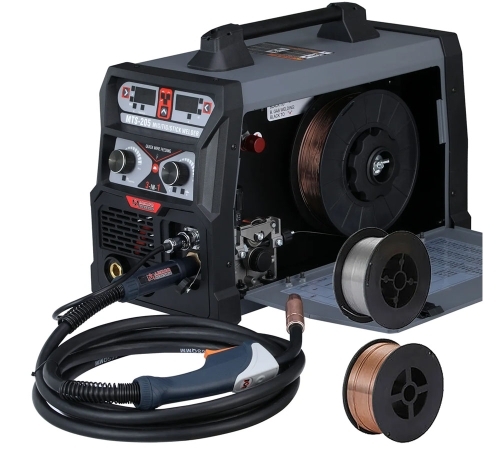
GMAW is a workhorse process, and keeping it running smoothly depends on a steady supply of the right components. When sourcing for MIG/MAG operations, your focus should be on the wire electrode and shielding gas, as these directly impact weld quality and productivity.
Wire Electrodes
The wire is the most critical consumable in GMAW. It comes in two main types:
- Solid Wires: These are solid metal wires, typically copper-coated for better conductivity and corrosion resistance. The most common type for carbon steel is ER70S-6. When sourcing, you must ensure the wire's chemical composition matches the base material to achieve the required mechanical properties in the final weld. Consistency in wire diameter and a smooth feed are paramount to avoid costly downtime from wire feeding issues.
- Flux-Cored Wires (FCAW): These are tubular wires filled with flux. They offer higher deposition rates than solid wires and can be used in outdoor or drafty conditions. Some are self-shielded (requiring no external gas), while others are dual-shielded (requiring gas). When sourcing, consider the specific application; for example, a flux-cored wire designed for all-position welding offers greater flexibility on complex structures.
Shielding Gases
Shielding gas protects the molten weld pool from atmospheric contamination. The choice of gas affects arc characteristics, penetration, and bead appearance. Common options include:
- 100% CO2: Cost-effective and provides deep penetration, but can result in a harsher arc and more spatter.
- Argon/CO2 Blends: Mixtures like 75% Argon / 25% CO2 are extremely common for steel. They provide a more stable arc, less spatter, and a better bead profile than pure CO2.
- Argon/Oxygen Blends: Used for stainless steel to improve bead wetting.
While often sourced locally, your primary consumables supplier should be able to provide technical guidance on the optimal gas mixture for your specific wire and application, ensuring you're not compromising quality for convenience.
Procuring Supplies for Gas Tungsten Arc Welding (GTAW/TIG)
TIG welding is all about control and precision. The consumables, while used at a slower rate than in MIG welding, must be of the highest quality to achieve the clean, strong welds this process is known for.
Tungsten Electrodes
Unlike other processes, the electrode in TIG welding is not consumed. However, it requires periodic re-sharpening or replacement. Different types of tungsten are available, each with specific benefits:
- 2% Thoriated (Red): Long-lasting and effective for DC welding on steel and stainless steel. Health and safety considerations are important due to its radioactivity.
- 2% Ceriated (Grey): A good all-around, non-radioactive alternative for both AC and DC welding at lower amperages.
- 1.5% Lanthanated (Gold): Another excellent non-radioactive option that performs well in both AC and DC applications, offering good arc starting and stability.
When sourcing, look for suppliers who offer dimensionally consistent electrodes with verified chemical compositions to ensure predictable arc performance.
Filler Rods
The filler material is added manually to the weld pool. The cardinal rule is that the filler rod's alloy must be compatible with the base metal. Sourcing from a supplier with a wide range of filler materials—from carbon steel and stainless steel to aluminum and exotic alloys—is crucial for workshops handling diverse projects. Each rod should be clearly stamped and traceable to its material specification.
Managing Manual Metal Arc Welding (MMA/SMAW) Consumables
MMA welding remains indispensable for its versatility and simplicity. The key consumable is the flux-coated electrode, or "stick." The coating is not just a protective layer; it's a complex chemical compound that provides shielding, deoxidizes the weld metal, adds alloying elements, and controls the arc's characteristics.
Coated Electrodes
Electrodes are classified by a numbering system (e.g., E6013, E7018) that indicates their tensile strength, welding position, and coating type. Key considerations include:
- Rutile Coatings (e.g., E6013): These offer a smooth, stable arc, easy slag removal, and a fine ripple finish. They are excellent for general-purpose fabrication and sheet metal work. When sourcing, it's wise to partner with a manufacturer who can provide consistent quality, like our popular AWS E6013 welding electrodes.
- Basic/Low-Hydrogen Coatings (e.g., E7018): These electrodes deposit tough, crack-resistant welds with excellent mechanical properties, making them mandatory for structural steel, pressure vessels, and other critical applications. They must be stored in a controlled, low-humidity environment. Your supplier must provide proper packaging to prevent moisture absorption.
A reliable supplier will offer electrodes with consistent coating concentricity and moisture content, ensuring every weld is as good as the last.
Optimizing Sourcing for Submerged Arc Welding (SAW)
SAW is a high-deposition process where the synergy between the wire and the granular flux determines the outcome. Sourcing these two components as a system from a single, knowledgeable manufacturer is the best strategy for success.
Wire and Flux Combination
The flux in SAW plays multiple roles: it shields the arc, cleanses the molten metal, shapes the bead, and can even add alloying elements to the weld. Fluxes are generally categorized as neutral, active, or alloy. An active flux, for example, can compensate for silicon and manganese loss during welding.
A high-quality supplier will not just sell you a wire and a bag of flux; they will provide technical data sheets specifying the exact mechanical properties you can expect from a specific wire-flux combination. For demanding applications, this is non-negotiable. The quality of the flux is directly tied to its raw materials. At Oldwelders, our fluxes are produced from premium ores like dolomite, bauxite, and cryolite, which are melted at 2000 °C to ensure purity and chemical homogeneity. Whether you need a standard product like our submerged arc welding flux HJ431 or a custom solution, the manufacturing process is key.
The Advantage of Supplier Consolidation for Welding Consumables
Managing separate suppliers for MIG wires, TIG rods, MMA electrodes, and SAW fluxes creates significant administrative overhead. Consolidating your procurement with a single, capable manufacturer offers compelling benefits:
- Streamlined Procurement: One point of contact, one purchase order, and one invoice simplifies the entire process.
- Consistent Quality Control: Sourcing from an ISO 9001-certified manufacturer ensures that all your welding consumables meet a consistent, high standard of quality, from raw material selection to final packaging.
- Supply Chain Reliability: A large-scale manufacturer has the capacity to meet your demands without interruption. For instance, our 1000-square-meter plant is equipped with six production lines capable of supplying up to 100 tons of welding materials per day. This capacity provides peace of mind, even for large-scale projects.
- Technical Expertise: A comprehensive supplier can act as a technical partner, offering expert advice on the best consumables for a new project or helping to troubleshoot an existing application.
- Global Logistics Experience: An established supplier with a history of serving diverse international markets, including Brazil, Thailand, Australia, and Malaysia, has the proven logistical expertise to deliver your orders on time and in compliance with all regulations.
Key Criteria for Evaluating a Bulk Consumables Supplier
When selecting a long-term partner for your welding consumables, go beyond the price list. Use this checklist to evaluate potential suppliers:
- Quality Management Systems: Do they hold internationally recognized certifications like ISO 9001? This is a fundamental indicator of their commitment to quality.
- Production Capacity and Infrastructure: Do they have the physical plant and production lines to handle your volume? Ask about their daily or monthly output capacity to gauge their ability to scale.
- Product Range and Specialization: Can they supply high-quality consumables for all the primary welding processes you use? A broad portfolio is a key indicator of a one-stop-shop partner.
- Technical Support: Do they have an accessible team of welding engineers or technicians who can provide application support?
- Logistical Terms: What are their standard lead times and minimum order quantities (MOQ)? A supplier with clear terms, such as a 30-day lead time and a 1-ton MOQ, allows for effective inventory planning.
- Traceability: Can they provide material test reports (MTRs) and certificates of conformity for their products? Full traceability is crucial for quality assurance, especially in regulated industries.
By strategically evaluating and consolidating your suppliers, you can transform the procurement of welding consumables from a complex daily task into a streamlined, value-adding component of your operation. A partnership with a knowledgeable and capable manufacturer like Oldwelders provides not just products, but a foundation of quality, reliability, and expertise that strengthens your entire production process.