
Smelting Flux: Borax, Silica, Limestone Roles
Understanding the Critical Roles of Borax, Silica, and Limestone in Smelting Flux
The metallurgical industry relies heavily on precision and efficiency to transform raw ores into valuable metals. A cornerstone of this process is the effective use of a suitable welding fluxes, a substance added to molten metals to remove impurities, protect the melt from oxidation, and facilitate the desired chemical reactions. Among the myriad of materials used for this purpose, borax, silica, and limestone stand out as fundamental components, each contributing unique properties that are indispensable for successful smelting operations. Oldwelders provides a comprehensive range of materials, including advanced solutions for welding materials, designed to meet the rigorous demands of modern industrial processes.
Effective welding fluxes are not just an additive; they are an integral part of the chemical environment within a furnace, dictating the quality of the final metal product and the overall efficiency of the extraction process. From reducing the melting point of unwanted oxides to forming stable, easily removable slag, the precise formulation of these fluxes is paramount. This article delves into the specific roles played by borax, silica, and limestone, highlighting why their proper selection and application are vital for industries across the globe, including our partners in Brazil, Thailand, Australia, and Malaysia.
The Fundamental Role of Borax in Smelting Operations
Borax, a hydrated sodium borate mineral, is highly valued in metallurgy for its exceptional fluxing capabilities. Its primary function in smelting is to act as a powerful solvent for metal oxides, particularly those with high melting points. When introduced into a molten bath, borax readily combines with these refractory oxides, forming borate glasses that have significantly lower melting points and viscosities than the original oxides. This allows the impurities to dissolve into the slag layer, which can then be easily separated from the purified metal.
Beyond its solvent properties, borax also serves as a protective layer over the molten metal. This glassy layer prevents atmospheric oxygen from reacting with the hot metal, thereby minimizing oxidation and subsequent metal loss. This is particularly crucial in processes involving reactive metals. Furthermore, borax can help to stabilize the arc in electric arc furnaces and improve the wetting characteristics of the molten metal, leading to better flow and reduced surface tension. Its ability to create a clean, stable melt environment contributes significantly to the production of high-quality alloys and pure metals. The application of appropriate fluxing agents, such as those found in our submerged arc welding flux hj431, demonstrates the diverse roles these materials play.
Oldwelders understands the critical importance of a consistent and high-quality borax component in our flux products. Our commitment to excellence, backed by ISO 9001 certification, ensures that every batch of raw material meets stringent standards before being processed. This meticulous approach guarantees that our customers receive fluxes that perform reliably, contributing to their operational success.

Silica: A Key Component for Slag Formation and Impurity Removal
Silica, or silicon dioxide (SiO₂), is another indispensable component in many flux formulations, particularly in the smelting of ferrous and non-ferrous metals. Its role is multifaceted, primarily revolving around the formation of stable and manageable slag. Silica is inherently acidic and reacts with basic metal oxides (like iron oxide, manganese oxide, and calcium oxide) to form silicates. These silicates constitute the slag, which floats on top of the denser molten metal and can be effectively skimmed off.
The acidic nature of silica is crucial for neutralizing basic impurities, preventing them from re-entering the metal bath. By forming a stable slag, silica helps to encapsulate these impurities, ensuring their efficient removal. The quantity and form of silica used are carefully controlled to achieve the desired slag viscosity and melting point, which can vary significantly depending on the specific metallurgical process and the type of ore being smelted. For example, in steelmaking, silica helps to remove phosphorus and sulfur, which are detrimental to steel quality.
Oldwelders sources excellent raw materials, including high-purity silica, which are melted at 2000 °C during our manufacturing process. This rigorous control over raw material quality and processing ensures that our welding and welding fluxes provide optimal performance in diverse industrial applications. Our plant, covering an area of 1000 square meters with six production lines, has the capacity to supply 100 tons of product a day, underscoring our capability to meet large-scale industrial demands efficiently and reliably.
Adjusting Slag Properties with Silica Content
The precise amount of silica in a flux mixture directly influences the chemical properties and physical characteristics of the resultant slag. Too little silica may lead to an overly basic slag that cannot effectively absorb acidic impurities, while too much can create an overly viscous slag that is difficult to tap or remove. Engineers at Oldwelders meticulously calibrate silica content in our welding fluxes to ensure optimal slag fluidity and impurity capture for specific applications, whether for general purpose aws e6013 welding electrodes or specialized industrial requirements.
Limestone's Contribution to Metallurgical Purity and Efficiency
Limestone, primarily composed of calcium carbonate (CaCO₃), is a widely used fluxing agent, particularly in the iron and steel industries. Its role is predominantly as a basic flux, reacting with acidic impurities and slag components to form a more fluid and manageable slag. When heated in a furnace, limestone undergoes calcination, decomposing into calcium oxide (CaO) and carbon dioxide (CO₂). Calcium oxide is highly basic and readily combines with acidic oxides like silica (SiO₂) and alumina (Al₂O₃) to form calcium silicates and aluminates, which are key constituents of the slag.
One of the most critical functions of limestone in smelting is its ability to remove sulfur and phosphorus, two common and highly undesirable impurities in many metals, especially steel. Calcium oxide reacts with sulfur to form calcium sulfide (CaS), which is incorporated into the slag. Similarly, it can react with phosphorus oxides to remove phosphorus. By effectively sequestering these elements into the slag, limestone plays a vital role in improving the mechanical properties and overall quality of the refined metal.
Furthermore, the CO₂ released during limestone calcination can provide some agitation to the molten bath, helping to mix the slag and metal layers, thereby promoting more efficient chemical reactions. The careful control of limestone addition ensures that the slag achieves the desired basicity-to-acidity ratio, which is crucial for efficient impurity removal and optimal furnace operation.
The Synergy of Borax, Silica, and Limestone in Flux Design
While borax, silica, and limestone each perform distinct functions, their true power in metallurgy often lies in their synergistic application. A well-designed flux formulation will often incorporate a blend of these materials, along with other specialized raw materials like dolomite, bauxite, cryolite, and fluorine ore, to achieve a comprehensive set of objectives. Borax might initiate the fluxing action at lower temperatures, followed by silica and limestone fine-tuning the slag chemistry for specific impurity removals at higher temperatures. This balanced approach ensures maximum efficiency, minimal metal loss, and the production of high-purity metals.
Oldwelders' expertise in material science allows us to develop sophisticated flux recipes that leverage the combined strengths of these fundamental components. Our products are engineered not only for superior performance but also for consistency, an attribute that is critical in demanding industrial environments. With a minimum order quantity of just 1 ton and a typical lead time of 30 days, we offer flexibility and reliability to our global clientele, ensuring their operations run smoothly.
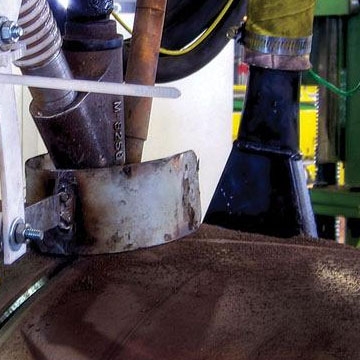
The Manufacturing Process of Quality Fluxes at Oldwelders
At Oldwelders, the creation of high-performance welding fluxes is a meticulous process that begins with the selection of superior raw materials. We utilize excellent dolomite, bauxite, cryolite, silica, fluorine ore, and other essential ores. These raw materials are carefully proportioned according to scientifically developed formulas, ensuring each component contributes optimally to the flux's intended function.
Our state-of-the-art facility, spanning 1000 square meters, houses six production lines designed for precision manufacturing. A critical step in our process involves melting these carefully selected raw materials at extremely high temperatures, up to 2000 °C. This intense thermal treatment ensures thorough blending and chemical activation, forming the homogeneous and effective flux desired by our industrial customers. This advanced manufacturing capability enables us to produce up to 100 tons of flux products daily, consistently meeting the high demands of the global market.
Quality control is paramount at every stage. From the initial inspection of incoming raw materials to the final product testing, Oldwelders adheres to stringent ISO 9001 quality management standards. This commitment ensures that our welding fluxes, as well as our diverse range of welding machine and welding materials, consistently deliver the desired performance, purity, and efficiency for our clients in Brazil, Thailand, Australia, Malaysia, and beyond. Our robust production capacity and unwavering dedication to quality make Oldwelders a reliable partner for all your metallurgical and welding needs.
Selecting the Right Flux for Your Application
Choosing the appropriate flux formulation is a complex decision that depends on several factors, including the type of metal being processed, the specific impurities present in the raw ore, the furnace type, and the desired properties of the final product. Understanding the individual contributions of borax, silica, and limestone is the first step in making an informed choice. For instance, processes requiring significant desulfurization might lean towards a higher limestone content, while those dealing with refractory oxides could benefit from increased borax. Oldwelders' technical team possesses the expertise to guide clients through this selection process, ensuring they receive the most effective and economical flux solution.
Our extensive product portfolio includes specialized fluxes tailored for various applications, alongside a comprehensive range of welding fluxes. We also offer expert consultation to help optimize your processes. Whether you are smelting aluminum, copper, iron, or other specialized alloys, the right flux can dramatically improve metal recovery rates, reduce energy consumption, and enhance product quality. Partnering with a manufacturer like Oldwelders, with proven capabilities and a commitment to quality, ensures that your operations benefit from the best available flux technology.
Oldwelders: Your Partner in Advanced Welding and Smelting Solutions
The intricate world of metallurgy demands precision at every turn, and the role of fluxing agents like borax, silica, and limestone cannot be overstated. These materials are not merely additives but active participants in the chemical dance that purifies metals and prepares them for their myriad applications. Oldwelders is dedicated to serving this critical sector by providing high-quality, reliable, and scientifically formulated fluxes.
Our ISO 9001 certification stands as a testament to our unwavering commitment to quality. With a manufacturing plant covering 1000 square meters and six production lines capable of supplying 100 tons of product per day, we are equipped to handle substantial orders with a consistent lead time of 30 days. Our minimum order quantity of 1 ton allows flexibility for diverse business needs, from small-scale specialized projects to large industrial operations. We pride ourselves on using only excellent raw materials, including dolomite, bauxite, cryolite, silica, and fluorine ore, which are meticulously processed at 2000 °C to create superior products.
We invite you to discover how Oldwelders can enhance your metallurgical processes with our advanced flux solutions. Our team is ready to discuss your specific requirements and demonstrate the quality and efficiency that define our products. Partner with Oldwelders for your flux needs and experience the difference that expertise and dedication make in achieving metallurgical excellence.