
Match Electrode Flux Coatings to Vertical-Up Welds
Selecting the Right Electrode Flux Coating for Successful Vertical-Up Welds
For any fabricator or welding engineer, positional welding presents a significant challenge. Among these, the vertical-up (3G/3F) position is particularly demanding, as the welder must constantly battle gravity to produce a sound, uniform weld bead. Success in this environment is not merely a matter of operator skill; it is fundamentally dependent on the consumables used. The single most critical factor in a shielded metal arc welding (SMAW) consumable for this application is the electrode flux coating. Understanding how different flux compositions behave is essential for creating safe, reliable, and code-compliant vertical welds.
Choosing the wrong electrode can lead to a host of problems, including excessive spatter, an uncontrollable weld pool, slag inclusions, and lack of fusion. These defects compromise the structural integrity of the joint and result in costly rework. This guide provides a detailed framework for matching flux coating characteristics to the specific demands of vertical-up welding, ensuring you can specify the correct consumables for your most challenging projects.
Understanding the Role of Flux in Positional Welding
While an electrode's flux coating serves several universal functions, its role becomes highly specialized when welding out-of-position. In any application, the flux is designed to shield the molten weld pool from atmospheric contamination, provide deoxidizers and scavengers to purify the weld metal, help stabilize the arc, and form a protective slag layer over the solidifying bead. However, in vertical-up welding, the physical properties of this slag are paramount.
The primary challenge is managing the molten weld pool. Gravity pulls the liquid metal downward, threatening to make it sag, drip, or create an undesirable convex profile. A properly formulated flux coating for vertical welding counteracts this by creating a slag with specific thermal and viscosity characteristics. This slag acts as a "shelf" or a dam, holding the molten metal in place just long enough for it to solidify. The ability of a slag to support the weld pool is the defining characteristic of an all-position electrode, and this capability is engineered directly into the flux composition.
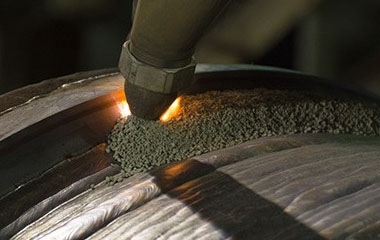
Key Flux Coating Characteristics for Vertical-Up Applications
Not all flux coatings are created equal, especially when fighting gravity. When selecting an electrode for vertical-up work, welders and procedure planners must evaluate the coating based on three interconnected properties that directly influence its out-of-position performance.
Slag Viscosity and Freezing Range
This is the most critical factor. For vertical-up welding, you need a flux that produces a fast-freezing slag. As the electrode is consumed, the flux melts and covers the weld pool. A fluid, slow-cooling slag, typical of electrodes designed for flat-position, high-deposition welding, would simply run down the plate, taking the molten weld metal with it.
In contrast, a fast-freezing slag quickly becomes viscous and solidifies behind the arc, forming a supportive shelf. This shelf effectively holds the weld pool in the joint, allowing the welder to deposit more metal without it sagging. Electrodes with "fast-freeze" characteristics are therefore essential. The chemical composition, including ingredients like rutile, cellulose, and various silicates, is carefully balanced to control this freezing rate.
Arc Force and Penetration Profile
The flux composition also dictates the characteristics of the welding arc. Some coatings, particularly those high in cellulose, produce a forceful, deeply penetrating arc. This "digging" action is excellent for achieving complete penetration in root passes on pipe and plate. The forceful arc helps to gouge the base metal and propel the molten metal into the joint.
Other coatings, such as those with high levels of low-hydrogen minerals, produce a softer, less aggressive arc. While this may offer less penetration, it creates a more manageable weld pool with less spatter, which is often preferred for fill and cap passes. The choice between a forceful or soft arc depends on the specific layer of the weld being completed. A powerful arc on a cap pass, for instance, could lead to undercut and an undesirable bead profile.
Weld Pool Fluidity
Closely related to slag characteristics is the fluidity of the weld pool itself. The flux's chemical composition influences the surface tension and viscosity of the molten steel. An ideal electrode for vertical-up welding will produce a more sluggish, or less fluid, weld pool. This makes the pool easier to control and manipulate with the arc. A highly fluid puddle is difficult to manage against gravity and is more likely to sag or spill out of the joint. The flux's formulation is a key determinant in creating this desirable, controllable weld metal consistency.
Common Electrode Classifications and Their Suitability for Vertical-Up
The American Welding Society (AWS) classification system provides a clear guide to an electrode's capabilities. For vertical-up SMAW, the third digit in the classification (e.g., the '1' in E6010 or the '1' in E7018) is the most important indicator, as it designates an electrode's usability in all positions.
Cellulosic Coatings (AWS EXX10, EXX11)
Electrodes like the E6010 are the go-to choice for root passes in vertical-up pipe and plate welding. Their flux coating is high in cellulose, which burns to create a significant volume of shielding gas and a very forceful, deeply penetrating arc. The slag produced is thin and fast-freezing. This combination allows a skilled welder to create a keyhole for 100% penetration on the root bead. The fast-freeze slag quickly solidifies to support the small, rapidly advancing weld pool. However, their aggressive arc and high spatter make them less suitable for fill and cap passes where a smoother bead profile is required.
Rutile Coatings (AWS EXX12, EXX13, EXX14)
Rutile-based electrodes, such as the common AWS E6013 welding electrodes, are known for their soft, smooth arc, easy restarts, and good bead appearance. While some are rated for all positions, their slag is typically more fluid and slower-freezing than cellulosic or low-hydrogen types. This makes them more challenging to use for vertical-up welding, especially on thicker materials. They are often limited to thinner gauge sheet metal in this position, where the smaller weld pool is more manageable. They are not typically used for critical structural or pressure vessel work in the vertical position.
Basic / Low-Hydrogen Coatings (AWS EXX18, EXX16)
For structural steel, pressure vessels, and other critical applications, low-hydrogen electrodes like the E7018 are the standard for fill and cap passes in vertical-up welding. The flux coating is high in calcium carbonate and other basic minerals, which produce a weld deposit with very low levels of diffusible hydrogen, reducing the risk of hydrogen-induced cracking. The arc is moderately forceful, and importantly, the slag is heavy, viscous, and fast-freezing. This creates an excellent slag shelf that is easy to control, allowing the welder to build up substantial fill passes and create a smooth, uniform cap pass with a steady weaving motion. The resulting weld offers excellent mechanical properties and a high-quality finish.
Sourcing High-Performance Welding Consumables
The success of a critical vertical-up weld depends directly on the quality and consistency of the consumables. A well-formulated electrode flux coating provides the predictable arc behavior and slag support that operators rely on to produce sound welds, pass after pass. Inconsistent flux composition can lead to an unstable arc, poor slag control, and ultimately, weld defects.
At Oldwelders, we understand that consistent weld quality begins with superior consumables. Our entire manufacturing process is ISO 9001 certified, ensuring that every batch of welding materials meets stringent international standards. Produced in our 1000-square-meter facility with a capacity of 100 tons per day, our fluxes are formulated from excellent raw materials like dolomite, bauxite, and silica. These materials are melted at 2000°C to create compounds that provide the precise slag control needed for challenging vertical-up welds. This commitment to quality and production scale is why fabricators in demanding markets from Brazil to Malaysia trust our products for their critical applications.
Whether you need a fast-freezing cellulosic rod for root passes or a reliable low-hydrogen electrode for structural fill passes, partnering with a manufacturer that controls quality from raw material to finished product is crucial. For demanding applications, ensure your arc welding machine is paired with an electrode that is engineered for the task.