
Improve FCAW Welds with the Right Electrode Core Wire
Improve FCAW Deposits by Understanding Electrode Core Wire
For production welding teams, consistency is not just a goal; it is a fundamental requirement for profitability and structural integrity. In Flux-Cored Arc Welding (FCAW), achieving consistent, high-quality weld deposits hinges on a critical component: the electrode core wire. Unlike solid wires, these tubular consumables contain a complex blend of materials that fundamentally dictates arc characteristics, weld metal properties, and overall operational efficiency. Moving beyond a basic understanding of FCAW to a deeper knowledge of how core wire formulation influences welding parameters is the key to troubleshooting inconsistencies and optimizing your production line.
This guide provides a practical workflow, moving from the chemical composition within the wire to the final parameter settings on your machine. By understanding this relationship, fabrication managers and lead welders can make more informed decisions, reduce rework, and enhance the performance of their flux-cored welding operations.
The Role of Core Composition in FCAW Performance
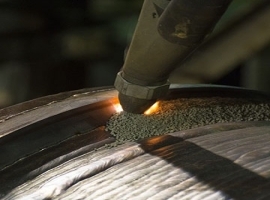
The "flux" in flux-cored wire is not a single substance but a carefully engineered mixture of mineral and metallic elements. Each ingredient serves a specific purpose, and their precise ratio determines the wire's classification and ideal application. Understanding these components helps demystify why one wire behaves differently from another.
The core composition can be broken down into several key functional groups:
- Arc Stabilizers: Elements like potassium and sodium compounds are added to help initiate and maintain a smooth, stable arc. A poorly stabilized arc results in excessive spatter, an erratic weld puddle, and inconsistent fusion.
- Slag Formers: Ingredients such as silica, manganese oxide, and titanium dioxide melt during welding to form a protective layer of slag over the molten weld pool. This slag system shapes the bead profile, holds the molten metal in place (especially in out-of-position welding), and protects it from atmospheric contamination as it cools. The quality of raw materials used here is critical, much like how our high-performance welding fluxes are produced from excellent dolomite, bauxite, and silica ore melted at 2000°C to ensure purity and consistency.
- Deoxidizers: Aluminum, silicon, and manganese are common deoxidizers. Their primary function is to react with oxygen and nitrogen present in the welding environment, preventing them from being dissolved in the weld metal where they would cause porosity and embrittlement. This is especially vital in self-shielded wires used in field applications.
- Alloying Elements: To achieve specific mechanical properties in the finished weld, elements like chromium, nickel, and molybdenum are added to the core. These form a solid solution with the iron, increasing a weld's strength, corrosion resistance, or toughness at low temperatures.
The consistency of this internal fill is paramount. Variations in the chemical composition from the beginning to the end of a spool can lead to unpredictable welding behavior and necessitate constant operator adjustments, slowing down production.
Matching Core Wire Type to Your Application
Flux-cored wires are broadly categorized into two main types, and selecting the correct one is the first major step in process optimization. The choice between them is dictated by the welding environment, available equipment, material type, and required productivity.
Self-Shielded Flux-Cored Wires (FCAW-S)
As the name implies, FCAW-S wires generate their own protective shielding gas from the flux contained within the core. This makes them ideal for outdoor and field applications where wind would blow away an external shielding gas.
Advantages:
- Excellent for outdoor work and drafty conditions.
- Less equipment required (no gas cylinder, regulator, or hose).
- High deposition rates, allowing for fast travel speeds.
- Deep penetration profiles, effective for welding thicker materials.
- They tend to produce more smoke and fumes than gas-shielded wires.
- The slag system can be more difficult to remove on some classifications.
- The resulting weld bead may have a rougher appearance.
Gas-Shielded Flux-Cored Wires (FCAW-G)
FCAW-G wires require an external shielding gas, typically a 100% CO2 or an Argon/CO2 blend, to protect the weld pool. The flux core in these wires has a different formulation, focusing more on slag formation and alloying, as the gas provides the primary shielding. These are often referred to as "dual shield" wires.
Advantages:
- Produce a very smooth arc with minimal spatter.
- Deliver a smooth, uniform bead profile with easy slag removal.
- Offer higher deposition rates and efficiencies than other processes like SMAW.
- Available in a wide range of alloy compositions for specific mechanical properties.
- Not suitable for windy or outdoor conditions.
- Requires additional equipment and the recurring cost of shielding gas.
- The setup is less portable than an FCAW-S system.
From Formulation to Setup: Setting Welding Parameters
The specific formulation of your chosen electrode core wire directly influences the optimal machine settings. Setting parameters without considering the wire manufacturer's recommendations is a common source of weld defects and frustration. Here are the key parameters to adjust.
Polarity (DCEN vs. DCEP)
Polarity is perhaps the most critical setting dictated by the wire type.
- Most self-shielded (FCAW-S) wires run on DCEN (Direct Current Electrode Negative), also known as straight polarity. In this setup, more heat is directed into the workpiece, leading to a higher melt-off rate and deeper penetration.
- Most gas-shielded (FCAW-G) wires run on DCEP (Direct Current Electrode Positive), or reverse polarity. This configuration provides a smoother arc, better puddle control, and lower spatter levels.
Voltage
Voltage controls the arc length and influences the shape of the weld bead.
- Too low voltage: Creates a narrow, ropey bead. The arc may feel like it is stumbling or stubbing into the workpiece.
- Too high voltage: Results in a flat, wide bead and increases the risk of undercut and spatter. The arc becomes long and may sound harsh or erratic.
Wire Feed Speed (Amperage)
On a constant voltage (CV) power source used for FCAW, the wire feed speed (WFS) control effectively sets the amperage. Amperage controls the deposition rate and penetration.
- Too low WFS: The wire may burn back to the contact tip. The arc will be unstable, and penetration will be insufficient.
- Too high WFS: Pushes too much wire into the puddle, causing stubbing and a convex, poorly fused bead.
Contact Tip to Work Distance (Stickout)
Stickout is the length of the unmelted electrode extending from the end of the contact tip. For FCAW, a longer stickout (typically 3/4" to 1") is required compared to solid wire welding. This longer extension allows the wire to preheat, which increases the deposition rate and helps create a stable arc. Maintaining a consistent stickout is crucial for maintaining consistent weld quality, especially in automated processes.
Sourcing a High-Consistency partner for Production Welding
For large-scale fabrication, consistency in consumables is a non-negotiable aspect of quality control. A single batch of poorly manufactured wire can lead to hours of costly rework and production delays. This is why partnering with a proven supplier is critical for operations that depend on reliable welding performance.
For global operations, particularly in demanding markets like Brazil, Thailand, Australia, and Malaysia, partnering with a supplier who can guarantee consistency across large orders is paramount. At Oldwelders, our commitment to quality is validated by our ISO 9001 certification, ensuring that every spool of wire adheres to strict manufacturing standards. Our 1000-square-meter plant, equipped with six modern production lines, maintains a daily supply capacity of 100 tons. This robust capacity ensures we can meet demanding production schedules for our international clients with a standard lead time of 30 days and a minimum order quantity of 1 ton.
By choosing a supplier with a documented quality management system and a proven production capacity, you mitigate the risks associated with consumable variability. This allows your welding team to focus on technique and procedure, confident that the electrode core wire they are using will perform predictably from the start of the spool to the end.