
How to Match Brown Corundum Grit for Blasting & Grinding
Selecting the Right Brown Corundum Grit for Your Application
In industrial fabrication, finishing, and surface preparation, the choice of abrasive media is a critical decision that directly impacts efficiency, cost, and final product quality. Among the most versatile and cost-effective materials is brown fused alumina, a tough, hard, and durable abrasive suitable for a wide range of applications. However, its effectiveness is entirely dependent on selecting the correct grit size for the task at hand. Matching the grit to the substrate, desired finish, and operational parameters is essential for achieving optimal results in both abrasive blasting and grinding.
This guide provides workshop managers, procurement specialists, and industrial buyers with the detailed knowledge required to specify the ideal abrasive grit for their specific needs. Understanding the nuances of grit sizing standards, material properties, and application requirements will empower you to make informed purchasing decisions, enhance operational performance, and ensure consistent, high-quality outcomes. As an ISO 9001 certified manufacturer with extensive experience in high-temperature material processing, we recognize the importance of material consistency and quality control in demanding industrial environments.
Understanding Brown Fused Alumina and Its Properties
Brown fused alumina, often referred to as BFA, is an artificial corundum produced by the fusion of high-quality bauxite in an electric arc furnace. This process creates a material that is exceptionally hard (approximately 9 on the Mohs scale), tough, and wear-resistant. Its chemical stability and thermal properties make it an excellent choice for aggressive applications where other media might break down quickly.
Key Characteristics:
- Hardness: Its high hardness allows it to effectively cut, etch, and grind a wide variety of materials, including carbon steel, stainless steel, alloy steels, and cast iron.
- Toughness and Durability: BFA particles resist fracturing upon impact, which allows them to be recycled multiple times in abrasive blasting systems, reducing overall media consumption and cost. This durability is a key advantage over more friable media like silica sand.
- Particle Shape: The sharp, angular shape of the grit provides a fast and aggressive cutting action. This is ideal for applications requiring rapid material removal, such as descaling, rust removal, or preparing a surface for thermal spray coatings.
- Low Iron Content: High-quality BFA has a very low iron content, which prevents ferrous contamination on non-ferrous substrates like stainless steel or aluminum. This is crucial for applications in the aerospace, food processing, and medical industries.
The manufacturing process, involving melting ores like bauxite at temperatures exceeding 2000 °C, is a precise science. It requires stringent process controls to ensure the final product meets chemical and physical specifications. This level of quality control is fundamental to producing reliable industrial consumables, whether they are abrasives or specialized welding fluxes.
Grit Size Standards and Selection Principles
The "grit size" of an abrasive refers to the particle size of the grains. A smaller grit number indicates a larger, coarser particle, while a larger grit number indicates a smaller, finer particle. This can be counterintuitive but is a standard convention in the abrasives industry. Consistency in sizing is paramount for predictable performance, which is why internationally recognized standards are used.
Common Grit Sizing Standards:
- FEPA (Federation of European Producers of Abrasives): The 'F' scale is widely used for bonded and coated abrasives. For example, F24 is a coarse grit, while F220 is a very fine grit.
- ANSI (American National Standards Institute): This standard is common in North America and often aligns closely with FEPA for many grit sizes.
When selecting a grit size, the primary trade-off is between the material removal rate (MRR) and the surface finish.
- Coarse Grits (e.g., F12 - F36): These large particles have more aggressive cutting edges, resulting in a high MRR. They are ideal for heavy-duty applications like removing thick scale, rust, or old coatings. However, they leave a deep, rough surface profile (anchor pattern).
- Medium Grits (e.g., F40 - F80): This range offers a balance between a good removal rate and a more refined surface finish. It is often used for general-purpose cleaning, weld preparation, and creating a moderate surface profile for paint or coating adhesion.
- Fine Grits (e.g., F90 - F220 and finer): These smaller particles are used for cleaning delicate surfaces, light deburring, and achieving a smooth, matte, or satin finish. The MRR is much lower, but the resulting surface is much smoother.
The choice always depends on the objective. Aggressive profiling requires a coarse grit, while final finishing demands a fine one. For many fabrication shops, stocking a medium-range grit provides the most versatility for daily tasks.
Matching Grit Size to Abrasive Blasting Applications
Abrasive blasting is a process of forcibly propelling a stream of abrasive material against a surface under high pressure. The goal can range from aggressive cleaning to precise surface texturing. The choice of brown corundum grit is foundational to achieving the desired outcome.
Heavy-Duty Cleaning and Profiling
Applications: Stripping heavy rust, thick paint, and mill scale from structural steel, ship hulls, and large fabrications.
Recommended Grits: F16, F24, F30, F36
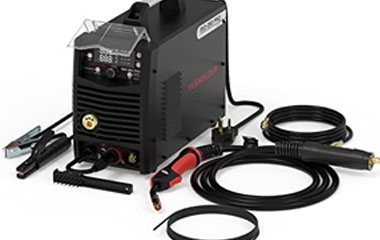
A coarse grit is necessary to provide the impact energy required to break through heavy contamination. The large, sharp particles create a deep anchor pattern (typically 3-5 mils or 75-125 microns), which is ideal for the adhesion of thick industrial coatings, thermal sprays, and rubber linings. In these heavy industrial settings, robust equipment like a powerful arc welding machine is common, and the surface preparation must be equally robust to ensure weld quality and coating longevity.
General-Purpose Cleaning and Weld Preparation
Applications: Removing light rust and paint, cleaning up welds, and creating a standard profile for general-purpose paints and primers.
Recommended Grits: F40, F54, F60
This medium range is the workhorse for most fabrication shops. It provides an effective cleaning action without being overly aggressive, which could cause warping on thinner materials. It creates a moderate anchor profile (typically 1.5-3 mils or 40-75 microns) that is suitable for a wide variety of common industrial coatings. This is the ideal grit range for preparing surfaces before applying new welding materials to ensure a clean, contaminant-free joint.
Light Cleaning and Finishing
Applications: Cleaning sensitive substrates like aluminum or stainless steel, removing light discoloration, deburring, and creating a uniform matte or satin finish.
Recommended Grits: F80, F100, F120
Fine grits are used when the primary goal is to clean the surface with minimal material removal or profiling. They are excellent for aesthetic applications or when preparing a surface for a thin-film coating that requires a very smooth finish. Using too coarse a grit on stainless steel can embed particles and lead to corrosion, so a finer, cleaner media is essential.
Selecting Grit for Grinding and Bonded/Coated Abrasives
Beyond loose-grain blasting, brown corundum is a primary component in bonded abrasives (like grinding wheels and cutting discs) and coated abrasives (like sanding belts and discs). The principles of grit selection remain similar but are applied within the context of the tool being used.
Bonded Abrasives (Grinding Wheels)
In a grinding wheel, abrasive grains are held together by a bonding agent. The grit size determines the wheel's cutting action.
- Coarse Grits (24, 30, 36): Used for rapid stock removal, snagging (removing gates and risers from castings), and applications where the finish is not a primary concern. They are suitable for soft, ductile materials as the large spaces between grains help prevent the wheel from "loading up."
- Medium Grits (46, 60, 80): Offer a compromise between cutting speed and surface finish. This is a common range for general-purpose bench grinders and cylindrical grinding operations where moderate stock removal and a decent finish are required.
- Fine Grits (100, 120, 180 and up): Used for precision grinding, tool sharpening, and achieving a very smooth, fine surface finish. They remove material slowly but provide excellent dimensional accuracy and surface quality.
Coated Abrasives (Sanding Belts and Discs)
For coated abrasives, the grit is bonded to a flexible backing like paper, cloth, or fiber. The application dictates the choice.
- Coarse Grits (P36, P40, P50): Ideal for aggressive material removal, such as calibrating timber, stripping old finishes, or shaping metal parts.
- Medium Grits (P60, P80, P100): Used for intermediate sanding steps, removing the scratches left by coarser grits, and general surface preparation before finishing.
- Fine Grits (P120 and above): Used for final finishing steps to produce a smooth surface ready for painting, staining, or polishing. In metalworking, very fine grits are used to achieve specific surface roughness (Ra) values.
Sourcing and Quality Considerations for Industrial Abrasives
When procuring an industrial abrasive like brown corundum, consistency is as important as the grit size itself. A reliable supplier must demonstrate stringent quality control over the chemical composition, hardness, particle size distribution, and shape of the abrasive grains. Inconsistent media can lead to unpredictable surface finishes, variable blasting speeds, and potential substrate damage.
As a manufacturer with a production capacity of 100 tons per day across six production lines, we understand the logistical demands of industrial supply chains. We serve diverse markets from Brazil to Thailand, and our clients depend on the reliability of our output. When evaluating a supplier, consider the following:
- Certifications: Look for certifications like ISO 9001, which indicate a commitment to a formal quality management system.
- Technical Data Sheets (TDS): A reputable supplier will provide a detailed TDS with chemical analysis (e.g., Al₂O₃, TiO₂, SiO₂ content), physical properties (e.g., hardness, bulk density), and particle size distribution curves according to FEPA or ANSI standards.
- Sourcing and MOQ: Understand the supplier's capabilities. For large-scale operations, you need a partner who can handle volume. We offer a minimum order quantity (MOQ) of 1 ton, making high-quality materials accessible for both large projects and ongoing workshop needs, typically with a lead time of around 30 days.
By partnering with a knowledgeable and capable manufacturer, you ensure that the abrasive you specify is the abrasive you receive in every batch, guaranteeing repeatable and high-quality results for your critical surface preparation and grinding operations.