
How to Choose the Right Welding Rod for Steel Thickness
Selecting the Right Welding Rod for Your Steel Thickness
In industrial fabrication and construction, selecting the appropriate welding consumable is as critical as the skill of the operator. The choice of welding rod, also known as a shielded metal arc welding (SMAW) electrode, directly impacts the structural integrity, efficiency, and overall cost of a project. While many factors influence this decision, the thickness of the base steel is the primary starting point. Using an electrode that is too small for thick material results in poor penetration and wasted time, while using one that is too large on thin material can easily lead to burn-through, warping, and costly rework. This guide provides fabrication buyers and welding supervisors with the essential knowledge to make informed decisions when selecting a welding rod for various steel thicknesses, ensuring strong, reliable, and compliant welds every time.
Understanding Electrode Classifications and Diameters
Before diving into specific thicknesses, it's crucial to understand the language of welding electrodes. The American Welding Society (AWS) has established a classification system that provides vital information about an electrode's capabilities. This system is typically printed on the side of the electrode itself.
Let's take a common example: E7018.
- E: Signifies that this is an electrode for arc welding.
- 70: The first two digits (or three, if it's a 5-digit number) indicate the minimum tensile strength of the deposited weld metal, in thousands of pounds per square inch (psi). In this case, it's 70,000 psi.
- 1: The third digit indicates the welding positions in which the electrode can be used. '1' means it is suitable for all positions (flat, horizontal, vertical, and overhead). '2' indicates flat and horizontal positions only.
- 8: The last digit provides information about the type of coating, slag, and the required power source (AC, DCEP, or DCEN). An '8' in this position, for instance, denotes a low-hydrogen, iron powder coating, which requires DCEP and produces high-quality, ductile welds.
Another prevalent type is the E6013 electrode. It offers a softer arc, less penetration, and is generally easier for operators to use, making it suitable for general-purpose fabrication on thinner mild steel. For specific applications, you might consider specialized consumables like aws e6013 welding electrodes which are designed for optimal performance in their intended roles.
Electrode Diameter
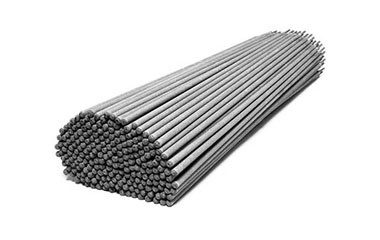
The diameter of the electrode's core wire is the second critical piece of the puzzle. It is typically measured in fractions of an inch (e.g., 3/32", 1/8", 5/32") or millimeters. The diameter determines the amount of filler metal deposited and the level of heat (amperage) required to create a stable arc. The general rule is simple: thicker materials require larger diameter electrodes and higher amperage settings to achieve adequate penetration and fill the joint properly.
Matching Electrode Diameter to Steel Plate Thickness
Selecting the correct diameter is a balance between achieving sufficient penetration without introducing excessive heat that could damage the workpiece. Here is a practical breakdown for matching electrode diameter to the thickness of mild steel, the most common material in fabrication.
Thin Steel (Less than 3/16" or approx. 5mm)
Welding on thin gauge steel requires precision and control to prevent burn-through. For this reason, smaller diameter electrodes are the standard choice.
- 1/16" (1.6mm) Electrodes: Ideal for sheet metal and materials up to 1/8" thick. They run on very low amperage, giving the operator maximum control over the weld puddle. They are perfect for applications where appearance is important and overheating must be avoided.
- 3/32" (2.4mm) Electrodes: A highly versatile size, suitable for materials from 1/16" up to 3/16" thick. This is a common choice for maintenance work and light fabrication on materials like square tubing, angle iron, and steel plate in this thickness range. It offers a good balance of deposition rate and control.
For these applications, electrodes like E6013 are often preferred due to their soft arc and the fluid slag that helps create a smooth bead profile on thinner materials.
Medium Thickness Steel (3/16" to 1/2" or approx. 5mm to 12mm)
This range covers the majority of structural and general fabrication work. Here, efficiency and strength become more prominent factors.
- 1/8" (3.2mm) Electrodes: This is arguably the most common and versatile welding electrode diameter used in the industry. It is the go-to for steel that is 1/8" to 1/2" thick. It provides a substantial deposition rate for filling joints efficiently while still being manageable for most operators in various positions. For single-pass welds on 1/4" plate or multi-pass welds on thicker sections, the 1/8" electrode is a reliable workhorse.
- 5/32" (4.0mm) Electrodes: As the material thickness approaches and exceeds 1/4", the 5/32" electrode becomes a more efficient choice. It allows for higher amperage settings, leading to deeper penetration and a faster fill rate. It is excellent for structural beams, heavy equipment repair, and fabricating thick-walled pipe. Using this size on material thinner than 1/4" is generally not recommended due to the high heat input.
Thick Steel (Greater than 1/2" or approx. 12mm)
For heavy plate fabrication, such as in shipbuilding, pressure vessels, and large-scale infrastructure, maximizing deposition rate is key to maintaining productivity. This requires larger electrodes and, often, a multi-pass welding technique.
- 3/16" (4.8mm) and Larger Electrodes: These large-diameter electrodes are specialists for heavy-duty applications. They are primarily used in the flat and horizontal positions due to the large, fluid weld puddle they create. They deposit a large amount of metal quickly, making them ideal for filling deep bevels and grooves in thick plate. Operating these electrodes requires a high-amperage industrial arc welding machine and significant operator skill to control the heat and molten metal. For such critical applications, low-hydrogen electrodes like E7018 are mandatory to ensure a tough, crack-resistant weld.
Beyond Thickness: Other Critical Selection Factors
While material thickness is the primary guide, a professional-level decision must account for several other variables to ensure the chosen welding rod is truly optimal for the job.
1. Base Metal Properties
The composition of the steel you are welding is critical. For standard mild steel (like ASTM A36), a general-purpose electrode (E6013) or a stronger one (E7018) will suffice. However, for high-strength, low-alloy (HSLA) steels or materials subjected to extreme stress or low temperatures, a low-hydrogen electrode with matching tensile strength (e.g., E8018, E9018) is non-negotiable to prevent hydrogen-induced cracking.
2. Welding Position
Gravity plays a significant role in welding. A weld performed in the flat position is much easier to control than one performed overhead.
- All-Position Electrodes (e.g., E6011, E7018): These have fast-freezing slag that solidifies quickly, holding the molten weld metal in place against gravity. This is essential for vertical or overhead work.
- Flat & Horizontal Only Electrodes (e.g., E7024): These electrodes often contain a high amount of iron powder in their coating, leading to very high deposition rates. However, their slag is very fluid, making them unsuitable for out-of-position work.
3. Power Source and Polarity
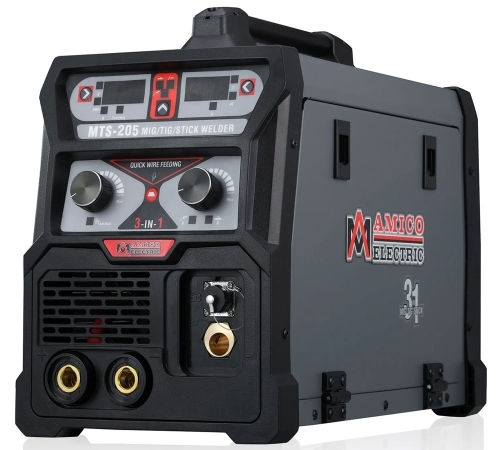
Not every electrode runs on every machine or polarity. Always check the manufacturer's recommendation.
- AC (Alternating Current): Many general-purpose electrodes can run on AC, which is common in smaller, less expensive machines.
- DCEP (Direct Current, Electrode Positive): This polarity provides deeper penetration and is required for most low-hydrogen and specialty electrodes. Also known as reverse polarity.
- DCEN (Direct Current, Electrode Negative): This polarity results in less penetration and a faster deposition rate. It is used for specific applications, such as welding thin sheet metal. Also known as straight polarity.
4. Joint Design and Fit-Up
The design of the weld joint influences electrode selection. A tight butt joint will require an electrode with a deep, penetrating arc (like an E6010) to ensure fusion at the root. Conversely, a joint with a large gap or poor fit-up may benefit from an electrode that deposits more filler metal (like an E6013 or E7018) to bridge the gap effectively.
Sourcing Quality Consumables for Industrial Production
For B2B buyers and large-scale fabrication shops, the quality and consistency of welding consumables are paramount. A single bad batch of electrodes can lead to widespread weld defects, failed inspections, and catastrophic project delays. This is why partnering with a reliable, certified manufacturer is a critical business decision.
At Oldwelders, we operate under a strict ISO 9001 quality management system, ensuring that every batch of electrodes meets stringent performance and safety standards. Our 1000 square meter facility, equipped with six production lines, has the capacity to supply up to 100 tons of high-quality welding consumables per day. This production scale ensures a stable supply chain for our partners in demanding markets such as Brazil, Thailand, Australia, and Malaysia.
Our commitment to quality starts with the raw materials. We use excellent dolomite, bauxite, and other carefully selected ores, which are melted at 2000°C to create the foundation for our superior flux products. Whether you require a standard welding electrode or specialized welding fluxes, we have the manufacturing expertise to deliver. With a minimum order quantity of 1 ton and a typical lead time of 30 days, we are structured to serve industrial-scale operations reliably.
Choosing the right welding rod is a technical decision that balances material thickness with a host of other factors. By starting with the guidelines above and partnering with a quality-certified supplier, you can ensure your welding operations are safe, efficient, and built to last.