
How a Submerged Arc Welder Works
How a Submerged Arc Welder Works to Deliver Superior Welds
The field of industrial fabrication demands precision, efficiency, and robustness in welding operations. Among the various welding processes, Submerged Arc Welding (SAW) stands out for its capability to produce high-quality welds at high deposition rates, particularly suited for heavy-duty applications. For fabrication engineers and new operators, understanding the intricate workings of a system is fundamental to leveraging its full potential. This article delves into the core principles, operational mechanics, and critical components that define how a Submerged Arc Welder functions, ensuring consistent and strong metallurgical bonds.
Oldwelders, an ISO 9001 certified manufacturer, specializes in providing robust welding machine solutions, alongside a comprehensive range of welding materials, including wires, rods, and fluxes. Our commitment to quality is evident in our production capabilities; with a robust production facility spanning 1000 square meters and six production lines, we boast a daily supply capacity of 100 tons. This infrastructure allows us to consistently meet the demands of international partners in key markets such as Brazil, Thailand, Australia, and Malaysia.
Understanding Submerged Arc Welding (SAW) Fundamentals
Submerged Arc Welding is an arc welding process where the arc is struck between a continuously fed bare wire electrode and the workpiece, completely shielded by a blanket of granular, fusible flux. Unlike other arc welding methods where the arc is visible, the SAW process occurs beneath this layer of flux, which not only protects the weld pool from atmospheric contamination but also contributes to the metallurgical properties of the weld metal.
The Basic Principle of Submerged Arc Welding
At its core, the SAW principle relies on an electric arc generating intense heat to melt the electrode wire, the base metal, and a portion of the granular flux. This molten mixture forms a weld pool, which, upon solidification, creates the weld bead. The insulating layer of flux concentrates the heat within the weld area, leading to deeper penetration and higher deposition rates compared to many other welding processes. This inherent characteristic makes SAW exceptionally efficient for welding thick sections and for applications requiring substantial fill material.
The flux plays a dual role: it shields the arc and molten metal from the atmosphere, preventing oxidation and nitrogen absorption, and it also adds alloying elements to the weld metal, enhancing its mechanical properties. As the welding head moves along the joint, the molten flux solidifies into a removable slag layer, which further protects the cooling weld from rapid oxidation and helps shape the weld bead.
Key Components of a Submerged Arc Welder System
A typical Submerged Arc Welder system comprises several essential components that work in tandem to execute the welding process effectively:
- Power Source: This provides the electrical energy required to sustain the arc. SAW systems commonly use direct current (DC) or alternating current (AC) power sources, often with constant voltage (CV) or constant current (CC) characteristics depending on the application. High-capacity power sources are typical to achieve the high current and voltage necessary for deep penetration and high deposition rates.
- Wire Feeder: This mechanism precisely controls the feed rate of the bare electrode wire into the weld pool. The wire feeder is crucial for maintaining a stable arc length and consistent weld quality. Modern feeders offer precise control over speed, ensuring optimal material delivery.
- Welding Head: This assembly holds the electrode wire, directs the flux delivery, and often incorporates mechanisms for adjusting the wire angle and contact tip. The welding head is typically mounted on a carriage or manipulator that moves it along the joint.
- Flux Hopper and Delivery System: A hopper stores the granular flux, which is then fed by gravity or a pneumatic system to cover the welding arc. Proper flux coverage is critical for shielding and weld quality.
- Flux Recovery System: As only a portion of the flux melts during the process, unused flux is typically recovered by a vacuum system, filtered, and returned to the hopper for reuse. This significantly reduces material waste and operational costs.
- Control System: This unit integrates and manages all parameters, including current, voltage, travel speed, and wire feed speed. Advanced control systems allow for precise programming and monitoring of the welding process, ensuring repeatability and quality.
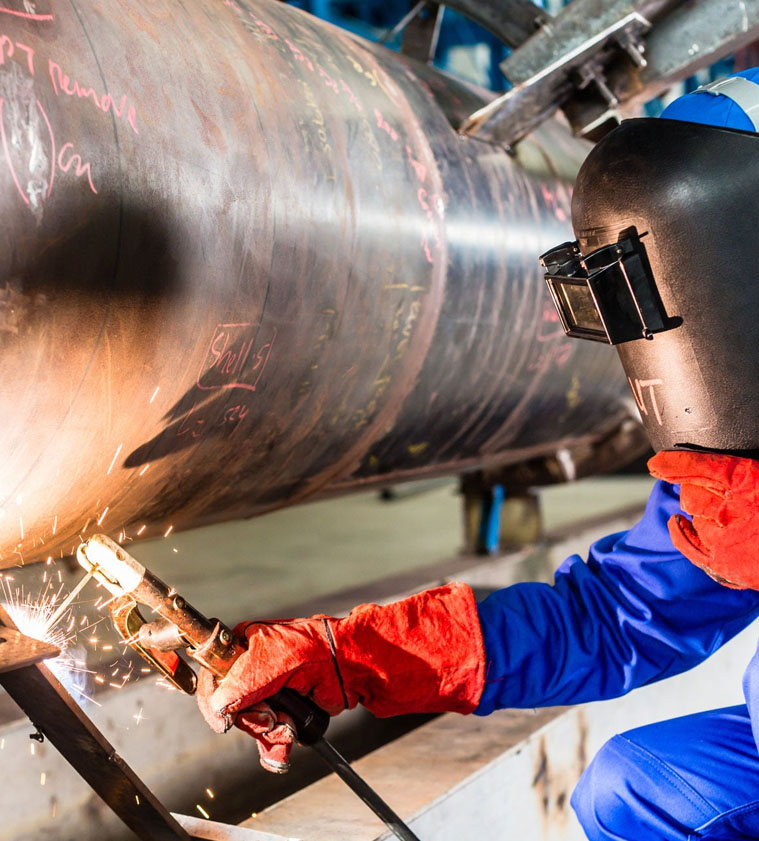
The Submerged Arc Welding Process Explained Step-by-Step
Understanding the sequence of operations is key to appreciating the efficiency and effectiveness of SAW. The process unfolds systematically, ensuring a controlled environment for material fusion.
Arc Initiation and Flux Shielding
The SAW process begins with the electrode wire being fed towards the workpiece. As the wire makes contact, a high-current arc is initiated. Simultaneously, granular flux from the hopper is deposited over the joint, completely submerging the arc and the immediate weld area. This flux blanket serves as the primary shield, preventing atmospheric gases like oxygen and nitrogen from contaminating the molten metal. Unlike MIG/MAG welding where shielding gas is visible, the SAW arc is entirely hidden beneath this protective layer, making it a "submerged" process. The choice of welding fluxes is critical here; Oldwelders produces high-quality fluxes crafted from excellent dolomite, bauxite, cryolite, silica, and fluorine ore, melted at 2000 °C, ensuring superior performance and weld integrity.
Electrode Feed and Molten Pool Dynamics
Once the arc is stable, the electrode wire continuously feeds into the molten pool created by the arc's heat. The intense heat melts the tip of the electrode, the adjacent base metal, and a portion of the flux. This forms a molten pool that rapidly solidifies behind the moving welding head, forming the weld bead. The wire feed speed, coupled with the welding current, directly influences the deposition rate and penetration depth. Higher wire feed speeds and currents generally lead to larger weld beads and deeper penetration, which is advantageous for thick materials. The travel speed of the welding head also plays a crucial role in controlling the bead shape and heat input, preventing excessive distortion and ensuring uniform fusion.
Slag Formation and Removal
As the molten flux cools and solidifies over the newly formed weld bead, it transforms into a layer of brittle slag. This slag acts as a secondary protective layer, slowing down the cooling rate of the weld metal and further preventing atmospheric contamination during solidification. Once the weld is complete and has cooled sufficiently, this slag layer is easily detached, often by simple chipping, revealing a clean and smooth weld bead underneath. The ease of slag removal is an indicator of a well-executed SAW process and proper flux selection, such as using a specific submerged arc welding flux hj431 designed for specific applications.
Advantages and Applications of Submerged Arc Welding
The unique characteristics of SAW lend themselves to significant advantages and a wide array of industrial applications, making it a preferred choice for many heavy fabrication projects.
Benefits for Industrial Fabrication
The benefits of using a Submerged Arc Welder are numerous:
- High Deposition Rates: SAW allows for very high deposition rates, significantly increasing productivity, especially for long, continuous welds.
- Deep Penetration: The concentrated heat under the flux blanket results in deep penetration, making it ideal for welding thick sections in a single pass or with fewer passes.
- Excellent Weld Quality: The full shielding by the flux prevents atmospheric contamination, leading to welds with superior mechanical properties, low porosity, and minimal spatter.
- Smooth Weld Appearance: The slag layer helps to shape the weld bead, resulting in a smooth, uniform finish that often requires minimal post-weld cleaning.
- Cost-Effectiveness: High deposition rates, efficient material utilization (due to flux recovery), and reduced post-weld cleanup contribute to lower overall production costs.
- Operator Comfort: Since the arc is submerged, there is minimal arc flash, fumes, or noise, creating a safer and more comfortable working environment for the operator.
Common Industrial Uses
SAW is extensively used across various heavy industries due to its ability to produce robust and high-quality welds:
- Shipbuilding: For welding large plates and structural components of ships and offshore platforms.
- Pressure Vessels and Boilers: Critical for fabricating components that must withstand high pressures and temperatures.
- Pipelines: Used for welding large-diameter pipes for oil and gas transmission.
- Structural Steel Fabrication: For beams, columns, and other heavy structural elements in construction.
- Wind Tower Manufacturing: Essential for welding the thick sections of wind turbine towers.
- Railway Rolling Stock: Fabrication of train cars and locomotives.
Choosing the Right Materials for Submerged Arc Welding
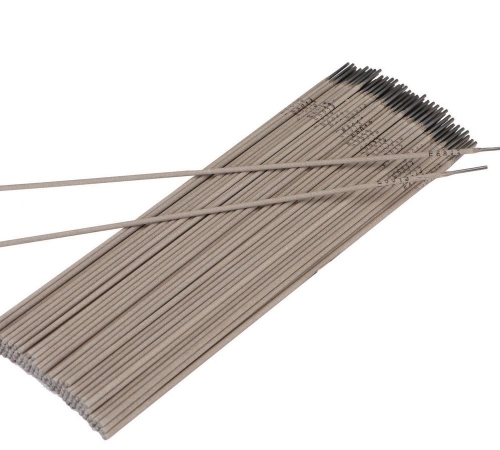
The performance of any Submerged Arc Welder is inextricably linked to the quality and compatibility of the welding materials used. Proper selection of wire and flux is paramount for achieving desired mechanical properties and ensuring process efficiency.
Selecting Welding Wires and Fluxes
The choice of welding wire and flux combinations is critical and depends on the base material, desired weld properties, and specific application requirements. Welding wires are typically solid, bare electrodes, available in various chemistries (e.g., carbon steel, low alloy steel, stainless steel) to match the base metal and impart specific metallurgical characteristics. Fluxes, on the other hand, can be categorized by their composition (acidic, basic, neutral) and their manufacturing method (fused, agglomerated, bonded). Each type offers different advantages regarding bead shape, slag detachability, and weld metal chemistry.
- Wire Selection: Consider factors such as tensile strength, yield strength, and impact toughness requirements. Compatibility with the base metal is essential to avoid issues like cracking or inadequate fusion.
- Flux Selection: The flux chemistry influences the weld metal's mechanical properties, deoxidation, and desulfurization. Basic fluxes generally offer superior mechanical properties and hydrogen removal, while acidic fluxes provide good bead shape and slag detachability. Neutral fluxes have minimal impact on weld metal chemistry.
Oldwelders offers a diverse range of welding wires and welding fluxes, designed to meet the rigorous demands of various industrial applications. Our expertise ensures that you can find the optimal combination for your specific SAW needs, guaranteeing superior weld quality and performance.
Quality Assurance in Welding Materials
To ensure consistent, high-quality welds, the integrity of welding materials is non-negotiable. Oldwelders adheres to stringent quality control measures throughout the production of our welding wires, rods, and fluxes. Our flux products, for instance, are meticulously crafted from excellent dolomite, bauxite, cryolite, silica, and fluorine ore, and melted at 2000 °C to achieve optimal composition and performance. This rigorous process, combined with our ISO 9001 certification, underscores our commitment to delivering materials that meet the highest industry standards.
For businesses requiring bulk supply, Oldwelders supports a minimum order quantity of 1 ton, with standard lead times typically 30 days. Our expansive plant, covering an area of 1000 square meters with six production lines, ensures that we can efficiently fulfill large orders, including for our international clients in markets like Brazil, Thailand, Australia, and Malaysia. This capability allows us to be a reliable partner for your most demanding fabrication projects.
Oldwelders' Commitment to Quality and Global Supply
Oldwelders stands as a dedicated partner in the global welding industry, providing essential tools and materials that empower businesses to achieve superior fabrication results. Our comprehensive product portfolio, encompassing welding machines, welding wires, welding rods, and welding fluxes, is meticulously developed to meet diverse industrial needs.
Our operational efficiency is a cornerstone of our service. With a daily production capacity of 100 tons from our six production lines, we are well-equipped to handle high-volume demands. This robust capability, combined with our adherence to the ISO 9001 quality management system, ensures that every product leaving our facility is of the highest standard. Whether you are seeking a complete welding machine solution or specialized welding materials, Oldwelders is committed to delivering products that enhance productivity and weld integrity. Our established presence in markets such as Brazil, Thailand, Australia, and Malaysia further solidifies our position as a globally recognized and trusted supplier.