
How Are Mineral Raw Materials Classified for Industrial Use?
Understanding the Classification of Mineral Raw Materials for Industry
In the world of industrial manufacturing and fabrication, the quality of the final product begins deep in the earth. The performance, durability, and integrity of everything from structural steel beams to the finest welding seam depend on the precise composition of the base components. A crucial component in this supply chain is the mineral raw material, the foundational building block for countless industrial processes. For procurement managers, engineers, and production supervisors, understanding how these materials are classified is not an academic exercise—it is a critical step in ensuring quality, managing costs, and securing a reliable supply chain.
This guide moves beyond simple geology to provide a practical, industry-focused overview of mineral classification. We will explore the primary categories, their relevance to specific applications like welding, and the key factors to consider when sourcing these essential materials. By understanding the distinctions between different types of minerals, you can make more informed purchasing decisions that directly impact your operational success.
The Fundamental Classification: Metallic vs. Non-Metallic Minerals
At the highest level, minerals are broadly divided into two main groups: metallic and non-metallic. This initial classification is based on their elemental composition, physical properties, and primary industrial uses. Each category contains a vast array of resources vital to modern manufacturing.
Metallic Minerals
Metallic minerals are the source of metals. They are typically found in the earth's crust as ores, which are rocks or sediments containing a high enough concentration of a particular mineral to make extraction economically viable. These minerals are valued for properties like conductivity, strength, and malleability. They are further subdivided into two groups:
- Ferrous Minerals: These minerals contain iron as their primary constituent. Iron ore is the most significant ferrous mineral, serving as the primary raw material for steel production. Steel, in turn, is the backbone of construction, automotive manufacturing, and heavy machinery. Other ferrous minerals include manganese and chromite, which are often used as alloying agents to enhance the properties of steel.
- Non-Ferrous Minerals: This group includes all other metallic minerals that do not have iron as a principal component. Examples include bauxite (the primary source of aluminum), copper, zinc, lead, and titanium. These metals are essential for applications requiring specific properties like light weight (aluminum), high electrical conductivity (copper), or corrosion resistance (zinc).
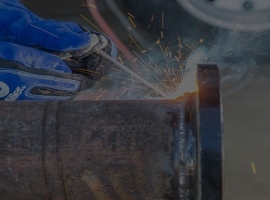
In the context of welding, both ferrous and non-ferrous minerals are fundamental. The base metals being joined are derived from these ores, and the composition of solid wire and filler materials is carefully engineered using refined metals from these sources to ensure compatibility and weld strength.
Non-Metallic Minerals
Often referred to as industrial minerals, non-metallic minerals are valued for their physical and chemical properties rather than their metallic content. This is a diverse and critically important category that includes everything from construction aggregates to the highly specialized components used in advanced manufacturing. Their applications are based on properties like hardness, thermal resistance, chemical inertness, and fluxing capabilities.
Examples relevant to industrial processes include:
- Silica: A primary component of glass, ceramics, and foundries. In welding, it is a key ingredient in flux coatings and submerged arc fluxes, where it influences the slag's viscosity and melting point.
- Dolomite and Bauxite: These are essential in producing fluxes. Dolomite (a source of magnesium and calcium) and bauxite (a source of alumina) help control the slag system, protect the weld pool from atmospheric contamination, and refine the weld metal.
- Fluorine Ore (Fluorspar): A powerful fluxing agent that lowers the melting point of slag, improves its fluidity, and helps remove impurities from the weld.
- Cryolite: Another fluorine-bearing mineral used in specialized flux formulations to enhance arc stability and slag detachability.
The quality and purity of these non-metallic minerals are paramount. For manufacturers of high-performance welding fluxes, sourcing excellent ores is the first step in a tightly controlled production process. The right composition ensures a stable arc, a protective slag, and a clean, strong weld.
Classification by Industrial Application and Function
While the metallic/non-metallic division is a useful starting point, a more practical approach for industrial buyers is to classify minerals based on their function. This perspective helps connect a specific mineral raw material to its role in a production process.
Fluxes and Slag-Forming Agents
In high-temperature processes like steelmaking and welding, fluxes are indispensable. They are chemical cleaning agents, flowing agents, and purifying agents. The minerals used for this purpose—such as dolomite, bauxite, silica, cryolite, and fluorine ore—are selected for their ability to form a protective slag layer over molten metal.
This slag performs several critical functions:
- Shielding: It protects the molten weld pool from oxygen and nitrogen in the atmosphere, which can cause porosity and embrittlement.
- Purification: It absorbs impurities from the weld metal, floating them to the surface to be removed later.
- Alloying: The slag can be used to introduce specific alloying elements into the weld metal to enhance its mechanical properties.
- Thermal Insulation: It slows the cooling rate of the weld, which helps refine the grain structure and prevent cracking.
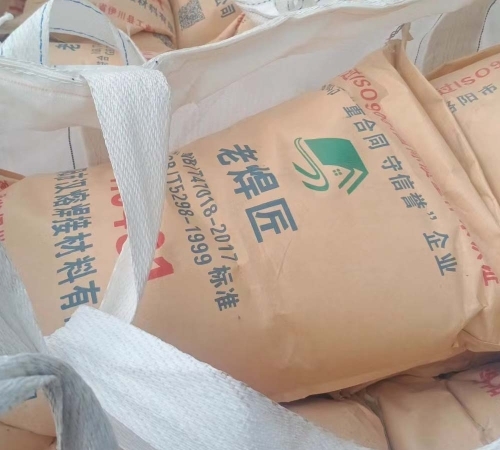
At Oldwelders, we understand this process intimately. Our ISO 9001 certified facility transforms these carefully selected ores into high-performance fluxes. The raw materials are melted at an extreme temperature of 2000 °C to ensure absolute purity and chemical homogeneity, resulting in products like our reliable submerged arc welding flux hj431 that deliver consistent performance.
Alloying Minerals
Alloying is the process of mixing a metal with other elements to improve its properties. The minerals that are sources for these elements are crucial for creating specialized metals and welding consumables. For example:
- Manganese Ore: A source of manganese, which increases the strength and hardness of steel and acts as a deoxidizer in welding.
- Chromite: The primary source of chromium, which is essential for producing stainless steel and provides corrosion resistance and hardness.
- Molybdenite: A source of molybdenum, which enhances strength, toughness, and creep resistance at high temperatures.
The formulation of welding consumables, such as electrodes and wires, involves precise additions of these elements to match or exceed the properties of the base materials being joined.
Sourcing and Processing: From Ore to Industrial-Grade Material
The journey from a mined ore to a usable industrial product is a complex, multi-stage process involving extraction, beneficiation (concentration), and refining. For a procurement team, understanding a supplier's role in this journey is key to assessing quality and supply chain reliability. A vertically integrated or highly specialized supplier offers significant advantages.
The transformation from a raw mineral raw material to a finished product like a welding flux requires significant industrial capability. At Oldwelders, our 1000-square-meter plant, equipped with six dedicated production lines, exemplifies this capability. We can process and supply up to 100 tons of finished flux products per day, a capacity that ensures we can meet large-scale demand for our clients in demanding markets such as Brazil, Thailand, Australia, and Malaysia. This control over production guarantees consistency from batch to batch, a non-negotiable requirement for critical welding applications.
Quality control is embedded at every stage. It begins with the geological sourcing of the ores and continues through crushing, melting, and grading. Adherence to international standards, such as ISO 9001, provides an external validation of a manufacturer's commitment to quality management systems. When sourcing, always inquire about a supplier's processing capabilities and quality certifications.
Key Considerations for Procurement Teams
When sourcing any mineral raw material or a product derived from it, procurement professionals must look beyond the price per ton. Several factors determine the true value and suitability of a material for your application.
Purity, Grade, and Chemical Composition
Not all minerals are created equal. The concentration of the desired element and the presence of impurities can vary dramatically. For example, in a welding flux, even trace amounts of sulfur or phosphorus from a low-grade ore can compromise weld integrity, leading to cracking and failure. Always request a detailed Certificate of Analysis (CoA) that specifies the exact chemical composition of the material. This data is critical for ensuring the material meets the technical specifications for your process. The performance of end-use products, such as specialized aws e6013 welding electrodes, is directly tied to the purity of the raw materials used in their flux coating.
Supply Chain Reliability and Logistics
A reliable supply chain is built on a supplier's production capacity, inventory management, and logistical expertise. When evaluating a new supplier, ask critical questions:
- What is your daily or monthly production capacity?
- What are your standard lead times?
- What is your Minimum Order Quantity (MOQ)?
- Can you provide case studies or references from customers in our region?
Clear and transparent answers to these questions build trust. For instance, at Oldwelders, we operate with a standard lead time of approximately 30 days and a typical MOQ of 1 ton, providing our partners with the predictability needed for effective production planning. Our experience supplying diverse markets from Southeast Asia to South America demonstrates our robust logistical capabilities.
Partnering with a Knowledgeable Supplier
Ultimately, the most effective way to navigate the complexities of mineral sourcing is to partner with a supplier who is an expert in their field. A knowledgeable manufacturer does not just sell a product; they provide a solution. They understand how the properties of a mineral raw material translate into performance in your application and can guide you to the optimal product for your needs.
By understanding these classification systems and procurement considerations, you can ensure that the foundational materials entering your facility are of the highest quality, leading to superior end products and a more resilient, efficient operation.