
High-Temp Smelting: Heat Balance and Refractory Limits
Navigating the Critical Balance of High Temp Smelting Operations
For operations and maintenance leaders, managing industrial furnaces is a constant exercise in balancing competing priorities. The core process of high temp smelting demands pushing thermal boundaries to achieve production targets, yet every degree of increased temperature puts stress on critical assets. Achieving optimal throughput without compromising equipment integrity or incurring unplanned downtime requires a deep understanding of the interplay between heat balance, process requirements, and the physical limitations of your refractory linings. This is not just a matter of thermodynamics; it is the foundation of a safe, efficient, and profitable operation.
Moving beyond basic definitions, this article explores the strategic trade-offs that define successful high-temperature campaigns. We will examine how to manage the delicate equilibrium between achieving necessary superheat for metallurgical quality and preserving the life of your furnace lining. For leaders planning maintenance schedules, budgeting for refractory replacements, and seeking energy efficiencies, mastering this balance is paramount. It is a discipline we understand well, as our own production of superior welding fluxes involves a meticulous process where raw materials are melted at 2000 °C to ensure purity and performance.
Understanding the Fundamentals of Heat Balance in Smelting
At its core, a heat balance (or energy balance) in a smelting furnace is a simple accounting principle: energy in must equal energy out. However, the operational reality is far more complex. Effectively managing this balance is the key to controlling costs, ensuring product quality, and maximizing the operational life of the furnace.
Energy Inputs:
- Chemical Energy: This is the primary energy source from the combustion of fuels (like coke, natural gas, or oil) or exothermic reactions within the charge itself. The efficiency of this combustion is a major variable.
- Electrical Energy: In electric arc furnaces (EAF) or induction furnaces, electricity is the main input, converted to thermal energy through resistance and arcing.
- Sensible Heat: This is the heat contained within the charge materials, preheated air, or fluxes added to the furnace. Preheating strategies are a key area for energy optimization.
Energy Outputs:
- Sensible Heat in Products: The largest and most crucial output is the heat contained in the molten metal and slag. This is the "useful" energy that defines the process.
- Heat Loss Through Walls (Thermal Losses): A significant portion of energy is lost through the furnace shell, roof, and floor. The condition of the refractory lining and insulation directly dictates the magnitude of this loss.
- Heat Loss in Off-Gases: Hot exhaust gases carry away a substantial amount of thermal energy. Waste heat recovery systems can capture some of this energy, but losses are inevitable.
- Cooling System Losses: Water-cooled panels, electrodes, and other components continuously draw heat out of the system to prevent their failure.
For an operations manager, tracking these outputs is critical. An increase in shell temperature, for instance, is not just a sign of wasted energy; it is a direct indicator of refractory wear and a warning sign of a potential failure. By meticulously monitoring these variables, you can move from a reactive maintenance posture to a predictive one, identifying degradation before it leads to a costly shutdown.
The Critical Role of Refractory Linings in High Temp Smelting
Refractory materials are the cornerstone of any high temp smelting furnace. These heat-resistant ceramic materials are designed to contain the molten bath, withstand extreme thermal cycling, resist chemical corrosion from slag, and provide thermal insulation. The "refractory limit" is not a single number but a complex boundary defined by temperature, chemistry, and physical stress.
Types of Refractory Materials
The choice of refractory depends on the specific process, operating temperature, and slag chemistry. They are generally categorized as:
- Acidic Refractories: Materials like silica and fireclay bricks are effective in environments with acidic slag (high in silica). They perform poorly when in contact with basic slag.
- Basic Refractories: Magnesite, dolomite, and chrome-magnesite bricks are used to resist basic slag (high in calcium oxide and magnesium oxide), which is common in steelmaking.
- Neutral Refractories: Alumina, chromite, and graphite-based materials are more versatile and can be used in contact with either acidic or basic slags, often found in hearths or tapholes where conditions are severe.
Mechanisms of Refractory Degradation
Understanding how refractory linings fail is essential for extending campaign life. The primary failure modes include:
- Corrosion and Erosion: Chemical reactions between the refractory and molten slag or metal are a leading cause of wear. The flow of the molten bath also physically erodes the lining, especially in high-velocity areas.
- Thermal Shock: Rapid changes in temperature during charging, tapping, or shutdowns can cause cracking and spalling. The greater the temperature swing, the more severe the stress on the lining.
- Abrasion: The physical impact from charging scrap metal or other raw materials can cause mechanical damage to the brickwork.
- Penetration: Molten metal or slag can penetrate the pores and joints of the refractory, leading to structural weakening and eventual failure. end>
- Accelerated Refractory Wear: Higher temperatures speed up chemical reactions between the slag and the lining, doubling or even tripling the wear rate in critical zones.
- Increased Energy Consumption: Raising and holding the bath at a higher temperature requires a disproportionately larger energy input due to increased thermal losses through the furnace walls and off-gas.
- Higher Risk of Breakout: As the lining thins at an accelerated rate, the risk of a catastrophic failure and molten metal breakout increases significantly.
- Thermal Imaging: Regularly scanning the furnace shell with an infrared camera can identify hot spots that indicate thinning refractory long before they become visible or critical.
- Laser Profiling: In-situ laser measurement tools can map the refractory lining during maintenance stops, providing precise data on wear patterns and helping predict the remaining service life.
- Process Data Analysis: Correlating data such as energy consumption per heat, off-gas temperature, and cooling water temperatures can reveal subtle changes that indicate a decline in furnace performance or lining integrity.
- Controlled Heat-Up and Cool-Down: Whenever possible, follow a carefully planned temperature curve during startups and shutdowns to minimize thermal shock.
- Slag Management: Maintaining a consistent and compatible slag chemistry is crucial. "Slag splashing" techniques, where the basic slag is used to coat the refractory walls after tapping, can provide a protective, sacrificial layer.
- Consistent Raw Materials: The quality and consistency of charge materials, fluxes, and electrodes are vital. Using reliable welding materials and consumables from a trusted supplier ensures predictable reactions and a more stable process, reducing thermal and chemical volatility.
Regular inspection and a deep understanding of these wear mechanisms allow teams to anticipate problem areas and plan for targeted repairs. This proactive approach is a hallmark of an operation committed to quality and reliability, a principle reflected in our own ISO 9001 certified manufacturing process.
Optimizing Superheat: The Trade-Off Between Fluidity and Refractory Life
Superheat is the amount of heat in the molten metal above its theoretical melting or liquidus temperature. Achieving a specific level of superheat is not optional; it is a critical process requirement. It ensures the metal remains fluid enough during tapping and transport to the casting stage, preventing premature solidification and ensuring the final product's quality by allowing impurities to separate.
However, superheat comes at a significant cost. The relationship between temperature and refractory wear is not linear—it is exponential. A seemingly small increase in operating temperature, perhaps by just 20-30°C, can dramatically accelerate the rate of refractory corrosion and erosion. This creates the central operational dilemma of high temp smelting: how to achieve the necessary superheat for metallurgical and casting requirements without excessively shortening the life of the furnace lining.
Pushing for higher superheat offers short-term benefits like faster processing and improved fluidity, but it carries long-term consequences:
The optimal strategy involves identifying the minimum effective superheat for your process and implementing strict process controls to maintain it. This requires precise temperature monitoring, consistent charge materials, and a well-understood energy balance model for the furnace. The goal is to operate within a narrow, optimized temperature band that satisfies production needs while maximizing campaign life.
Strategies for Extending Campaign Life and Preventing Unplanned Shutdowns
Extending the life of a furnace campaign and avoiding the immense costs of an unplanned outage are top priorities. This requires a multi-faceted strategy that combines diligent monitoring, smart operational practices, and the use of high-quality materials.
Predictive and Condition-Based Monitoring
Moving away from a time-based maintenance schedule to a condition-based one can yield significant savings. Key techniques include:
Operational Best Practices
How the furnace is operated day-to-day has a profound impact on refractory life. Key practices include:
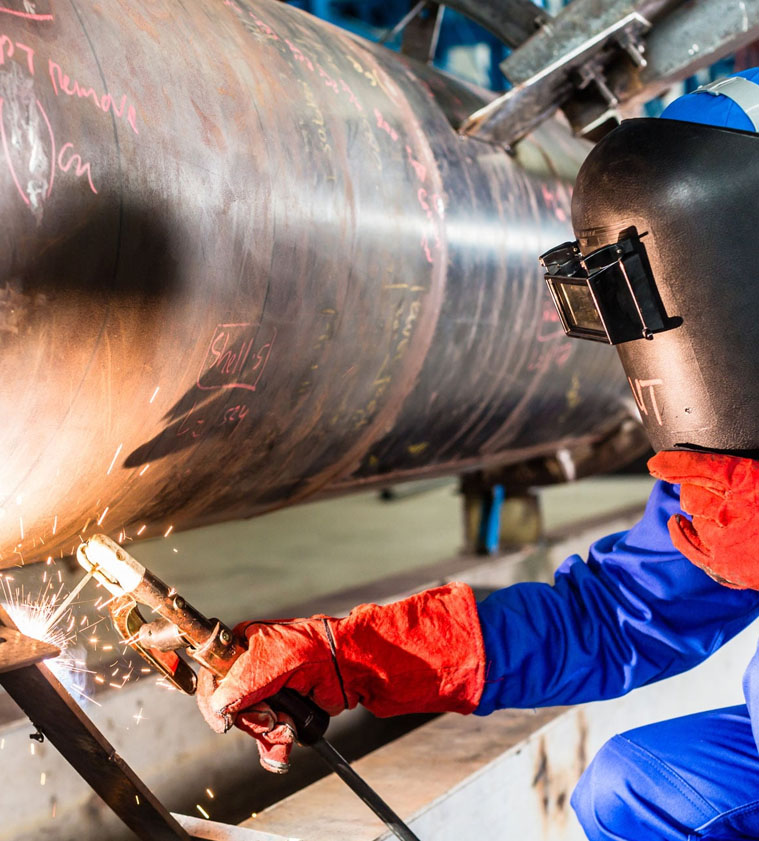
When repairs are necessary, having the right equipment is essential. A robust arc welding machine and properly selected electrodes are critical for shell repairs and other maintenance tasks that keep the furnace structure sound.
Material Selection and Quality Control in High-Temperature Environments
The success of any high temp smelting operation is fundamentally tied to the quality of the materials that go into it. This applies not only to the main charge but to every consumable, from the refractory bricks to the fluxes and alloys used for metallurgical adjustments. Inconsistent or low-quality materials introduce variables that disrupt the carefully managed heat balance, leading to unpredictable performance and accelerated wear.
At Oldwelders, we apply these principles to our own manufacturing. Our plant, covering 1000 square meters, is equipped with six production lines capable of supplying 100 tons of product per day. To produce our high-performance welding fluxes, we start with excellent raw materials like dolomite, bauxite, and silica. These ores are melted at 2000 °C, a process that ensures the final product is homogenous, pure, and possesses the exact chemical and physical properties required for consistent performance in demanding applications.
This commitment to quality control provides our customers—including those in demanding markets like Brazil, Thailand, Australia, and Malaysia—with the assurance that our products will perform predictably. When you use a consistent, high-quality product like our submerged arc welding flux hj431, you reduce the variables in your own process. This stability makes it easier to maintain a steady thermal state, manage slag chemistry, and ultimately protect your critical refractory assets, helping you extend campaign life and keep your operation running smoothly and profitably.