
High-Performance Submerged Arc Flux for Multi-Pass Welds
High-Performance Submerged Arc Flux for Demanding Multi-Pass Welding Applications
In the world of heavy industrial fabrication, Submerged Arc Welding (SAW) stands as a pillar of productivity and quality. Known for its high deposition rates and deep penetration, this automated or semi-automated process is essential for manufacturing pressure vessels, large-diameter pipes, structural beams, and shipbuilding components. At the heart of this process lies the granular flux that blankets the arc, and for applications requiring multiple passes to fill a thick joint, the performance of the Submerged Arc Flux is paramount. Choosing the correct flux is not merely a matter of preference; it is a critical engineering decision that directly impacts weld integrity, operational efficiency, and final project costs. An unsuitable flux can lead to costly defects, extensive post-weld cleaning, and inconsistent mechanical properties, compromising the entire structure.
This article provides a comprehensive guide for fabricators and welding engineers on selecting the optimal flux for multi-pass SAW operations. We will explore the key characteristics that define a superior flux, the metallurgical principles at play, and how Oldwelders' commitment to manufacturing excellence ensures you receive a product that delivers consistent, reliable, and high-quality results, weld after weld.
Understanding the Role of Flux in Multi-Pass Submerged Arc Welding
Before diving into selection criteria, it is crucial to appreciate the multifaceted role of the granular Submerged Arc Flux that covers the operation. Unlike open-arc processes, SAW hides the arc beneath this blanket of flux, which melts to perform several critical functions simultaneously. In multi-pass welding, where layers of weld metal are deposited on top of each other, these functions become even more vital to the success of the joint.
Core Functions of Welding Flux
- Arc Shielding: The primary role of the flux is to melt and create a protective layer of molten slag over the weld pool. This shield prevents atmospheric contamination from oxygen and nitrogen, which can cause porosity, embrittlement, and other severe weld defects.
- Arc Stabilization: The chemical composition of the flux contains arc stabilizers, which create a consistent and focused electrical path for the welding current. This results in a smooth, stable arc, minimizing spatter and ensuring uniform heat input, which is essential for consistent bead shape and fusion.
- Deoxidation and Cleaning: Fluxes contain deoxidizing agents, such as manganese and silicon, which react with impurities like oxides and sulfur in the molten weld pool. These reactions form compounds that are then absorbed into the slag, effectively cleaning and refining the weld metal to enhance its mechanical properties.
- Alloying and Property Control: Flux can be a vehicle for introducing alloying elements into the weld deposit. This is particularly important for achieving specific tensile strengths, impact toughness, and corrosion resistance required by engineering codes. In multi-pass work, the flux must consistently contribute to the weld chemistry with each pass to ensure the final joint is homogenous.
- Bead Shaping and Thermal Insulation: The molten slag shapes the surface of the weld bead, creating a smooth and uniform profile. It also acts as a thermal blanket, slowing the cooling rate of the weld. This slower cooling allows more time for dissolved gases like hydrogen to escape and refines the grain structure of the metal, improving its toughness and reducing the risk of cracking.
In multi-pass scenarios, these functions are tested repeatedly. The slag from one pass must be completely removed before the next is applied to prevent slag inclusions, a critical defect. The flux's chemical activity must remain stable despite repeated thermal cycles, ensuring that the top layers of the weld have the same integrity as the root pass. Therefore, a flux designed for multi-pass welding is engineered for exceptional consistency and performance under demanding conditions.
Key Characteristics of an Ideal Flux for Multi-Pass Applications
Not all fluxes are created equal, especially when subjected to the rigors of multi-pass welding. Fabricators should evaluate a flux based on four critical performance characteristics that directly influence productivity and quality.
1. Superior Slag Detachability
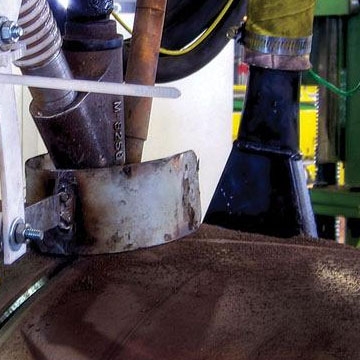
Perhaps the most crucial factor for multi-pass efficiency is slag detachability. After each pass, the solidified slag crust must be removed quickly and completely. A high-quality Submerged Arc Flux creates a slag that, upon cooling, lifts away easily from the weld bead, often in long, continuous pieces. This "self-peeling" or easy-release characteristic significantly reduces interpass cleaning time, which can account for a substantial portion of total fabrication hours. Poor slag removal requires aggressive mechanical cleaning (chipping, grinding), increasing labor costs and the risk of damaging the weld surface. Furthermore, residual slag particles that are not removed can become trapped in the subsequent pass, creating slag inclusions that are stress concentrators and can lead to joint failure.
2. Consistent Weld Bead Profile
The flux plays a direct role in shaping the contour of the weld bead. For multi-pass welding, an ideal bead profile is slightly convex and smoothly transitions into the base metal or previous weld pass at the toes. A flux that produces a deep, narrow "finger" profile or excessive convexity can create notches that are difficult to fill in subsequent passes and act as stress risers. A consistent, well-shaped bead minimizes the need for grinding between passes and ensures proper fusion, reducing the risk of defects like lack of fusion or overlap.
3. Precise Chemical and Metallurgical Control
The flux's chemical activity dictates the final composition and, consequently, the mechanical properties of the weld metal. Fluxes are classified as "active," "neutral," or "alloying."
- Neutral Fluxes: These have minimal effect on the weld metal's silicon and manganese content, making the final chemistry largely dependent on the welding wire and base material. They are preferred for multi-pass welding on thick sections because their stable chemistry is less affected by changes in welding parameters like voltage.
- Active Fluxes: These fluxes intentionally add controlled amounts of deoxidizers like silicon and manganese to the weld. While excellent for single-pass welds over rust or mill scale, their chemical contribution can vary with welding voltage, potentially leading to inconsistent properties in deep, multi-pass joints.
For critical applications, a neutral, high-basicity flux is often the best choice. It provides a clean, tough weld deposit whose properties are reliably determined by the chosen filler wire.
4. High Basicity Index (BI)
The Basicity Index is a calculated ratio of basic compounds (like CaO, MgO, CaF₂) to acidic compounds (like SiO₂, TiO₂) in the flux formulation. Fluxes with a higher BI (typically >1.2) are considered basic. Basic fluxes produce weld metal with lower oxygen content, resulting in fewer non-metallic inclusions and significantly improved impact toughness, especially at low temperatures. For structural and pressure vessel applications where fracture toughness is a critical design requirement, using a high-basicity flux is standard practice. Oldwelders leverages premium raw materials like dolomite and fluorine ore to carefully engineer fluxes with the desired basicity for demanding codes.
Selecting the Right Oldwelders Consumable for Your Project
The selection of a specific Submerged Arc Flux is a technical decision that must account for the base material, joint design, welding position, and required mechanical properties. Oldwelders produces high-quality fused fluxes, which offer distinct advantages for automated, high-volume production.
Our fluxes are created by melting raw materials like dolomite, bauxite, cryolite, silica, and fluorine ore at temperatures of 2000 °C. This process creates chemically homogenous, glass-like particles. Fused fluxes are non-hygroscopic (do not readily absorb moisture), which is critical for preventing hydrogen-induced cracking. They also promote very stable arc characteristics and are highly resistant to breaking down into fine dust during handling, ensuring consistent feeding and a cleaner work environment. One of our versatile offerings is the [submerged arc welding flux hj431](https://www.oldwelders.com/welding-flux/Submerged-Arc-Welding-Flux-HJ431-.html), known for its excellent performance in a variety of applications.
The flux must always be considered as part of a system with the welding wire. The AWS classification system (e.g., AWS A5.17/A5.23) certifies flux-wire combinations to guarantee specific mechanical properties. For example, an F7A2-EM12K classification indicates a flux-wire combination that produces a weld with a minimum tensile strength of 70 ksi (F7), in the as-welded condition (A), with a minimum Charpy V-notch impact toughness of 20 ft-lbs at -20°F (-29°C). Partnering with a knowledgeable supplier like Oldwelders ensures you select the correct, certified combination from our wide range of [welding materials](https://www.oldwelders.com/welding-materials.html) for your specific code requirements.
Manufacturing Excellence: The Oldwelders Quality Advantage
Consistency is the cornerstone of successful multi-pass welding. At Oldwelders, we have built our reputation on a foundation of rigorous process control and an unwavering commitment to quality, backed by our ISO 9001 certification.
Our state-of-the-art production facility covers 1000 square meters and is equipped with six modern production lines, giving us the capacity to supply up to 100 tons of flux per day. This scale allows us to serve large-scale industrial projects and maintain a reliable supply chain for our global partners. We have proven experience delivering our products to demanding markets, including Brazil, Thailand, Australia, and Malaysia, demonstrating our capability in international logistics and quality assurance.
The quality of our finished product begins with the raw materials. We source only excellent dolomite, bauxite, cryolite, silica, and fluorine ore. These high-purity ores are the building blocks of our fused fluxes. By melting these ingredients at 2000 °C, we ensure complete chemical homogeneity and create a stable, glass-like particle structure. This meticulous process guarantees that every bag of our ISO 9001 certified Submerged Arc Flux performs identically, providing the predictable slag behavior, arc stability, and metallurgical results that your production line depends on.
Partnering with Oldwelders for Production Reliability
Choosing Oldwelders as your consumables partner provides more than just a high-quality product; it provides peace of mind. Our manufacturing capacity, stringent quality controls, and deep technical expertise ensure that you can focus on fabrication, confident in the performance of your welding consumables.
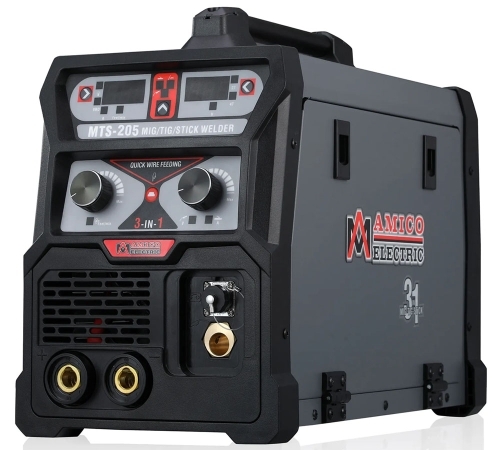
We offer a comprehensive range of products to support your entire welding operation, from the flux and wire to the complete [welding machine](https://www.oldwelders.com/welding-machine.html) setup required for an efficient SAW process. Our B2B-focused approach is designed to meet the needs of industrial producers. We accommodate substantial production requirements with a minimum order quantity of 1 ton and offer clear communication on logistics, with typical lead times of 30 days for planning your procurement cycles.
For your next project involving multi-pass submerged arc welding, do not leave the performance of your most critical joints to chance. Contact the experts at Oldwelders today to discuss your specific application. We will help you select the ideal flux-wire combination to maximize your productivity, ensure weld integrity, and achieve superior results.