
Ensuring Mineral Raw Material Quality from Mine to Factory
Understanding the Journey of High-Quality Mineral Raw Material from Mine to Factory
For manufacturers in the welding industry, the consistency and purity of finished products are non-negotiable. Whether producing high-strength welding wire or specialized fluxes, performance begins long before the production line. It starts deep within the earth, with the quality of the base components. The journey of a mineral raw material from the mine to your factory is a complex process, with multiple stages where quality can be either protected or compromised. Understanding this supply chain is crucial for procurement managers and engineers aiming to secure a reliable source for their critical applications.
Inconsistent raw materials can lead to variable product performance, production delays, and ultimately, a damaged reputation. This article explores the key stages of the mineral supply chain, highlighting the factors that influence material integrity and how a knowledgeable supplier manages these variables to deliver a consistently superior product. For industrial applications, especially in welding, the chemical and physical properties of these materials directly impact the final weld's strength, durability, and finish.
The Critical First Step: Sourcing and Extraction
The entire quality lifecycle begins at the source. The geological characteristics of a mine dictate the inherent purity and composition of the ore. Reputable suppliers invest significantly in geological surveys and partnerships with mines that have proven, consistent deposits. The choice of raw materials is the first and most fundamental quality control checkpoint.
At Oldwelders, the foundation of our high-performance welding fluxes is built on sourcing excellent ores. We specifically select materials like dolomite, bauxite, cryolite, silica, and fluorine ore known for their ideal properties in flux formulation. The extraction method itself—whether open-pit mining or underground operations—also plays a role. Proper extraction techniques are designed to minimize the introduction of contaminants from surrounding rock and soil. A supplier's relationship with its mining partners is key; it ensures access to the best seams and provides early warnings of any geological shifts that could affect ore consistency.
Furthermore, initial on-site analysis at the mine is a best practice. This involves testing samples to confirm they meet predefined specifications before they are even loaded for transport. This step prevents subpar materials from ever entering the supply chain, saving time and resources while safeguarding the quality of the final product. For global manufacturers serving diverse markets from Brazil to Thailand, establishing this level of control at the source is essential for maintaining a global standard of quality.
Processing and Beneficiation: Refining for Purity
Once extracted, the raw ore is rarely ready for industrial use. It must undergo a series of refinement processes collectively known as beneficiation. The goal is to increase the concentration of the desired mineral and remove impurities (known as gangue). This stage is where the raw potential of the ore is transformed into a precise industrial ingredient.
The key steps in beneficiation often include:
- Comminution: This is the process of reducing the size of the ore particles through crushing and grinding. The final particle size is critical for many applications. For welding fluxes, particle size distribution affects melting rate, arc stability, and the final slag characteristics. Inconsistent grinding can lead to an uneven melt and flawed welds.
- Separation: After the ore is ground, various techniques are used to separate the valuable minerals from the waste rock. These methods can include froth flotation, magnetic separation, or gravity separation, depending on the physical and chemical properties of the mineral. Each technique is calibrated to target specific minerals, and the efficiency of this process directly determines the final purity of the material.
- Dewatering: Many separation processes are water-based, so the resulting concentrate must be dried to a specific moisture content. Excessive moisture can cause issues in transport (such as freezing or clumping) and can introduce hydrogen into the welding process, which may lead to weld defects like cracking. Precise moisture control is a hallmark of a quality-focused processor.
A supplier's control over this stage is paramount. At Oldwelders, our ISO 9001 certified processes ensure that the materials we procure have been processed to exacting standards. We understand that the purity achieved during beneficiation is directly linked to the performance of our welding fluxes and other consumables.
Logistics and Traceability: Maintaining Integrity in Transit
Even the purest mineral concentrate can be compromised if not handled correctly during transportation and storage. The journey from a remote processing plant to a manufacturing facility can span thousands of miles and involve multiple modes of transport—truck, rail, and sea. Each handoff is a potential point of contamination or degradation.
Effective supply chain management focuses on several key areas to mitigate these risks:
- Contamination Prevention: Containers, vessels, and storage silos must be thoroughly cleaned between shipments to prevent cross-contamination from previous cargo. A shipment of high-purity silica, for example, could be rendered useless if transported in a container that previously held iron ore.
- Moisture Control: As mentioned, moisture is a significant concern. Materials must be protected from the elements. This can involve using sealed containers, covered storage facilities, and specifying requirements for handling during loading and unloading, especially in humid climates like those in Malaysia or Brazil.
- Traceability: Robust lot and batch tracking systems are essential. Traceability allows a manufacturer to follow a specific batch of material from the original mine, through the processing plant, and to the final factory. This is not just a quality control tool; it's a critical risk management system. In the event of an issue, traceability allows for a swift and precise investigation, isolating the problem without disrupting the entire supply chain.
For a company that serves a global client base in locations like Australia and Thailand, mastering global logistics is a core competency. Our commitment to the ISO 9001 quality management standard extends to our logistics partners, ensuring that the integrity of our materials is maintained from source to destination.
From Raw Material to Finished Product: The Oldwelders Advantage
The final and most critical transformation of a mineral raw material occurs within the manufacturing plant. This is where carefully sourced and processed ingredients are combined under precise conditions to create finished goods. The capabilities of the manufacturing facility are a direct reflection of the supplier's commitment to quality.
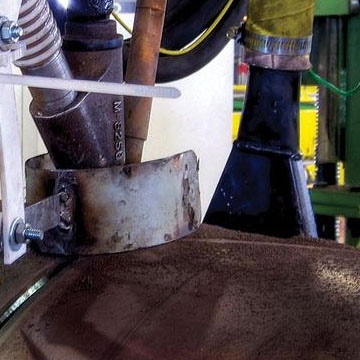
At Oldwelders, our 1000-square-meter plant is equipped with six modern production lines, giving us the capacity to supply up to 100 tons of finished product per day. This scale allows us to meet demanding production schedules while maintaining strict quality control. The heart of our flux production process is the high-temperature melting of the mineral blend. We melt our raw materials—dolomite, bauxite, silica, and others—at 2000 °C. This extreme temperature ensures a complete and homogenous fusion of the ingredients, burning off any trace impurities and creating a glassy, consistent flux with predictable performance characteristics.
This vertically integrated control, from sourcing excellent ores to final manufacturing, allows us to offer reliable products like our submerged arc welding flux hj431 with confidence. We provide clear terms for our B2B partners, including a typical lead time of 30 days and a minimum order quantity (MOQ) of 1 ton, enabling efficient planning and inventory management for your operations. By controlling every variable, we transform high-quality minerals into high-performance welding materials that our customers can depend on.
Key Quality Indicators for Your Raw Materials
When evaluating a supplier, procurement managers should look for transparency and data related to several key performance indicators. These metrics provide objective evidence of material quality and consistency.
Chemical Composition and Purity
This is the most fundamental attribute. The supplier should provide a Certificate of Analysis (CoA) for each batch, detailing the exact percentages of the primary mineral and listing any trace elements or impurities. For welding applications, elements like sulfur and phosphorus must be kept below strict thresholds to prevent weld brittleness.
Particle Size Distribution
Beyond just an average particle size, the distribution (i.e., the range of sizes from finest to coarsest) is crucial. A narrow, consistent particle size distribution ensures predictable melting behavior and stable arc performance. Ask potential suppliers for data on their screening and grinding processes and the tolerances they can guarantee.
Moisture Content
As discussed, moisture is a critical enemy, particularly in welding consumables where it can introduce hydrogen. The CoA should specify the moisture content, and it should be well within the acceptable limits for your application. Inquire about the supplier's packaging and storage methods to ensure the material remains dry until use.
Supplier Certifications
Look for internationally recognized certifications as an indicator of a mature quality management system. An ISO 9001 certification, for example, demonstrates that the supplier has established and follows rigorous processes for everything from sourcing and production to logistics and customer service. It is an independent verification of their commitment to quality and continuous improvement.
Ultimately, the reliability of your finished product is a direct consequence of the quality of the components you use. By understanding the complex journey of mineral raw materials and partnering with a supplier who demonstrates mastery over each stage, you can build a more resilient supply chain and deliver the consistent performance your customers demand.