
Electrode Flux Coating for Optimal Penetration & Slag Control
Understanding how an electrode flux coating influences weld penetration and slag control is crucial for high-quality results.
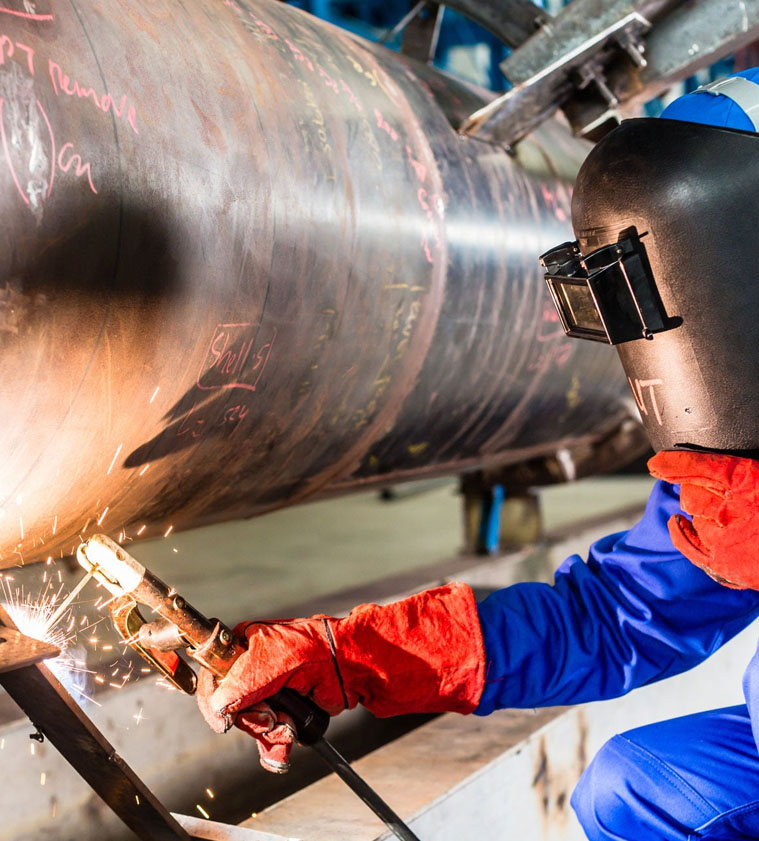
In Shielded Metal Arc Welding (SMAW), the humble stick electrode is more than just a filler metal. It is a sophisticated consumable engineered for specific performance characteristics, and the key to this performance lies in its outer covering. This covering, the electrode flux coating, is a carefully formulated mixture of minerals, metals, and chemical compounds. When consumed in the arc, it performs multiple critical functions simultaneously: it generates a shielding gas to protect the molten weld pool from atmospheric contamination, stabilizes the electric arc, provides deoxidizers and scavengers to refine the weld metal, and forms a protective slag layer over the cooling weld bead.
For welding supervisors, procurement managers, and engineers, selecting the right electrode is a decision that directly impacts project efficiency, structural integrity, and overall cost. Two of the most important outcomes dictated by the flux composition are weld penetration and slag behavior. A deep-penetrating electrode may be essential for achieving complete fusion in a thick-section V-groove joint, while an electrode with a fast-freezing, easily-controlled slag is necessary for out-of-position work. Choosing incorrectly can lead to weld defects like lack of fusion, slag inclusions, and poor bead appearance, resulting in costly rework and potential joint failure. This guide provides a detailed breakdown of the primary flux coating types and how to select them based on your penetration and slag control requirements.
The Fundamental Roles of Flux in SMAW
Before diving into the specific types of coatings, it's essential to appreciate the multifaceted role the flux plays during the welding process. As the electrode melts, the coating disintegrates under the intense heat of the arc, triggering a series of physical and chemical reactions that are fundamental to creating a sound weld.
Key functions include:
- Shielding: The primary function is to shield the molten weld pool. Certain components in the flux, like cellulose and calcium carbonate, decompose to produce a gaseous shield of carbon dioxide, carbon monoxide, and water vapor. This shield displaces oxygen and nitrogen from the surrounding atmosphere, preventing them from dissolving in the molten metal and causing porosity or embrittlement.
- Arc Stabilization: A stable, consistent arc is necessary for a smooth welding experience and a uniform weld bead. The flux contains arc stabilizers, such as potassium and sodium compounds, which ionize easily in the arc plasma. This creates a reliable path for the electrical current, preventing the arc from becoming erratic or extinguishing.
- Deoxidation and Alloying: Even with a gaseous shield, some oxygen may reach the weld pool. The flux contains deoxidizers, like ferromanganese and ferrosilicon, which react with oxygen to form harmless oxides that float to the surface as slag. Additionally, the flux can be used to introduce specific alloying elements into the weld metal to enhance its mechanical properties, such as strength, toughness, or corrosion resistance.
- Slag Formation: As the deoxidizers and other minerals in the flux melt, they form a liquid slag that is less dense than the molten steel. This slag layer covers the weld bead, protecting it from atmospheric contamination as it solidifies. It also helps shape the bead profile and controls the cooling rate, which can influence the final grain structure and mechanical properties of the weld metal. After cooling, this slag must be removed.
Key Flux Coating Types and Their Characteristics
Electrodes are categorized based on their flux composition, which is designated by the last two digits in the American Welding Society (AWS) classification system (e.g., in E7018, the "18" indicates a low-hydrogen, iron powder coating). Understanding these categories is the first step in making an informed selection.
Cellulosic Coatings (e.g., E6010, E6011)
Cellulosic coatings contain a high proportion of organic material, primarily cellulose, which is essentially wood pulp. When this coating burns, it produces a large volume of shielding gas (hydrogen and carbon oxides), resulting in a forceful, deeply penetrating arc often described as a "digging" or "driving" arc.
- Penetration: Deep and aggressive. This makes them ideal for welding root passes in pipe and plate, where complete joint penetration is critical. They can effectively burn through rust, oil, and mill scale.
- Slag Control: The slag produced is thin, friable, and fast-freezing. This is a significant advantage for all-position welding, including vertical-up and overhead, as the molten puddle solidifies quickly, preventing it from sagging or dripping.
- Considerations: The high hydrogen content in the shielding gas can lead to hydrogen-induced cracking in high-strength or thick-section steels. The arc is harsh, producing a rough-looking weld bead with significant spatter. These electrodes are typically limited to DC+ operation (E6010) or AC/DC (E6011).
Rutile Coatings (e.g., E6013, E7014)
Rutile coatings are based on titanium dioxide (TiO2), a mineral that promotes a very smooth, quiet, and stable arc. These electrodes are often considered "all-purpose" or "general-purpose" due to their user-friendly characteristics.
- Penetration: Shallow to medium. They are not designed for deep joint penetration but are excellent for sheet metal, fillet welds, and general fabrication where high deposition rates are not the primary concern.
- Slag Control: Rutile slag is dense, fluid, and provides excellent coverage, resulting in a smooth, finely rippled bead appearance. It is largely self-peeling or very easy to remove, which reduces post-weld cleaning time. The AWS E6013 welding electrodes are a prime example of this versatile category.
- Considerations: Their lower penetration makes them unsuitable for root passes on thick materials. The fluid slag can be challenging to control in vertical or overhead positions compared to cellulosic or basic types. They are excellent for new welders due to the soft arc and easy operation on small AC or DC welding machines.
Basic / Low-Hydrogen Coatings (e.g., E7016, E7018)
Basic coatings are formulated with calcium carbonate (limestone) and fluorspar. Their defining characteristic is the extremely low level of hydrogen in the coating, which is achieved through a high-temperature baking process during manufacturing. This minimizes the risk of hydrogen-induced cracking.
- Penetration: Medium. The arc is moderately forceful, providing a good balance of penetration without being as aggressive as a cellulosic electrode.
- Slag Control: The slag is heavy, thick, and fast-freezing, making it relatively easy to control in out-of-position work. It requires a more deliberate removal effort compared to rutile slag but provides excellent protection to the cooling weld.
- Considerations: These electrodes produce high-quality, X-ray-grade welds with excellent mechanical properties, making them the standard for critical applications like pressure vessels, bridges, and heavy machinery. They must be stored in a heated oven to prevent moisture absorption from the atmosphere, as moisture will introduce hydrogen back into the coating and defeat its purpose. They require a higher amperage to run properly.
Iron Powder Coatings (e.g., E7024, E7028)
These coatings contain a large percentage of iron powder (up to 50%). The iron powder contributes to the filler metal, significantly increasing the deposition rate—the amount of weld metal deposited per unit of time.
- Penetration: Shallow to medium. The focus of these electrodes is on filling joints quickly, not on deep penetration.
- Slag Control: They produce a very heavy, thick, and fluid slag that is extremely easy to remove. This slag helps to shape large, smooth, and aesthetically pleasing fillet welds.
- Considerations: Due to the high iron powder content and fluid slag, these electrodes are typically restricted to flat and horizontal fillet weld positions. They are often called "jet rods" and are used for high-volume production welding where speed is a key factor. A powerful welding machine is often required to supply the high amperage these electrodes demand for optimal performance.
Matching Flux Coating to Application Requirements
The theoretical knowledge of flux types becomes practical when applied to specific welding scenarios. A supervisor or buyer must analyze the joint design, material type, welding position, and required final properties to make the best choice.
For Deep Penetration Needs: When welding a root pass on a beveled pipe or a thick plate, a cellulosic electrode like an E6010 is the superior choice. Its driving arc ensures the weld fuses completely with the root face of the joint. Using a rutile E6013 in this scenario would likely result in incomplete fusion, a critical weld defect.
For Out-of-Position Work: For vertical-up or overhead welding, slag control is paramount. You need a slag that freezes quickly to hold the molten metal in place. Cellulosic (E6010/E6011) and basic low-hydrogen (E7018) electrodes excel here. The fluid slag of a rutile or iron powder electrode would be difficult to manage against gravity.
For High-Quality, Critical Welds: When welding on high-strength steels, heavy equipment, or structures where weld failure is not an option, a low-hydrogen E7018 is mandatory. The low hydrogen content is essential to prevent cracking and ensure the weld deposit has the required toughness and ductility.
For Speed and Aesthetics: In a production setting where large fillet welds are needed on flat surfaces, such as fabricating structural beams or heavy frames, an iron powder E7024 is the most efficient option. Its high deposition rate and easy-to-remove slag significantly reduce welding time and cleaning costs.
Sourcing a Reliable Supply of Welding Consumables
The performance of any electrode is only as good as its manufacturing process. Inconsistent formulation, improper baking, or poor-quality raw materials can lead to erratic arc behavior, porosity, and weld defects, even if the correct electrode type is chosen. For businesses operating in demanding markets from Brazil to Australia, partnering with a supplier that demonstrates a commitment to quality is non-negotiable.
At Oldwelders, we operate under a strict ISO 9001 certified quality management system. Our 1000-square-meter facility is equipped with six production lines capable of supplying up to 100 tons of product per day, ensuring we can meet large-volume orders with a lead time of around 30 days. We begin with superior raw materials—including dolomite, bauxite, cryolite, and silica—which are melted at 2000°C to ensure purity and create the precise chemical compositions required for each flux type. This rigorous control over the entire production process guarantees that every batch of our welding materials delivers the consistent, reliable performance your critical applications demand. By managing every step, from raw ore to finished product, we provide the quality assurance necessary for professional welding operations worldwide.