
Cut Welding Consumable Spend by Tracking Burn Rate | Oldwelders
Track Burn Rate to Effectively Manage Your Welding Consumables Spend
In high-volume fabrication and manufacturing, the recurring cost of welding consumables represents a significant portion of operational expenditure. While managers often focus on labor rates and equipment capital, the steady outflow on welding wire, rods, flux, and shielding gases can silently erode profitability. The key to controlling these costs lies not just in negotiating lower prices, but in understanding precisely how these materials are used—or wasted. By meticulously tracking the burn rate, or the rate of consumption, businesses can unlock substantial savings, improve process efficiency, and build a more resilient supply chain.
Effectively managing your inventory of welding consumables is more than an accounting exercise; it's a strategic imperative. It provides the data needed to optimize everything from welder training to procurement cycles. For cost-conscious fabrication buyers, understanding and controlling the burn rate is the most direct path to a healthier bottom line and a more competitive operation. This guide will explore the concept of burn rate, how to track it accurately, and how to leverage that data to make smarter purchasing decisions and operational improvements.
What is Consumable Burn Rate and Why Does It Matter?
In the context of welding, "burn rate" refers to the volume or weight of a consumable used over a specific period or per unit of production (e.g., kilograms of wire per hour, or number of electrodes per completed assembly). It’s a critical Key Performance Indicator (KPI) that directly translates material usage into financial terms. An unmonitored or excessively high burn rate often signals underlying issues that go beyond simple material cost.
Understanding this metric is crucial for several reasons:
- Accurate Job Costing: Without a precise understanding of how many welding consumables are required for a given project, bids and cost estimates are based on guesswork. Tracking burn rate allows you to quote jobs with greater accuracy, protecting your margins and increasing your bid-win ratio.
- Waste Identification: A high burn rate can be a red flag for significant waste. This could manifest as excessive stub loss on stick electrodes, high levels of spatter from an improperly tuned MIG process, or over-welding by operators applying more filler metal than specified in the Welding Procedure Specification (WPS).
- Performance Benchmarking: By tracking burn rates across different shifts, welders, or production cells, managers can establish performance benchmarks. Deviations from this standard can highlight either best practices that should be replicated or training opportunities for operators who may be using materials inefficiently.
- Predictive Procurement: Relying on visual stock checks leads to reactive purchasing, rush orders, and potential stock-outs that halt production. Burn rate data enables predictive inventory management, allowing you to forecast future needs and schedule orders strategically. This ensures you never run out of critical supplies while also avoiding the capital cost of excessive on-hand inventory.
Ultimately, a deep understanding of your burn rate transforms welding consumables from a simple line item expense into a manageable and optimizable production variable. It provides the visibility needed to make data-driven decisions that enhance both financial and operational performance.

How to Accurately Track Consumable Burn Rate
Implementing a system to track consumable burn rate does not need to be overly complex, but it does require consistency and attention to detail. The goal is to move from a generalized, plant-wide consumption figure to a more granular understanding of usage by project, station, or even individual welder.
1. Establish a Baseline
Before you can improve, you must measure. Start by establishing a baseline for your current consumption. This involves a comprehensive inventory audit of all your welding consumables. For a set period—a week or a month—record the starting inventory, all incoming purchases, and the ending inventory. The difference will give you your total consumption. Divide this by a key production metric (e.g., total production hours, number of units produced) to get your initial, high-level burn rate.
2. Implement a Checkout System
To gain more granular insight, implement a formal checkout system. Instead of allowing open access to the supply storeroom, require operators to sign out materials for specific jobs or for their shift. This can be done with a simple paper log or a digital spreadsheet.
- For Welding Wire: Track full spools checked out and weigh any partial spools returned at the end of a shift or project. The difference is the amount consumed.
- For Stick Electrodes: Issue electrodes by the box or by weight. Track the number of stubs returned and their collective weight to calculate stub loss percentage—a key waste metric.
- For Fluxes: For submerged arc welding, track the bags of flux issued to a specific machine or job.
3. Leverage Technology
For larger operations, manual tracking can become cumbersome. Modern inventory management software or even dedicated welding data monitoring systems can automate this process. These systems can integrate directly with purchasing and can provide real-time visibility into consumption rates. By linking material usage to specific welding machine stations, you can automate data collection and generate powerful analytical reports with minimal manual effort.
4. Analyze and Report
Data is only useful if it is analyzed. Regularly review your burn rate data. Create simple reports that show trends over time and highlight outliers. Ask critical questions:
- Is the burn rate higher on the night shift than the day shift?
- Does Welder A consistently use 15% more wire than Welder B for the same task?
- Did a specific project consume significantly more materials than was estimated?
These questions will guide you toward the root causes of inefficiency and provide a clear path for corrective action.
Factors That Influence Your Burn Rate
Your burn rate is not a static number; it is influenced by a dynamic interplay of processes, people, and materials. Understanding these factors is key to controlling and reducing your consumption of welding consumables.
Welder Skill and Technique
The operator is often the single most significant variable. A highly skilled welder who follows the WPS precisely will typically have a lower burn rate. They maintain correct travel speed, work angles, and arc length, resulting in less spatter and minimal over-welding. Conversely, an inexperienced or poorly trained operator may use excessive filler metal, create larger-than-necessary welds, and waste material through poor technique.
Welding Process and Parameters
The chosen welding process and its parameters have a direct impact on deposition efficiency—the percentage of the consumable that becomes part of the finished weld.
- Voltage and Amperage: Incorrect settings can lead to a chaotic arc, producing excessive spatter that is wasted material.
- Shielding Gas: The wrong gas mixture or an improper flow rate can lead to poor weld quality and increased spatter, wasting both gas and filler metal.
- Wire Feed Speed: For MIG/MAG welding, a wire feed speed that is not synchronized with the voltage will result in poor performance and wasted wire.
Choosing the right type of consumable, such as a high-efficiency flux-cored wire for specific applications, can also dramatically improve deposition rates compared to other materials.
Joint Design and Fit-Up
Poor fit-up is a common culprit of high consumable usage. Wide or inconsistent gaps in the weld joint require the welder to use excess filler metal to bridge them. This not only consumes more wire or electrodes but also increases welding time and labor costs. Enforcing tight tolerances in the fabrication and assembly stages, before the parts reach the welding station, is a crucial step in controlling burn rate.
Quality of Welding Consumables
The quality and consistency of the welding consumables themselves play a vital role. Low-quality wire may have an inconsistent diameter or surface finish, leading to feeding issues and an unstable arc. Inconsistent flux coatings on electrodes, such as aws e6013 welding electrodes, can result in porosity and rework. Partnering with a supplier that maintains rigorous quality control is essential. As an ISO 9001 certified manufacturer, we ensure that every batch of product meets strict specifications, providing the consistency your operation needs to maintain a stable and predictable burn rate.
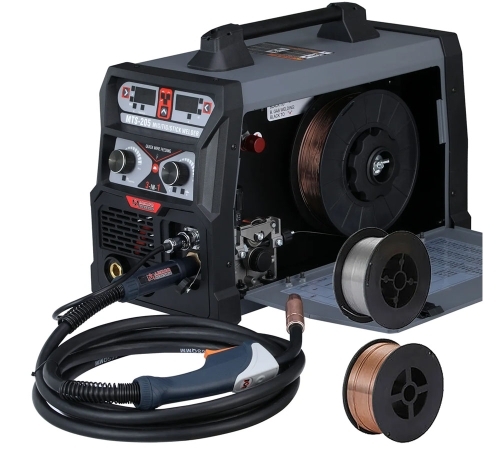
Leveraging Data to Partner with a Strategic Supplier
Once you have a firm grasp of your burn rate, you can transition from a purely transactional relationship with your supplier to a strategic partnership focused on total cost reduction. The data you've collected empowers you to make smarter, more strategic procurement decisions.
Accurate forecasting allows you to work with a supplier who can meet your demand reliably. For large-scale operations, supply chain stability is paramount. You need a partner with the production capacity to be a dependable part of your long-term planning. For instance, Oldwelders operates a 1000-square-meter facility with six production lines, capable of supplying up to 100 tons of flux products per day. This capacity ensures that as your demand forecasts become more accurate, we can consistently meet your needs without interruption.
This data also enables you to optimize order quantities. You can plan purchases that align with supplier logistics, meeting minimum order quantities—such as our standard 1-ton MOQ—while adhering to predictable lead times, which are typically around 30 days. This eliminates the premium costs associated with frequent, small, or rushed orders.
Finally, a strategic supplier should be a source of technical expertise. They can help you analyze your burn rate data and recommend alternative welding consumables or process adjustments that could yield significant savings. Perhaps a different type of wire could increase deposition efficiency, or a specific flux could reduce post-weld cleaning time. This collaborative approach focuses on reducing the total cost of welding, not just the price per kilogram of wire.
By tracking your burn rate, you gain control over a critical operational variable. This data-driven approach reduces waste, improves job costing accuracy, and fosters a culture of efficiency. It also strengthens your position as a buyer, allowing you to build a robust and cost-effective supply chain with a reliable, high-capacity partner. We have a proven track record of supporting industrial clients across the globe, from Brazil and Thailand to Australia and Malaysia, by providing high-quality, consistent welding products that support efficient and profitable operations.