
Choosing the Right Welding Electrode: 6010 vs 6013 vs 7018
Understanding which welding electrode is best for your project is crucial for achieving strong, reliable welds.
In the world of Shielded Metal Arc Welding (SMAW), or stick welding, the selection of the correct consumable is as critical as the skill of the operator. The market offers a vast array of options, but three mild steel electrodes consistently stand out for their versatility and widespread use: the E6010, E6013, and E7018. Each possesses a unique set of characteristics tailored for specific applications, base materials, and welding conditions. Choosing incorrectly can lead to weld defects, reduced structural integrity, and increased project costs.
This comprehensive guide will delve into the distinct properties of these three popular electrodes. We will explore the American Welding Society (AWS) classification system, analyze the performance of each rod, and provide a comparative analysis to help you make an informed decision for your industrial or commercial needs. As a manufacturer committed to quality, we understand that the foundation of a great weld begins with superior consumables, produced from excellent raw materials like dolomite and bauxite, and processed under stringent controls. Whether you're fabricating structural steel, repairing heavy machinery, or working on pipe, this comparison will clarify which a welding electrode is the optimal choice.
Decoding the AWS Classification: What the Numbers Mean
Before comparing the electrodes, it's essential to understand the AWS A5.1 specification for carbon steel electrodes for SMAW. The numbering system provides critical information about the electrode's capabilities.
Let's break down a designation like E7018:
- E: This simply stands for "electrode," indicating it's used for arc welding.
- First Two Digits (e.g., 70): This represents the minimum tensile strength of the deposited weld metal, in thousands of pounds per square inch (ksi). So, an E7018 produces a weld with a minimum tensile strength of 70,000 psi. An E6010 or E6013 produces a weld with 60,000 psi tensile strength.
- Third Digit (e.g., 1): This indicates the recommended welding position.
- 1: All positions (flat, horizontal, vertical, overhead)
- 2: Flat and horizontal positions only
- 4: Flat, horizontal, overhead, and vertical down
- Fourth Digit (e.g., 8): This digit is more complex and relates to the type of flux coating, the slag produced, and the required welding current (AC, DC+, or DC-). This number is what truly defines the electrode's operating characteristics.
Understanding this system is the first step for any purchasing manager or lead welder in sourcing the correct welding materials for a job. It ensures that the selected consumable meets the engineering specifications for strength, position, and weld quality.
The E6010: The Aggressive, Deep-Penetrating Choice
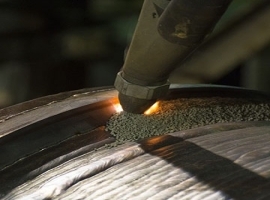
The E6010 is a classic, all-position welding electrode renowned for its powerful, deeply penetrating arc. It is exclusively a direct current (DC) electrode, run on electrode positive (DCEP or DC+).
Characteristics and Performance
The key to the E6010's performance is its cellulose-based flux coating. When this coating burns, it produces a high volume of gaseous shielding (primarily carbon dioxide and hydrogen) and very little slag. This results in several distinct characteristics:
- Deep Penetration: The forceful arc, often described as "digging," cuts through rust, oil, paint, and mill scale effectively. This makes it ideal for root passes in pipe welding and for work on materials that are not perfectly clean.
- Fast-Freezing Slag: The minimal slag solidifies very quickly, which is a major advantage when welding in vertical or overhead positions. It prevents the weld puddle from sagging or running.
- Difficult to Use: The arc is very stiff and can be difficult for beginners to control. It requires a specific "whip and pause" or similar manipulation technique to achieve a good bead profile. The resulting weld bead is often rough and rippled in appearance.
- High Spatter: The aggressive arc action tends to produce a significant amount of spatter compared to other electrodes.
Common Applications
Due to its deep penetration and all-position capability, the E6010 is a staple in specific industries:
- Pipe Welding: It is the go-to electrode for root passes on steel pipes in the oil and gas industry.
- General Fabrication and Repair: Excellent for welding on dirty, painted, or galvanized materials where extensive surface preparation is not feasible.
- Shipbuilding and Field Construction: Its ability to perform in all positions makes it valuable for on-site work.
While powerful, the E6010 is not suitable for all applications. The high hydrogen content in its shielding gas makes the resulting weld less ductile and more prone to cracking on high-carbon or thick steels if not handled correctly. It's a specialized tool for jobs that demand its unique cutting power.
The E6013: The User-Friendly, All-Purpose Rod
The E6013 is arguably one of the most popular general-purpose electrodes, especially for hobbyists and in light fabrication. It's known for its soft, smooth arc and ease of use.
Characteristics and Performance
The E6013 has a rutile-based flux coating, which creates a much different welding experience than the E6010.
- Shallow Penetration: It has a much lighter-penetrating arc, making it ideal for welding on thin materials like sheet metal where a burn-through is a risk.
- Smooth, Stable Arc: The arc is very easy to start and maintain, making it an excellent choice for novice welders. It can be run on both AC and DC (either polarity) welders, adding to its versatility.
- Thick, Easy-to-Remove Slag: The E6013 produces a heavy slag coating that completely covers the weld bead. This slag helps shape the bead and is typically very easy to chip away after cooling, revealing a smooth, aesthetically pleasing weld.
- Minimal Spatter: When run at the correct amperage, it produces very little spatter, reducing cleanup time.
Common Applications
The E6013's user-friendly nature and shallow penetration define its primary uses:
- Sheet Metal Work: Its gentle arc is perfect for automotive bodywork or any fabrication involving thin-gauge mild steel.
- General-Purpose Fabrication: Ideal for non-critical welds on clean material, such as building gates, trailers, and furniture.
- Tack Welding: The arc is easy to start, making it great for quickly tacking pieces together before final welding. We offer a range of high-quality AWS E6013 welding electrodes suitable for these applications.
However, the E6013 is not suitable for high-strength, structural applications. Its shallow penetration does not provide the same level of fusion into the base metal as an E6010 or E7018, and its mechanical properties are lower.
The E7018: The Strong, Low-Hydrogen Standard
The E7018 is a high-strength, low-hydrogen welding electrode that produces high-quality, X-ray-grade welds. It is the standard for critical structural applications.
Producing a reliable low-hydrogen electrode requires exceptional quality control. As an ISO 9001 certified manufacturer, we adhere to strict processes to ensure the mineral-based flux coatings on our E7018 electrodes maintain their low-hydrogen characteristics from production to packaging, delivering consistent performance for our clients in demanding markets from Brazil to Australia.
Characteristics and Performance
The E7018's flux contains very little hydrogen and a high percentage of iron powder. This iron powder increases the deposition rate, meaning more metal is put into the joint per electrode used.
- Low Hydrogen: This is its most critical feature. The low-hydrogen deposit significantly reduces the risk of hydrogen-induced cracking, a major concern when welding thicker, high-carbon, or alloy steels.
- High Ductility and Strength: It produces welds that are not only strong (70,000 psi tensile) but also very ductile and resistant to cracking under stress or in cold temperatures.
- Smooth Arc and Bead: While not as soft as an E6013, the E7018 offers a smooth, stable arc with low spatter. It creates a uniform bead with fine ripples.
- Thick, Heavy Slag: Like the E6013, it produces a heavy slag covering that is generally easy to remove. However, restarting the arc can be difficult as the flux can form a hard, non-conductive cap over the tip.
- Strict Storage Requirements: To maintain its low-hydrogen properties, the E7018 must be stored in a heated rod oven. If exposed to atmospheric moisture, the flux will absorb hydrogen, negating its primary benefit.
Common Applications
The E7018 is specified for applications where weld failure is not an option:
- Structural Steel: Used in the construction of buildings, bridges, and other critical structures.
- Heavy Equipment Manufacturing and Repair: Ideal for welding on thick plates for bulldozers, excavators, and other machinery.
- Power Plants and Pressure Vessels: Specified for applications requiring high-quality, defect-free welds.
The E7018 is a premium welding electrode that requires a more powerful welding machine and greater operator skill than an E6013, but it delivers unmatched strength and quality for demanding jobs.
Comparative Analysis: 6010 vs. 6013 vs. 7018 at a Glance
To simplify the selection process, here is a direct comparison of the key attributes of each welding electrode.
| Feature | E6010 | E6013 | E7018 |
|---|---|---|---|
| Tensile Strength | 60,000 psi | 60,000 psi | 70,000 psi |
| Welding Position | All | All | All |
| Current Type | DCEP only | AC, DCEP, DCEN | AC, DCEP |
| Arc Characteristic | Aggressive, digging | Soft, smooth | Medium, smooth |
| Penetration | Deep | Shallow / Light | Medium |
| Slag Type | Minimal, fast-freezing | Heavy, easy to remove | Heavy, easy to remove |
| Spatter Level | High | Low | Low |
| Best For | Dirty/rusty metal, pipe roots | Sheet metal, clean materials | Structural steel, thick plate |
| Skill Level | Advanced | Beginner | Intermediate / Advanced |
Choosing the Right Partner for Your Welding Needs
Selecting the correct welding electrode is the first step. The second is sourcing it from a reliable manufacturer who can guarantee quality and supply. For large-scale industrial projects in Thailand, Malaysia, and beyond, consistent access to high-quality consumables is paramount. Our modern facility, spanning 1000 square meters with six production lines, has a capacity of 100 tons per day, ensuring we can meet demanding supply schedules with a standard lead time of 30 days and a minimum order quantity of just 1 ton.
By understanding the fundamental differences between the E6010, E6013, and E7018, you can optimize your welding operations for efficiency, quality, and safety. The E6010 is your deep-digging tool for challenging conditions. The E6013 is the versatile, easy-to-use option for light fabrication. The E7018 is the high-strength, low-hydrogen solution for critical structural work. By matching the electrode to the application, you ensure every weld meets the required specifications and contributes to the integrity of the final product.