
BFA Abrasive: Your Guide to Blasting and Grinding Media
Choosing the right BFA abrasive is crucial for superior surface preparation and finishing.
In the world of metal fabrication and high-integrity welding, the final quality of a joint is often determined long before the arc is ever struck. Proper surface preparation is not just a preliminary step; it is a foundational requirement for creating strong, durable, and defect-free welds. Contaminants like mill scale, rust, oils, and existing coatings can introduce porosity, weaken the bond, and ultimately lead to catastrophic failure. This is why selecting the correct abrasive media for cleaning and profiling a surface is a critical decision for engineers, fabricators, and procurement managers. Among the array of options available, Brown Fused Alumina, or BFA, stands out for its exceptional balance of hardness, toughness, and cost-effectiveness.
This comprehensive guide will explore the properties of Brown Fused Alumina, its primary applications in surface preparation and finishing, and the critical factors to consider when selecting the appropriate grit size for your specific project. Understanding these nuances ensures that your preparation processes are not only efficient but also contribute directly to the quality and longevity of your finished products, a principle we champion across our entire range of welding materials.
What is Brown Fused Alumina (BFA)?
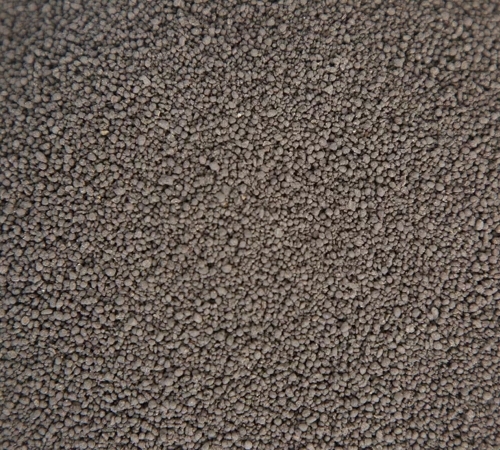
Brown Fused Alumina is a tough, hard, and durable synthetic abrasive manufactured through the electric arc furnace fusion of high-quality bauxite ore at temperatures exceeding 2000°C. This intense electro-fusion process melts the raw material, allowing impurities to be removed and the aluminum oxide to recrystallize into a dense, solid mass with superior abrasive properties. The resulting material is then crushed, cooled, and precisely graded into various grit sizes to meet specific application requirements.
Key Properties and Characteristics
The performance of any abrasive is defined by its physical and chemical properties. BFA's unique combination of characteristics makes it one of the most versatile and widely used abrasives in industrial applications.
- High Hardness: With a rating of approximately 9 on the Mohs scale, Brown Fused Alumina is exceptionally hard, surpassed only by materials like silicon carbide and diamond. This hardness allows it to effectively cut, grind, and etch even the toughest metals and alloys with speed and efficiency.
- Excellent Toughness: Toughness, or fracture resistance, is BFA’s standout feature. Unlike more brittle abrasives, it can withstand high pressures and repeated impacts without shattering. This durability translates to a longer service life, reduced media consumption, and lower operational costs in both blasting and grinding applications.
- Angular Grain Shape: After crushing, the grains of BFA retain a sharp, angular shape. This aggressive geometry is ideal for rapid material removal, creating a uniformly etched surface profile that is perfect for promoting adhesion of paints, thermal spray coatings, and other protective layers.
- High Recyclability: Due to its exceptional toughness, BFA can be reclaimed and reused multiple times in abrasive blasting systems, especially in blast rooms or cabinets. This recyclability significantly reduces media consumption and disposal costs over the long term.
- Chemical Inertness: Brown Fused Alumina is a highly stable material that does not react with most chemicals. It is free of iron and silica, preventing ferrous contamination on non-ferrous substrates like stainless steel and aluminum.
Core Applications in Metal Fabrication and Welding
The versatility of Brown Fused Alumina makes it an indispensable tool throughout the metal fabrication lifecycle, from initial surface preparation to final weld finishing. Its performance characteristics are well-suited for the demanding environments of modern workshops and industrial plants.
Abrasive Blasting for Surface Preparation
Before any welding can occur, the substrate must be perfectly clean. Abrasive blasting with a BFA abrasive is a highly effective method for achieving the required level of surface cleanliness and creating an optimal profile for subsequent processes.
The primary goals of pre-weld blasting are:
- Removal of Contaminants: Aggressively strips away rust, mill scale, old paint, and other surface impurities that could compromise weld quality.
- Creating an Anchor Profile: The sharp, angular grains etch the metal surface, creating microscopic peaks and valleys. This "anchor pattern" increases the surface area and provides a mechanical grip for coatings, ensuring superior adhesion and preventing delamination.
- Stress Relieving: In some applications, the peening action of the abrasive particles can help relieve surface stresses in the material, which can be beneficial for the component's fatigue life.
Using BFA ensures a fast, efficient cleaning process without embedding unwanted ferrous particles, making it suitable for carbon steel, stainless steel, and other alloys.
Grinding and Finishing Welds
After a weld is completed, finishing is often required to meet aesthetic or functional specifications. BFA is a primary component in many of the tools used for these tasks.
- Bonded Abrasives (Grinding Wheels): The toughness and hardness of BFA make it the grain of choice for vitrified and resin-bonded grinding wheels. These wheels are used for heavy stock removal, weld bead grinding, beveling edges for weld preparation, and shaping components.
- Coated Abrasives (Flap Discs, Belts): In coated abrasives, BFA grains are bonded to a backing material like cloth or paper. Flap discs, sanding belts, and fiber discs using this abrasive are essential for blending welds smoothly into the parent material, removing weld spatter, and achieving a uniform surface finish. The durability of the grain ensures a consistent cutting rate and a long product life.
The consistent performance of BFA in these applications ensures that fabricators can meet tight dimensional tolerances and surface finish requirements efficiently, whether they are using a powerful arc welding machine or a delicate TIG process.
How to Select the Right BFA Abrasive Grit Size
Choosing the correct grit size is a critical decision that directly impacts the speed of your operation, the resulting surface finish, and the overall cost-effectiveness of the process. A grit that is too coarse may remove material too quickly and create an overly deep profile, while a grit that is too fine may be inefficient for heavy cleaning. Grit sizes are typically classified according to standards like FEPA (Federation of European Producers of Abrasives) or ANSI (American National Standards Institute).
Understanding the Grit Scale
The grit numbering system is inverse: a lower number indicates a larger, coarser particle, while a higher number indicates a smaller, finer particle.
- Coarse Grits (e.g., F16 - F36): These large particles are designed for aggressive, heavy-duty applications. They offer the fastest material removal rates and are ideal for stripping thick coatings, removing heavy rust and scale, and preparing surfaces for thick thermal spray coatings. However, they leave a very rough surface profile.
- Medium Grits (e.g., F46 - F80): This range offers a balance between speed and finish. It is the most common choice for general-purpose surface preparation before painting or bonding, providing a good anchor profile without being overly aggressive. It is effective for removing light rust and mill scale.
- Fine Grits (e.g., F90 - F220): These smaller particles are used for applications where a smoother finish is required. They are suitable for cleaning sensitive substrates, deburring, and preparing surfaces for thinner coatings or for aesthetic finishing. The material removal rate is significantly slower.
Matching Grit to Application
When selecting a grit size, consider the following factors:
- Initial Surface Condition: For surfaces with heavy contamination, thick rust, or multiple layers of paint, start with a coarse grit (F24-F36) for efficient removal.
- Substrate Material and Thickness: For thinner or softer materials, a finer grit (F60-F100) may be necessary to avoid warping or damaging the substrate. Harder steels can withstand more aggressive, coarser grits.
- Required Surface Profile (Anchor Pattern): The coating or subsequent process will have a specified surface profile, usually measured in mils or microns. The abrasive manufacturer's technical data sheet will provide guidance on the profile achieved by each grit size. Always choose a grit that creates the specified anchor pattern.
- Productivity vs. Finish: The project requirements will dictate the trade-off. If speed is the priority for a non-critical surface, a coarse grit is best. If a smooth, pre-polish finish is the goal, finer grits are required.
The Oldwelders Commitment: Quality and Supply Chain Reliability
While we are known for our advanced welding machine technology and high-performance consumables, we understand that world-class welding depends on a foundation of superior material science. Our expertise extends to the very raw materials that define industrial quality. We recognize the parallels between manufacturing premium welding fluxes and producing a high-grade BFA abrasive; both begin with exceptional raw materials like bauxite and rely on precisely controlled high-temperature processes.
Our own flux production involves melting select ores at 2000°C, a process that gives us a deep appreciation for the thermal dynamics and material science required to create consistent, high-purity industrial materials. This foundational knowledge informs our selection of all related consumables and accessories.
As an ISO 9001 certified company, our commitment to quality is embedded in every aspect of our operations. For our B2B partners in demanding markets such as Brazil, Thailand, Australia, and Malaysia, supply chain stability is paramount. Our state-of-the-art, 1000-square-meter facility with six production lines has a capacity of 100 tons per day, ensuring we can meet large-scale industrial demand reliably and consistently. With a standard lead time of 30 days and a minimum order quantity of 1 ton, we are structured to support the procurement needs of significant fabrication and manufacturing projects. By partnering with Oldwelders, you are choosing a supplier that understands the entire fabrication workflow, from initial surface preparation to the final, flawless weld.