
A Buyer's Guide to Vetting a Global Welding Flux Exporter
How to Confidently Verify Your Next Welding Flux Exporter
For procurement managers and import buyers, sourcing high-quality welding consumables is a high-stakes decision. The integrity of a weld—and by extension, the final product—depends on the consistency and quality of materials like welding flux. Choosing a new international supplier introduces significant risk. A slick website and a compelling price list are not guarantees of a reliable supply chain, consistent product quality, or genuine export experience. Before committing to a trial order, you need objective proof that a potential partner can deliver on their promises. This is where a professional welding flux exporter can be distinguished from a mere trader or an unreliable factory.
While factory audits and sample testing are crucial, there is a powerful, data-driven method for initial vetting: analyzing shipping records. This guide will walk you through the practical steps of using publicly available trade data to verify a supplier's export history, operational scale, and market experience, empowering you to make a more informed and lower-risk sourcing decision. By understanding what to look for, you can separate experienced exporters from those with unproven claims.
Why Standard Due Diligence Falls Short for Welding Flux
Welding flux is not a simple commodity. It is a complex formulation of minerals and chemical compounds designed to perform specific functions in arc welding processes, such as shielding the molten weld pool from atmospheric contamination, cleaning and deoxidizing the metal, and influencing the weld bead's shape and mechanical properties. This complexity makes supplier verification more critical than ever.
Standard due diligence often involves:
- Website Review: A professional website is easy to create but offers no proof of manufacturing capability or export history.
- Certification Checks: While important, certifications can sometimes be outdated or not applicable to the specific product line you are interested in.
- Initial Communication: A responsive sales team is a good sign, but it doesn't confirm the company's ability to consistently produce and ship tons of product internationally.
The problem is that these steps primarily verify a company's ability to market itself, not its ability to perform. For a product as critical as welding flux, where inconsistent composition can lead to weld defects, porosity, or cracking, you need to verify performance and reliability. The quality of the final flux is directly tied to the raw materials—such as high-purity dolomite, bauxite, and cryolite—and the precision of the manufacturing process, including melting temperatures that can reach 2000°C to ensure homogeneity and proper chemical reactions.
An Introduction to Vetting with Shipping Records
Every time a container of goods crosses an international border, a legal document known as a Bill of Lading (B/L) is created. This document acts as a receipt, a contract, and a document of title. Crucially for verification purposes, a sanitized version of this data is often collected by national customs agencies and aggregated by commercial trade data platforms. This creates a searchable history of a company's export activities.
By accessing this data, you can answer critical questions about a potential supplier:
- Have they actually shipped products to your country or region before?
- How frequently do they export? Is it a consistent business or a one-off shipment?
- What is the typical volume of their shipments? Are they shipping full container loads (FCL) or smaller palettes (LCL)?
- Do the product descriptions on the shipping documents match their stated specialization?
Answering these questions provides a factual, third-party-verified picture of a company's real-world export operations, cutting through marketing claims to reveal their true capabilities as a global welding flux exporter.
A Practical Guide to Vetting Exporters with Trade Data
Using trade data for verification is a systematic process. By following these steps, you can build a detailed profile of a potential supplier's export history and operational scale.
1. Identify the Correct HS Code
The Harmonized System (HS) is an international standard for classifying traded products. Every product is assigned an HS code, which is used by customs authorities worldwide. Welding fluxes typically fall under Chapter 38, "Miscellaneous chemical products." The specific code is often HS Code 3810.90, which covers "preparations for pickling metal surfaces; fluxes and other auxiliary preparations for soldering, brazing or welding." Always confirm the specific code used for your target product, as variations can exist.
2. Accessing Trade Data
There are several ways to access shipping data, ranging from free government resources to comprehensive paid platforms:
- Free Government Databases: Some countries' customs departments provide public access to import/export data. These can be a good starting point but are often limited in scope and user-friendliness.
- Paid Data Providers: Services like Panjiva, ImportGenius, and IHS Markit aggregate global trade data into powerful, user-friendly databases. They allow you to search by company name, HS code, or product description. While they require a subscription, the depth of insight can easily justify the cost when making a significant procurement decision.
3. Analyzing the Shipping Records
Once you have access to the data, here is what you should look for to evaluate a potential welding flux exporter:
- Shipment Frequency and Consistency: Look for a steady stream of shipments over the past 12-24 months. A supplier with weekly or monthly exports is demonstrably more reliable than one with a single shipment six months ago. Consistent activity indicates stable production and a repeatable logistics process.
- Shipment Volume and Weight: Pay attention to the weight and volume of the shipments. A supplier regularly exporting 20-ton containers of welding fluxes is operating on a completely different scale than one shipping 500 kg pallets. This helps verify their claims of production capacity.
- Geographic Reach: Check the destinations of their shipments. A supplier with a diverse export portfolio, shipping to demanding markets, demonstrates their ability to meet different international standards and navigate complex logistics. For example, experience shipping to countries like Brazil, Australia, Thailand, and Malaysia indicates a familiarity with a range of customs procedures and quality expectations.
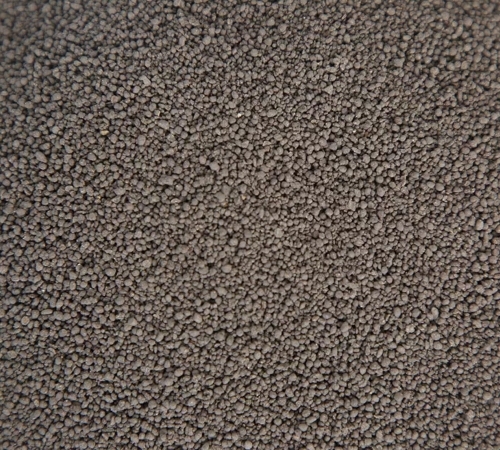
- Product Descriptions: The "product description" field on the Bill of Lading is invaluable. If a company claims to specialize in high-performance fluxes, their shipping records should reflect this. Look for specific product names or types, such as "Submerged Arc Welding Flux" or "Agglomerated Flux." A consistent history of shipping a product like submerged arc welding flux hj431 is a strong positive signal. Vague descriptions like "welding goods" are a red flag.
Beyond Trade Data: Corroborating Your Findings
Shipping data provides a powerful, objective foundation for your due diligence, but it should be combined with other verification steps to form a complete picture. A truly transparent and capable welding flux exporter will welcome this deeper level of scrutiny.
Request Sanitized Documents
Once you have identified a promising supplier, ask them directly for a copy of a recent Bill of Lading for a shipment to a non-competing country. They can redact sensitive customer information. Their willingness and ability to provide this document quickly is a strong indicator of their authenticity and transparency. If their story matches the data you've found, your confidence can increase significantly.
Verify Certifications and Production Capabilities
Your research should be supported by formal qualifications. Ask for their quality management system certifications. An ISO 9001 certification, for instance, is not just a piece of paper; it's evidence of a structured, repeatable process for quality control, from raw material inspection to final product testing. This system is essential for ensuring the batch-to-batch consistency required for critical welding applications.
Furthermore, inquire about their production facility. A serious manufacturer can provide concrete details. At Oldwelders, our dedicated plant covers an area of 1000 square meters and is equipped with six production lines. This infrastructure gives us a stable production capacity of 100 tons per day, allowing us to reliably fulfill large-volume orders with a standard lead time of 30 days and a minimum order quantity of just 1 ton.
Partnering with a Proven, Transparent Exporter
Choosing a supplier for critical welding materials is a decision that impacts your production quality, timeline, and bottom line. By moving beyond surface-level claims and using objective trade data, you can significantly de-risk the process and identify partners with proven track records. A supplier's shipping history is their resume, written in the indisputable language of logistics.
At Oldwelders, we are proud of our history as a global welding flux exporter and stand behind our production capabilities and quality systems. We understand the importance of trust and transparency in B2B partnerships and invite our potential clients to conduct thorough due diligence. We are confident that our record of consistent quality and reliable international delivery speaks for itself. Contact us today to discuss your specific welding flux requirements and learn how our proven processes can strengthen your supply chain.